

According to UNCTAD's Review of Maritime Transport 2025, global seaborne trade reached 12.7 billion tons in 2024, up 2.2% year-on-year, and still carries more than 80% of world merchandise trade by volume. Behind that figure sits a worldwide network of specialized port terminals, the backbone of modern intermodal logistics scheduling.
A port terminal is a core component of port infrastructure and the critical node where cargo transfers between ships and land. Terminals are classified mainly by the cargo they handle, and each type differs significantly in design, equipment, and operating model. The three most common are the container terminal, the bulk cargo terminal, and the ro-ro terminal.
This guide explains how each works: core equipment, key performance indicators, technical characteristics, and where automation fits in modern terminal operations. It is written for port operators, supply chain managers, and anyone tracking the maritime industry.
A port terminal is a defined area within a port dedicated to ship berthing, cargo handling, storage, and transshipment, equipped with the loading and unloading equipment, storage facilities, and transport systems its cargo requires.
A large modern port usually combines several independently operated terminals, each built for a specific cargo type. That type dictates the equipment, site layout, operating process, and labor structure: a container terminal needs heavy lifting gear and yard space, while a liquid bulk terminal needs pipelines and storage tanks.
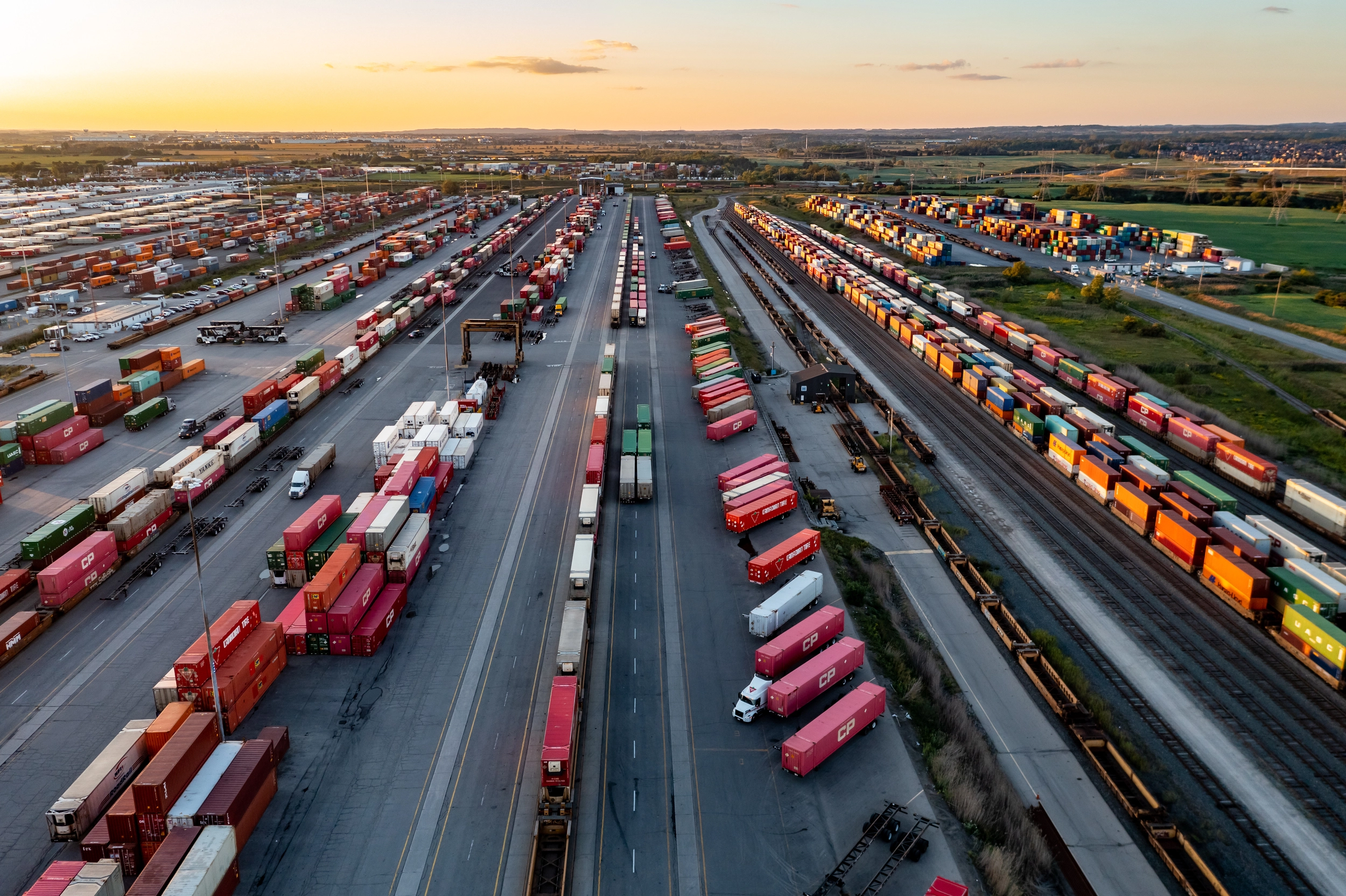
A container terminal is a port facility dedicated to the loading, unloading, stacking and transshipment of standardized containers, and is one of the most important nodes in the global supply chain.
A standard container terminal workflow has five core steps:
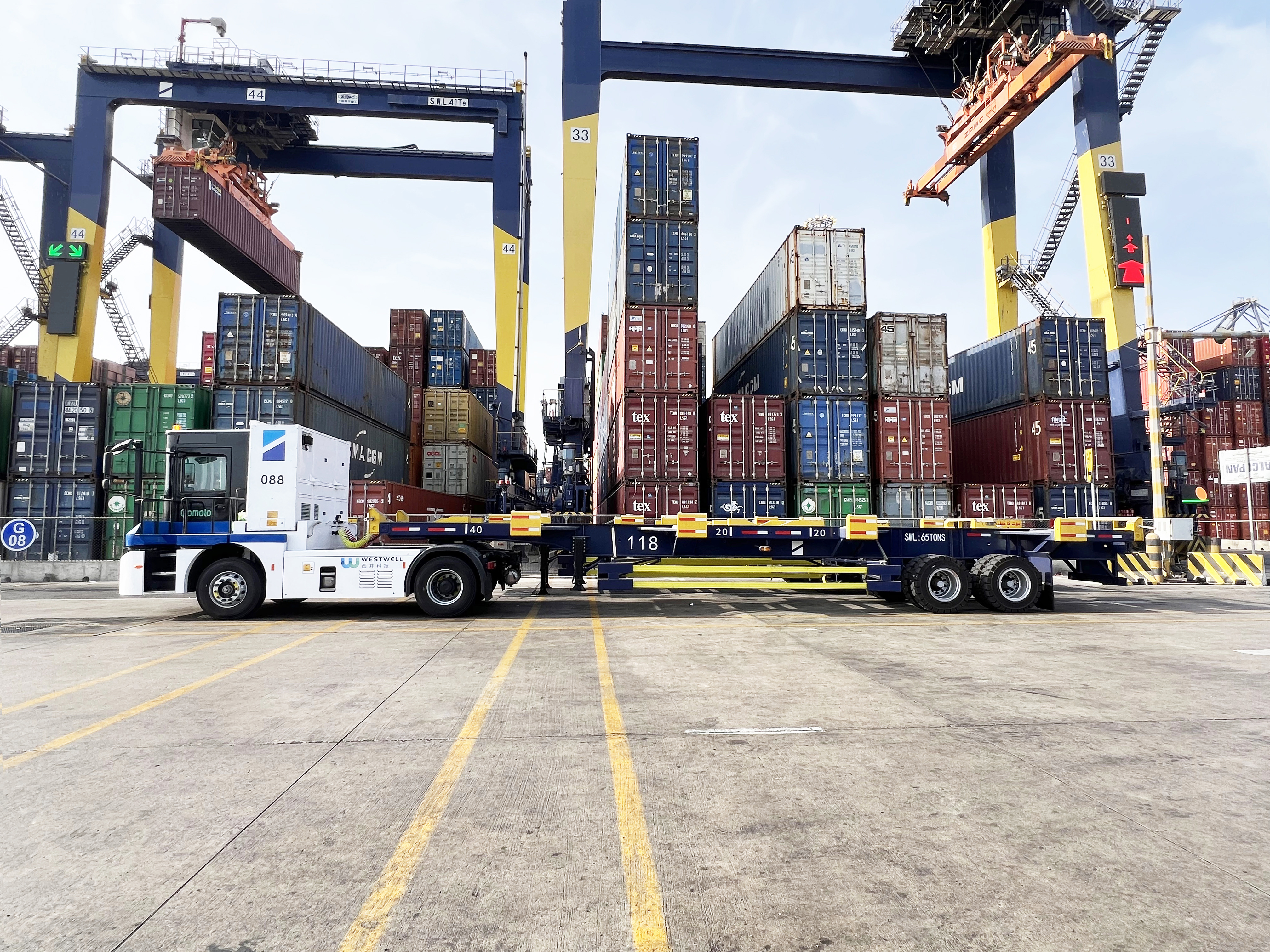
Core equipment includes Ship-to-Shore (STS) cranes for loading and unloading between vessel and quay; yard cranes, namely Rubber-Tyred Gantry (RTG) and Rail-Mounted Gantry (RMG) cranes, for stacking; straddle carriers, which lift and stack directly; and terminal tractors for horizontal transport within the terminal.
A Terminal Operating System (TOS) is the brain of a container terminal: integrated software that manages all operations, including vessel planning, yard management, equipment scheduling, gate control, and reporting. Strong terminal operating system integration with logistics scheduling software lets terminal operations coordinate with the wider supply chain.
Key performance indicators include crane moves per hour (CPH), vessel turnaround time, container dwell time, and gate passage time. At the world's leading terminals, the STS benchmark has reached 35 to 40 moves per hour, and some automated terminals exceed 45.
A bulk cargo terminal handles unpackaged bulk cargo, the main carrier of global energy and raw-material trade. It splits into two categories.
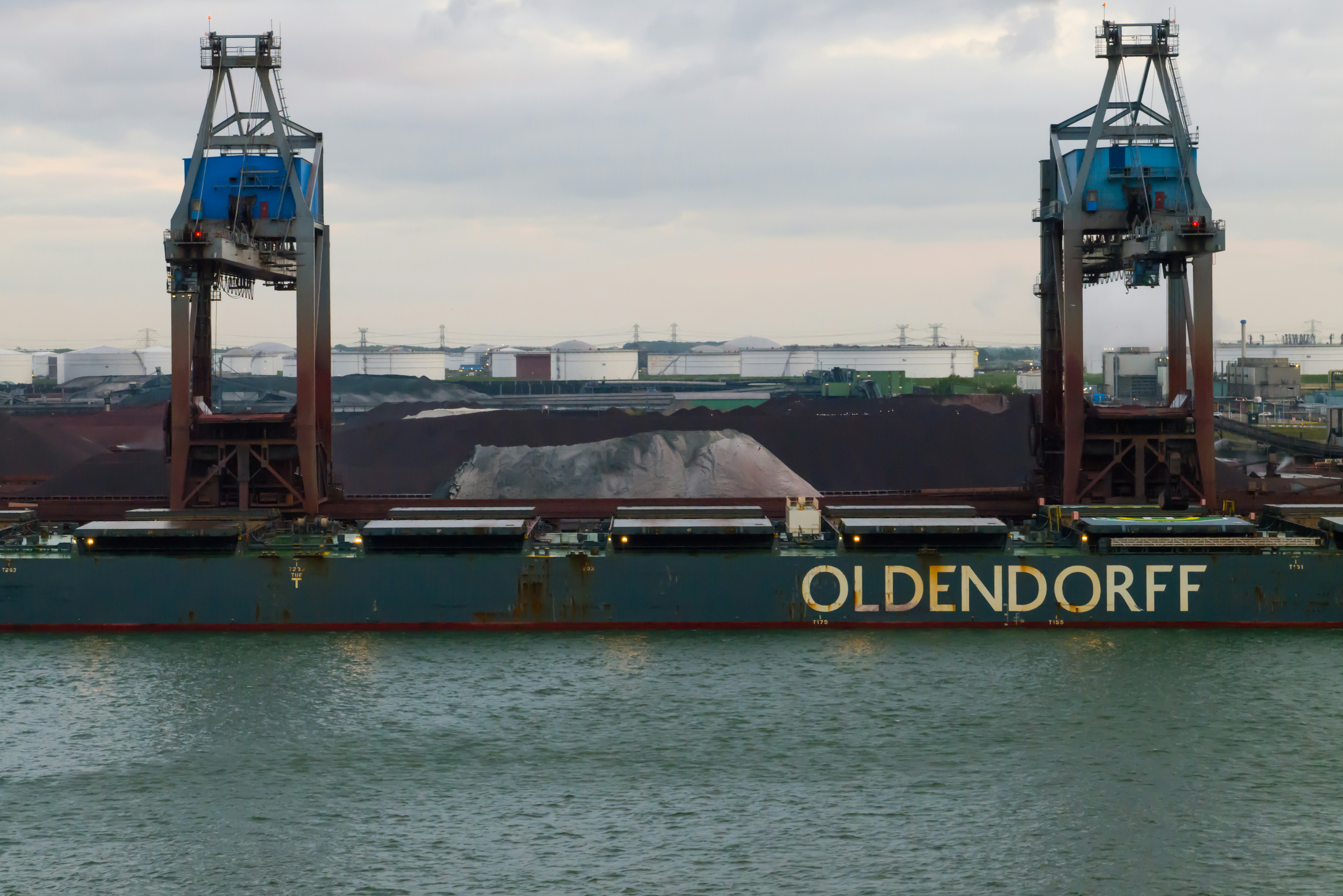
Photo by Georg Eiermann on Unsplash
Dry bulk terminals handle solids such as coal, iron ore, grain, and cement, using belt conveyors, grab cranes, ship unloaders, stacker-reclaimers, and hoppers. Liquid bulk terminals handle crude oil, refined products, chemicals, LNG, and LPG, relying on pipeline systems, large storage tanks, and loading arms.
Unlike the unitized, intermittent rhythm of container terminals, bulk terminals run a continuous-flow model, moving cargo through conveying systems that suit large volumes of low-value cargo.
Their KPIs differ accordingly: tons per hour, annual throughput, storage capacity, and berthing efficiency. Bulk cargo dominates seaborne volume: per UNCTAD, dry bulk commodities account for about 36% of seaborne trade and crude oil about 18% (2023).
A ro-ro terminal (roll-on/roll-off) handles wheeled cargo that drives or is towed directly on and off vessels via dedicated ramps.
Photo by Timur Garifov on Unsplash
Its core infrastructure is the linkspan between ship and dock, adjustable for tide and draft so vehicles board and disembark safely. Unlike container and bulk terminals, ro-ro terminals need almost no large lifting equipment. Cargo moves under its own power.
That gives ro-ro terminals fast loading speeds, short vessel turnaround, and low cargo damage rates. Typical cargo includes passenger cars, commercial vehicles, container trailers, construction machinery, and military vehicles. Many ro-ro terminals also tie into intermodal logistics scheduling systems for door-to-door service to automotive and heavy-equipment manufacturers.
| Terminal Type | Cargo Handled | Primary Equipment | Handling Model | Key KPIs | Automation Maturity |
| Container Terminal | Standardized containers (20ft, 40ft, etc.) | STS cranes, yard cranes (RTG/RMG), straddle carriers, terminal tractors | Unitized intermittent operation | Crane moves per hour, vessel turnaround time, container dwell time | Highest |
| Bulk Cargo Terminal | Dry bulk (coal, ore, grain), liquid bulk (oil, chemicals, LNG) | Conveyors, grabs, ship unloaders, stacker-reclaimers, pipelines, storage tanks | Continuous flow operation | Tons per hour, annual throughput, storage capacity | Medium |
| Ro-Ro Terminal | Automobiles, trailers, heavy machinery, project cargo | Ramps, linkspans, terminal tractors, forklifts | Self-propelled roll-on/roll-off operation | Vessel turnaround time, vehicles loaded/unloaded per hour, berth utilization rate | Lowest |
The differences come down to the physical characteristics of the cargo. The standardized nature of containers makes container terminals the best fit for automation and data-driven management, while the variety and irregularity of bulk and ro-ro cargo make automation harder. All three are nonetheless moving toward more efficient, safer, and greener operations.
Among the three types, container terminals reach the highest automation maturity: standardized box dimensions are ideal for automated identification, handling, and stacking. Bulk and ro-ro terminals, with varied and irregular cargo, automate selectively in specific steps.
Container terminal automation uses automated equipment, information systems, and AI to take over part or all of operations: ship loading and unloading, horizontal transport, yard stacking, and gate handling. Terminals fall into semi-automated (typically an automated yard with manual STS and horizontal transport) and fully automated (unmanned across all major steps).
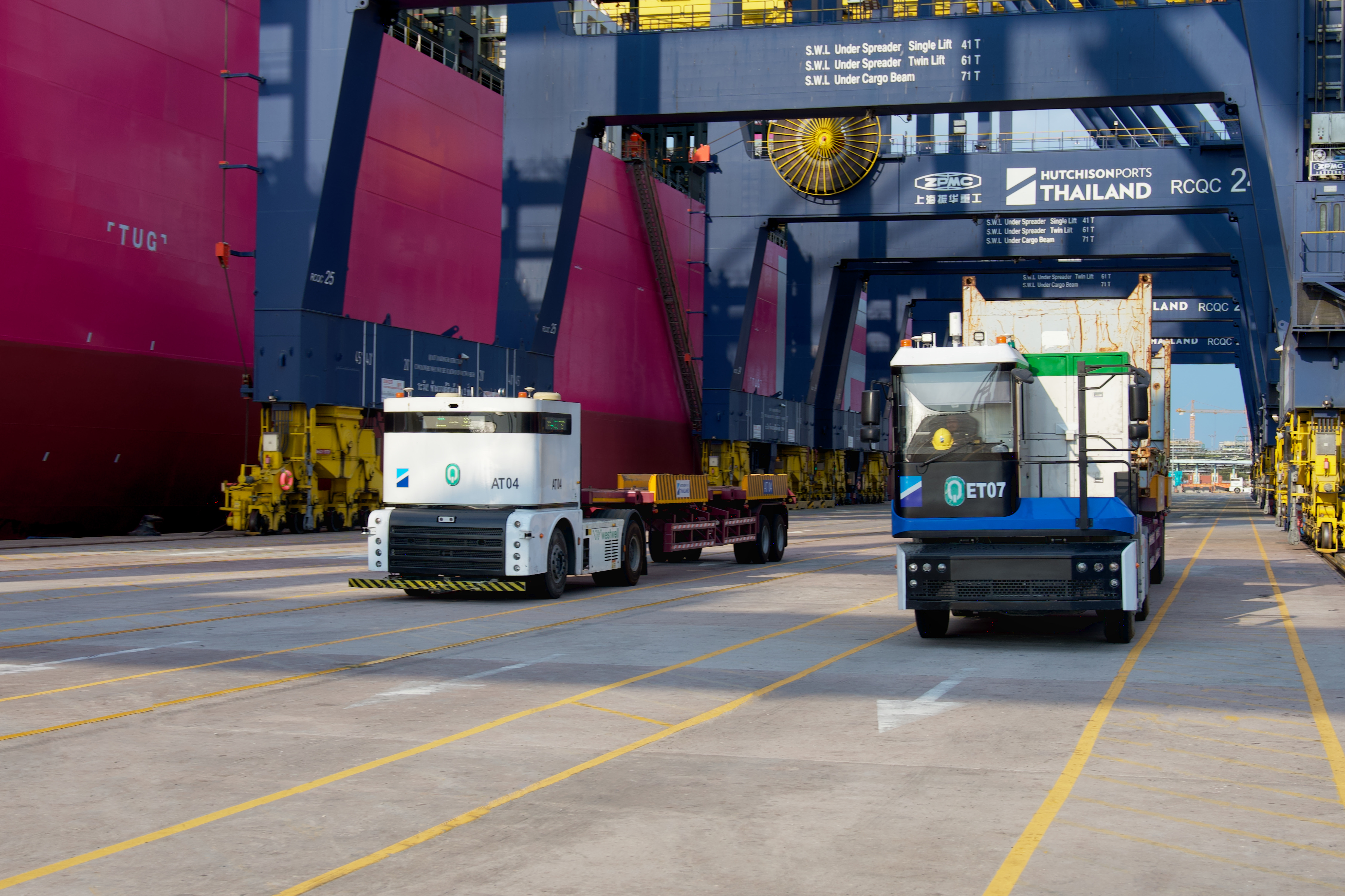
Autonomous terminal trucks are a working example of Physical AI: AI that lets machines perceive, understand, and act in the physical world rather than only process data on a screen. In a container terminal, that loop is concrete. Trucks perceive the quay, containers, and people through onboard cameras, LiDAR, and GNSS; an orchestration layer such as Westwell's ReeWell decides how to assign and route each task; and the trucks act, driving, positioning, and handing off containers in live mixed traffic.
Westwell runs autonomous Q-Truck fleets and ReeWell orchestration across operational container terminals worldwide. At Laem Chabang Port in Thailand, autonomous and human-driven trucks share the same terminal without magnetic pins or physical isolation. ReeWell's autonomous fleet dispatch coordinates the mixed fleet for 24/7 operation, which the site reports lifting operational efficiency by about 30% as of 2025. Comparable deployments run at CSP Abu Dhabi (UAE), the Port of Felixstowe (UK), Chancay (Peru), Sokhna (Egypt) and more.
Port terminals fall into three categories. Container terminals handle standardized containers and are the core of the global supply chain. Bulk cargo terminals handle dry and liquid bulk, carrying global energy and raw materials. Ro-ro terminals handle vehicles and project cargo that drive on and off ships. Each differs in equipment, layout, and process.
A container terminal uses large cranes to load and unload standardized containers and relies on complex yard stacking and a terminal operating system. A ro-ro terminal lets cargo drive on and off via ramps with no large lifting equipment, giving simpler processes and faster vessel turnaround, though it handles a narrower range of cargo types.
Bulk cargo terminals are specially used to handle unpackaged bulk cargo, divided into dry bulk terminals and liquid bulk terminals. Dry bulk terminals mainly load and unload solid cargo such as coal, iron ore and grain, while liquid bulk terminals mainly load and unload liquid cargo such as oil, chemicals and liquefied natural gas. They adopt a continuous flow operation mode and usually have very large throughput.
Container terminal are currently the most automated type of port terminals because standardized container units are very suitable for precise handling by automated equipment. There are already multiple fully automated container terminals in operation around the world, while bulk cargo terminals mainly achieve partial automation in loading, unloading and conveying links, and the application of automation in ro-ro terminals is more limited.
Port terminal design is moving toward more data-driven, lower-carbon, and more automated operations. The change is sharpest in container handling, where automation, AI, autonomous fleet dispatch, and terminal operating system integration are changing how terminals run day to day.
As efficiency and sustainability pressures grow, more terminals will invest in automation and green energy. Closer integration of logistics scheduling software with intermodal and sea-rail intermodal operations will matter most for terminals trying to stay competitive and meet emissions targets.