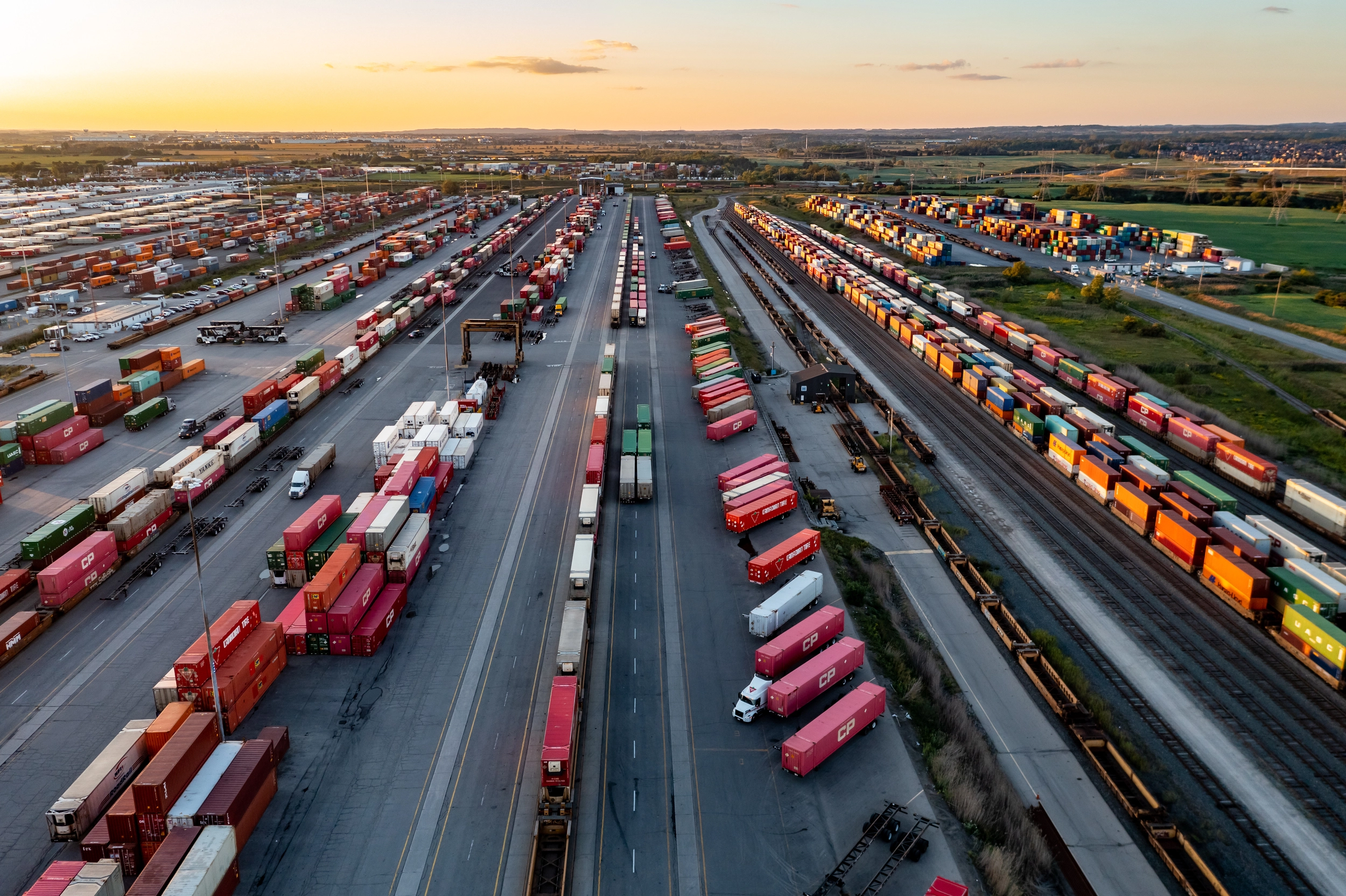
Why is your dispatcher still making 200 radio calls per shift?
Smart terminal fleet management gives dispatchers a shared task views across TOS, FMS, cranes and vehicles. By unifying task, equipment, site, and energy status, terminals reduce radio-led coordination, recover faster from disruptions, and make better dispatch decisions when plans change. Data must move before containers do....
2026-09-29

We Run Autonomous Trucks Next to Human Drivers Every Day: What Mixed-Fleet Operations Really Require
Autonomous trucks can work beside human drivers in an active terminal. The condition is not a separate autonomous lane. It is a shared operating model: one dispatching authority, visible vehicle intent, site-specific traffic rules and a tested process for recovering tasks when the plan changes.
That distinction becomes clear the moment a normal shift stops being normal. A lane closes around a quay-crane hand-off. A manually driven tractor arrives late. An autonomous truck pauses after detecting an obstacle. Containers still need to reach the next operation, and the dispatcher must decide which task moves, waits or changes route. Mixed-fleet operations succeed when that decision is made through agreed rules rather than radio calls and improvisation.
This is how Westwell approaches mixed traffic in live terminals: autonomous driving handles repeatable, coordination-heavy transport work, while human drivers remain part of the operating model. The objective is not to remove people from the terminal. It is to give people, vehicles and systems a predictable way to work through change....
2026-09-21

Types of Port Terminals Explained: Container, Bulk, and Ro-Ro
According to UNCTAD's Review of Maritime Transport 2025, global seaborne trade reached 12.7 billion tons in 2024, up 2.2% year-on-year, and still carries more than 80% of world merchandise trade by volume. Behind that figure sits a worldwide network of specialized port terminals, the backbone of modern intermodal logistics scheduling....
2026-06-26

JIT Logistics for Mega-Factories: How to Build Autonomous Material Flow
JIT logistics keeps production moving by delivering the right parts, in the right sequence, to the right station at the right time. At mega-factory scale, that timing depends on more than a few automated vehicles. Warehouse, line-side, yard and cross-workshop movements must share production data and operate under one dispatch logic.
This article explains how to design that flow, where warehouse robots, automated guided vehicles (AGVs), autonomous mobile robots (AMRs) and autonomous trucks fit, and what manufacturers can learn from a live automotive deployment....
2026-07-31