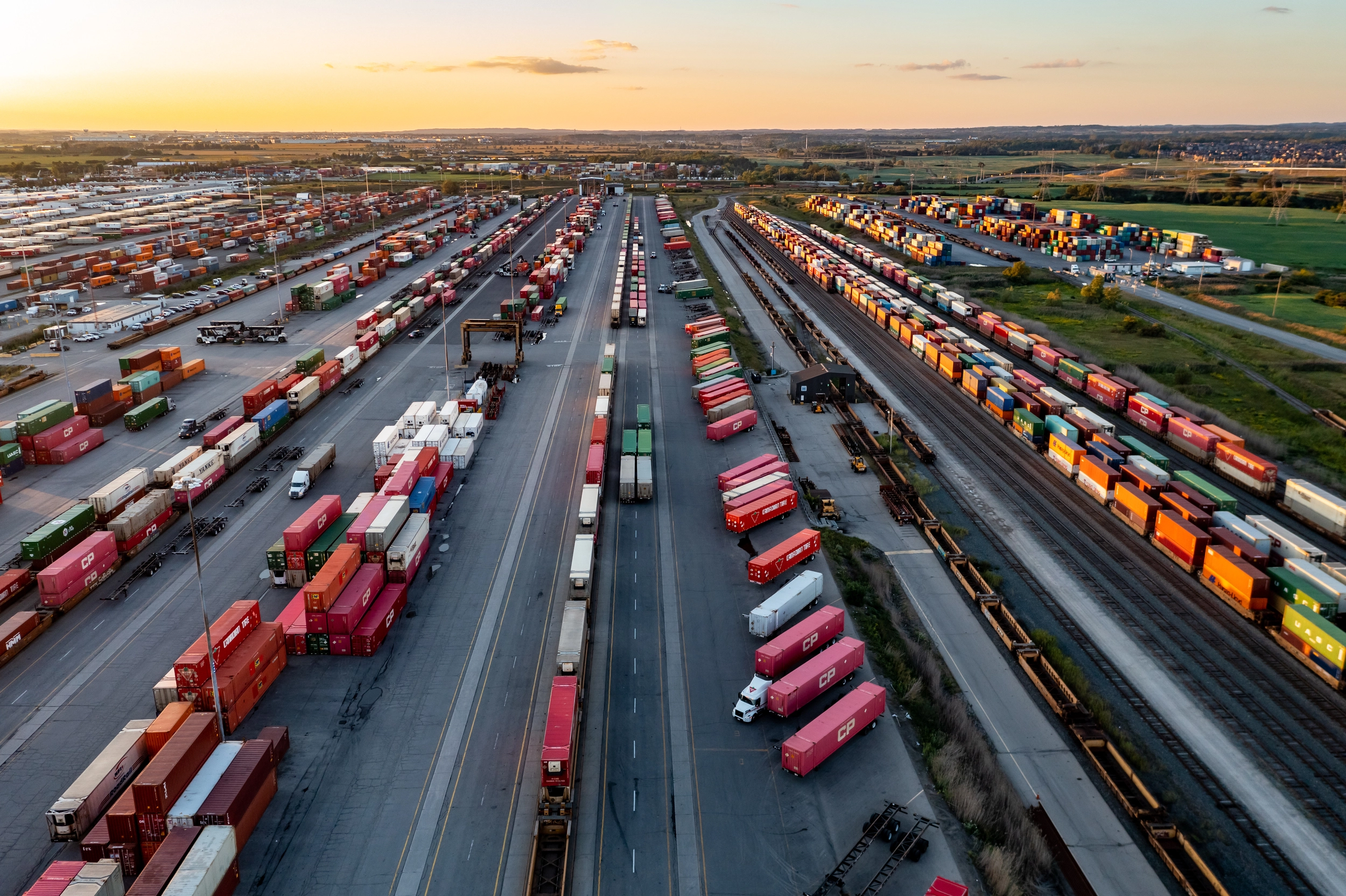


Cargo still moves too slowly inside modern hubs because the longest delays no longer happen on the ocean or the highway — they happen in the last few hundred meters. While airlines, trunk carriers, and automated ports have spent decades optimizing long-distance links, the short-distance transfers between operational nodes inside a hub remain fragmented, under-equipped, and manually scheduled. The tow tractor is the equipment built to solve it.
Photo by Ivan Shimko on Unsplash
Short-haul cargo transport refers to the high-frequency, large-volume horizontal movement of goods between functional zones inside a hub — aircraft stand to cargo terminal, storage area to dock, production line to outbound. These in-hub moves can swell to a large share of total handling time during air-cargo peaks and e-commerce promotions, yet they attract a fraction of the automation invested in long-haul links. The delay isn't in thousands of kilometers; it's in the gap a forklift was never designed to cross.
Internal short-haul logistics is the network of repeated, short-distance moves that connect a hub's functional zones — the "capillaries" of the supply chain. The distances vary widely, from a few hundred meters between an aircraft stand and a cargo terminal to several kilometers across a logistics park, but the pattern is the same: each handover switches operators, breaks rhythm, and risks an information mismatch. Four core scenarios concentrate on the pain.
| Scenario | The transfer gap | What's at stake |
| Air cargo | Aircraft stand → cargo terminal | Flight on-time rate, customs and fulfillment timeliness under a rigid operating window |
| Warehousing | Storage area → loading dock | Outbound efficiency and dock turnover during peak-and-valley demand swings |
| Manufacturing | Production line → finished-goods outbound | Line takt continuity, inventory turnover, and on-time delivery |
| Port / intermodal | Container yard → sorting and connection | Container turnover, berth capacity, and sea-land intermodal flow in 24/7 operation |
The slowdown isn't one broken link — it's three failures compounding at once.
Fragmented cargo flow between nodes. Hubs are designed around functional zoning, so a single batch may pass through three to five handovers before it leaves. Each handover adds damage risk, multiplies coordination complexity, and inserts dead time — goods that "move for 10 minutes and wait for half an hour."
The wrong equipment for continuous transport. Most hubs default to forklifts, which are built for vertical lifting and stacking with an economic radius under 100 meters, carrying one or two pallets per trip. Pushed into hundreds of meters of repeat hauling, they generate high empty-running rates and wasted capacity, while the tow tractor — the tool purpose-built for horizontal continuous transfer — sits underused.
Internal traffic congestion. Forklifts, trucks, transfer vehicles, and people share the same dense routes. During promotions, concentrated flight arrivals, or ship berthing, in-park traffic multiplies and waiting times climb sharply, feeding a cycle of congestion, delay, and backlog.
A tow tractor is a vehicle purpose-built to pull multiple trailers or cage carts in a single trip — the "one-tow-many" model that replaces dozens of forklift round trips with one continuous run. That single design choice reconstructs short-haul flow from segmented hops into coherent circulation. Two variants address different operational maturity levels.
An electric tractor is a battery-powered tow tractor that uses a mature three-electric (battery, motor, control) system, delivering low-cost, low-carbon haulage well suited to fixed-route, high-frequency transfer. A high-capacity tow tractor can pull several standard trailers at once, cutting trips and empty running sharply versus single-pallet forklift handling.
An automated tow tractor (autonomous tow tractor) adds an L4 autonomous driving system — lidar, vision, and high-precision positioning — for path planning, dynamic obstacle avoidance, and multi-vehicle coordinated scheduling. It upgrades the operation from single-vehicle efficiency to hub-wide optimization, dynamically rerouting around real-time congestion.
| Electric tow tractor | Autonomous tow tractor (L4) | |
| Operation | Driver-operated, fixed routes | Unmanned, system-scheduled |
| Best fit | High-frequency standardized transfer | Multi-node hubs with complex moving lines |
| Core gain | Low TCO, zero emission, low noise | 24/7 uptime, coordinated routing, no manual scheduling |
| Labor impact | Reduced trips per operator | Removes the driver from the loop |
A tow tractor's fixed driving trajectory and stable running state reduce cargo damage and accident risk compared with the high-frequency start-stop of forklifts. Electric models run below roughly 65 decibels with zero tailpipe emissions, making them suitable for enclosed warehouses, airport terminals, and food or pharmaceutical environments. Autonomous models add 360° perception that identifies people and obstacles in advance, removing fatigue, blind spots, and operator error — and because routing and parking are system-controlled, every move becomes traceable and predictable.
Economics reinforce the case. Electric drive typically runs at a fraction of fuel cost with far lower maintenance, improving total cost of ownership over the asset's life. Autonomous operation lifts equipment utilization toward continuous use without shift changes, eases recruitment and labor-cost pressure on night and high-intensity shifts, and — through integration with WMS, MES, and airport operating systems — distributes and executes transfer tasks automatically.
Air cargo competes on speed, and the stand-to-terminal transfer is the link that defines end-to-end timeliness. The airport cargo tractor handles this under tight flight windows and strict apron safety rules, while the same autonomous platform extends to the baggage tractor role, moving passenger luggage between terminals and aircraft stands.
Westwell's proof point here is Hong Kong Air Cargo Terminals Limited (Hactl) — the largest independent air cargo handler in Hong Kong, operating since 1976 and serving more than 100 airlines and 1,000 freight forwarders worldwide. In 2025, Westwell secured the letter of intent (LOI) for Hactl's new energy autonomous tractor project. Its autonomous tow tractor, the Q-Tractor, supports unmanned cargo transport at the terminal, enhancing productivity while accelerating Hactl's smart and green transformation.
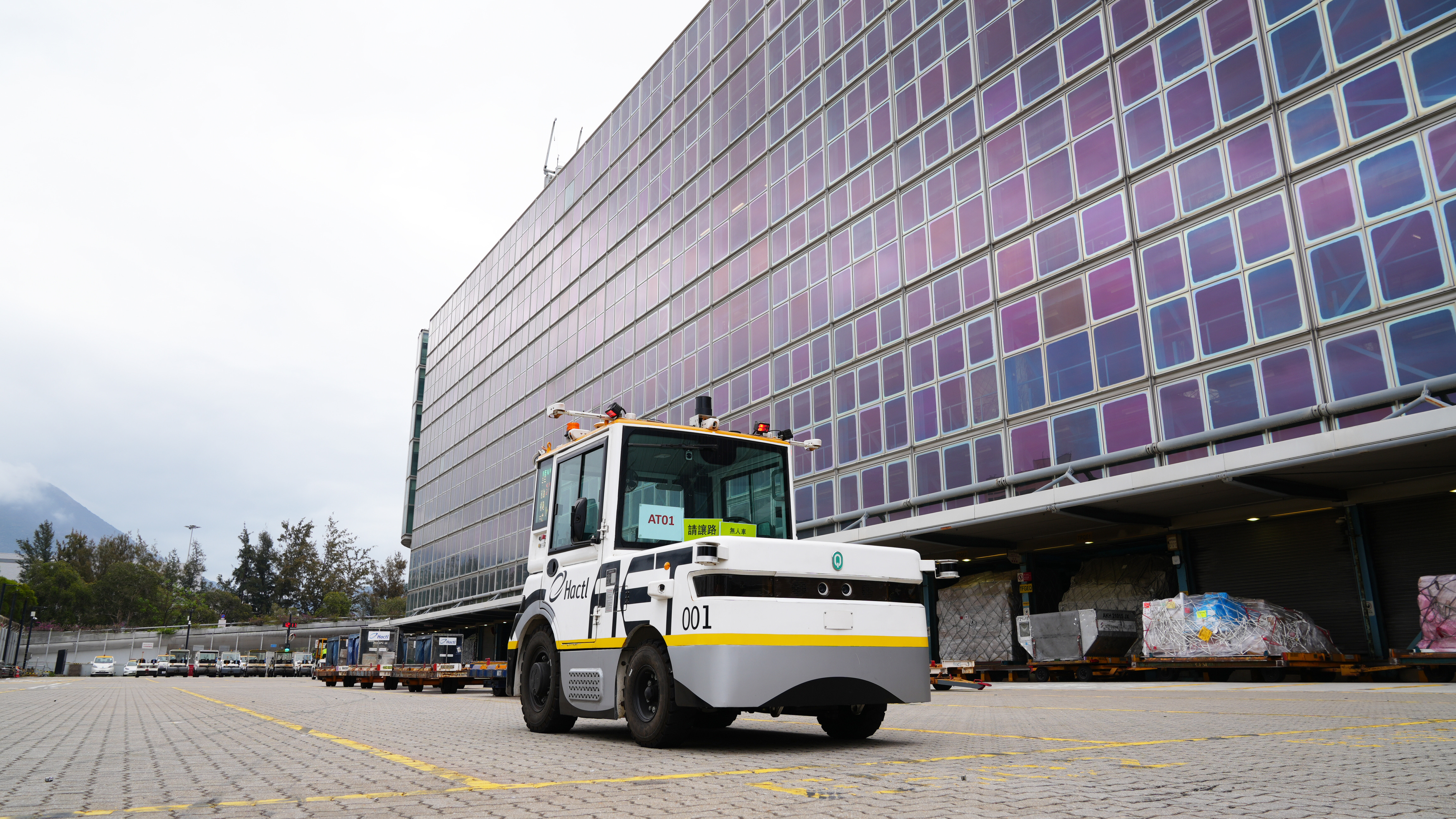
The warehouse tow tractor moves full pallets from storage to picking, feeds automated sorting lines, and batches sorted orders to outbound docks. During promotion and holiday peaks, a high-capacity tow tractor absorbs explosive transfer demand and protects outbound timeliness.
Electric tractors support JIT line-side logistics — delivering parts to stations on schedule and clearing finished goods to outbound — keeping the line running without the backlog that manual transfer causes.
Where goods shuttle between container yards, rail freight stations, and sorting centers over hundreds of meters to several kilometers, automated and high-capacity tow tractors handle the volume and use coordinated scheduling to cut park congestion.
Replace forklift-based short-distance hauling with tow tractors that pull multiple trailers per trip, and add autonomous scheduling to coordinate routes across nodes. This cuts handovers, empty running, and waiting time — the three causes of in-hub delay.
An electric tractor is driver-operated and optimized for low-cost, low-emission haulage on fixed routes. An autonomous tow tractor adds an L4 self-driving system for unmanned operation, dynamic rerouting, and multi-vehicle coordination, making it suited to complex, high-density hubs.
Because routing, speed, and parking are controlled by the system rather than improvised by drivers, autonomous tow tractors follow consistent trajectories and traceable task sequences — reducing congestion, scratch incidents, and the unplanned interruptions that make manual transfer unpredictable.
The efficiency frontier of logistics has moved inward. As trunk and ocean links approach their limits, the short-haul transfers inside hubs — anywhere from a few hundred meters to several kilometers — are where the next gains, and the next bottlenecks, will be decided. The tow tractor family closes that gap: electric models bring a mature, low-carbon answer for high-frequency routes, and autonomous models bring hub-wide intelligence that turns fragmented hauling into continuous flow.