


At TOC Europe 2026, Westwell demonstrated one of the most complete smart port automation technology stacks ever shown at the conference — a fully integrated system spanning real-time container recognition, AI-driven fleet scheduling, and mixed autonomous-manned vehicle operations. This article unpacks what Westwell showcased, how the technologies connect, and why terminal operators from Europe to the Middle East are increasingly choosing this approach to future-proof their operations.
Container terminals today face a compounding set of pressures. According technavio, global port throughput is forecast to grow by over 30% through 2030, yet labor shortages and infrastructure constraints are already limiting capacity at many of the world's largest hubs. Port labor shortage has accelerated the case for automation: the question for most operators is no longer whether to automate, but how to do it without disrupting live operations. Technology is no longer a long-term hedge — it is the operational answer. What makes Westwell's TOC showcase significant is not any single product, but the coherence of the system as a whole: perception, decision-making, and physical execution, unified.
Smart port automation begins with knowing exactly what is where. WellOcean is Westwell's container OCR recognition and intelligent port perception solution — the data foundation that turns physical container movements into structured, machine-readable operational events, and the entry point for any meaningful smart port digital transformation.
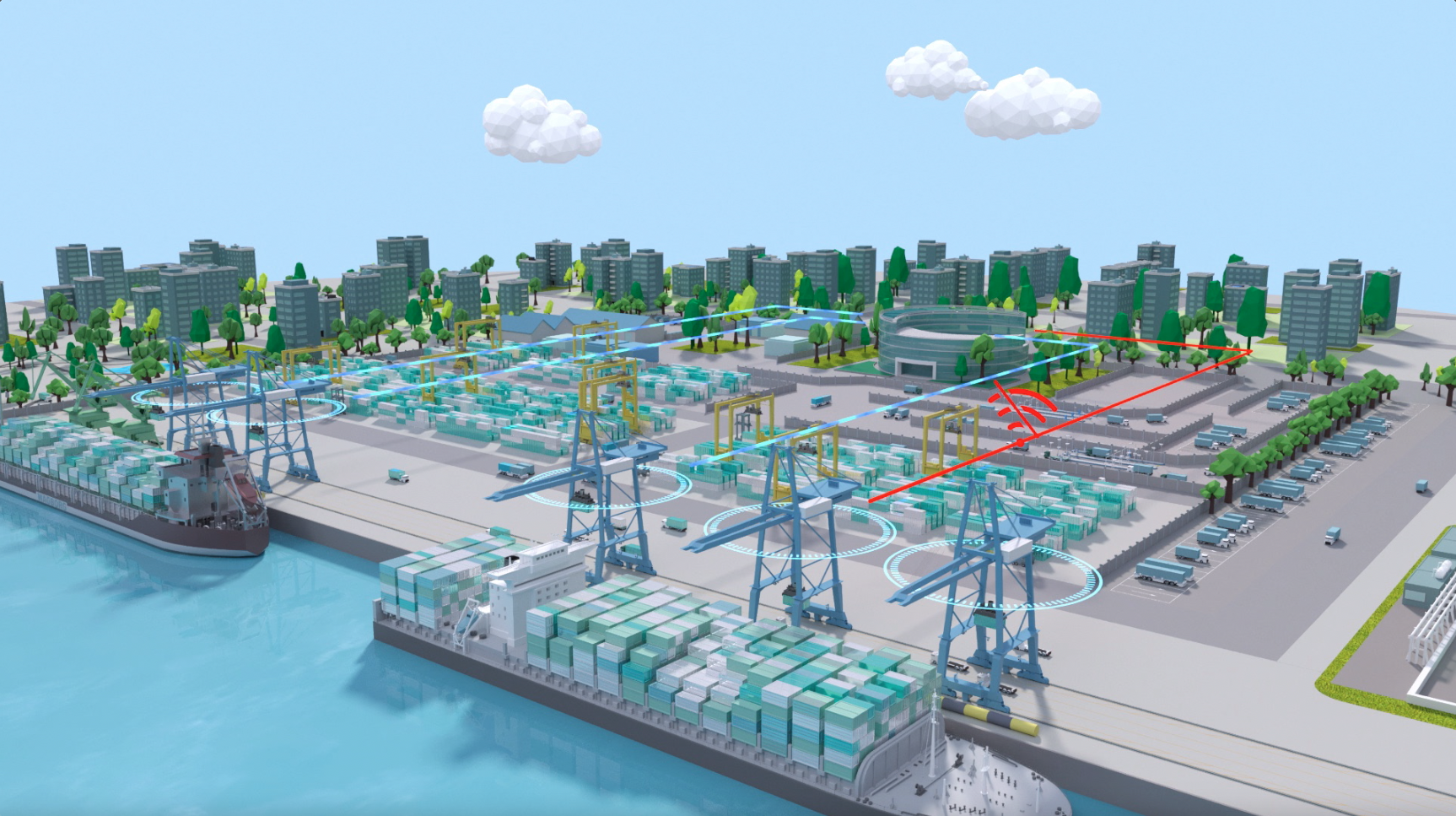
WellOcean captures container numbers, truck plate IDs, and equipment status across quay cranes, rail-mounted gantry (RMG) cranes, yard cranes, and gate lanes. It achieves near-100% container number recognition accuracy in 24/7 commercial operation, as validated at CSP Abu Dhabi Terminal (Khalifa Port) where the system was first deployed in 2019. WellOcean eliminates the manual tally errors and data entry delays that historically have caused mismatches between what the Terminal Operating System (TOS) records and what actually exists on the ground.
The practical impact is significant. When every crane move and every gate transaction is captured automatically, dispatchers no longer spend time reconciling conflicting system records. Container dwell time — the time a container remains in the terminal between vessel unload and onward dispatch — decreases because yard planning can be based on verified data rather than estimates.
If WellOcean is the eyes of the smart terminal, ReeWell is the brain. ReeWell is Westwell's AI World Model-driven, full-scene intelligent scheduling and fleet management platform. It does not simply connect existing systems — it replaces fragmented, radio-dependent coordination with a continuously learning AI that sees every asset, predicts every bottleneck, and dispatches every decision at millisecond speed.
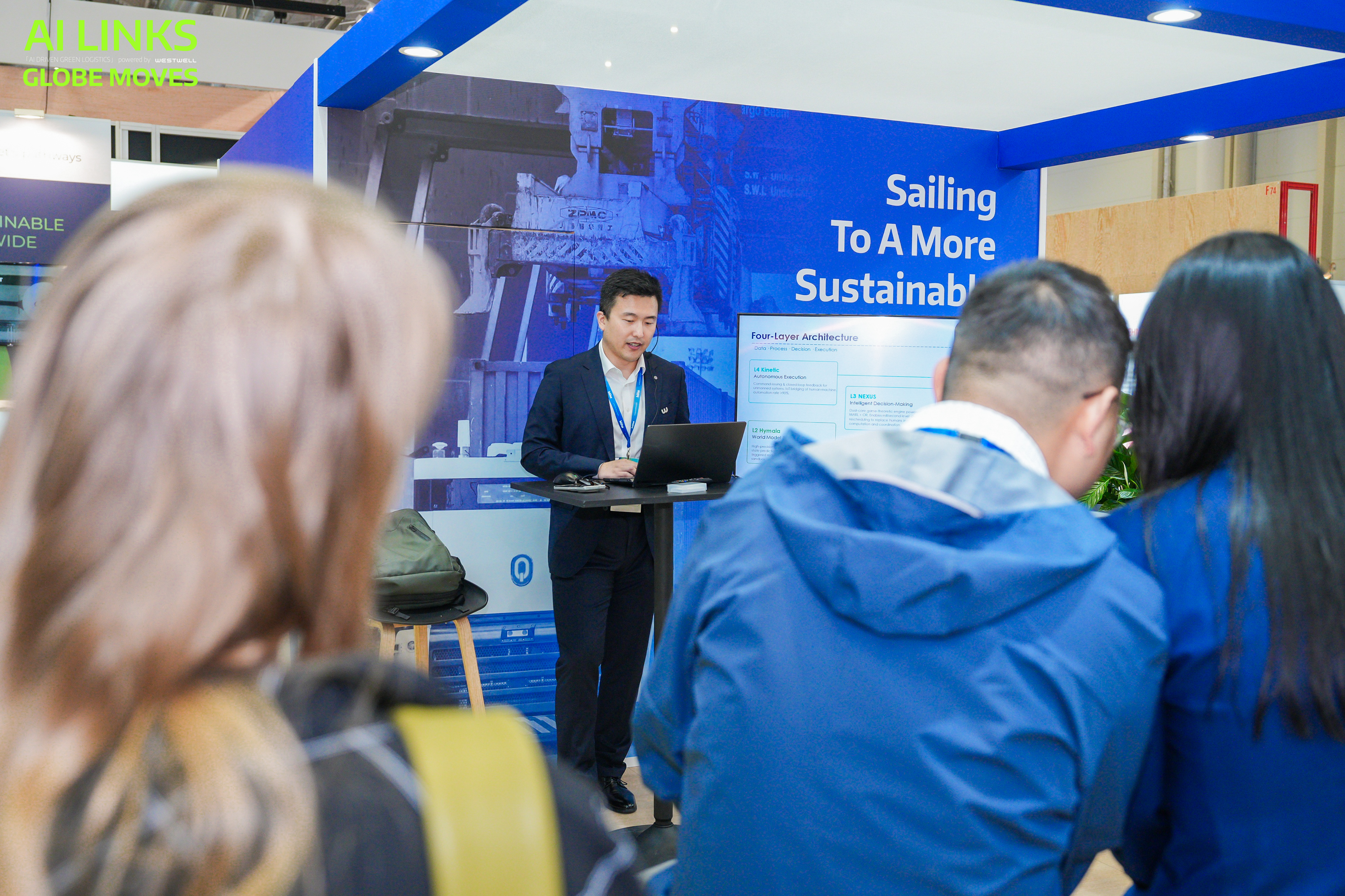
Most large container terminals run TOS, Fleet Management Systems (FMS), Equipment Control Systems (ECS), and external logistics platforms in parallel. These systems rarely share a common clock, vocabulary, or decision logic. The operational result is well understood by anyone who has worked a terminal: data says one thing, equipment does another, and supervisors fill the gap with experience and radio calls. For operators asking how AI scheduling improves port throughput, ReeWell's answer is to eliminate that gap entirely — replacing it with a single, continuously updated decision layer.
For terminal operators evaluating scheduling platforms, ReeWell's key differentiator is its simulation-first validation capability. Before any deployment, the Hymala World Model and Cactus data layer are used to model energy costs, depreciation, throughput, and revenue impact — providing simulation-backed ROI projections, not spreadsheet assumptions.
One of the most significant demonstrations Westwell brings at TOC was live mixed-traffic fleet operation — autonomous and manned trucks coordinating seamlessly within the same terminal environment, without magnetic pins or physical lane separation.
The Qomolo Q-Truck is a cabless, fully autonomous new energy port terminal tractor purpose-built for container logistics in ports, terminals, and industrial logistics parks — and one of the most commercially proven electric autonomous trucks operating at scale globally today. Cabless autonomous terminal tractor design is a deliberate architectural choice — eliminating the driver's cab increases cargo flexibility, reduces the vehicle's physical footprint, and enables round-the-clock unmanned operations.
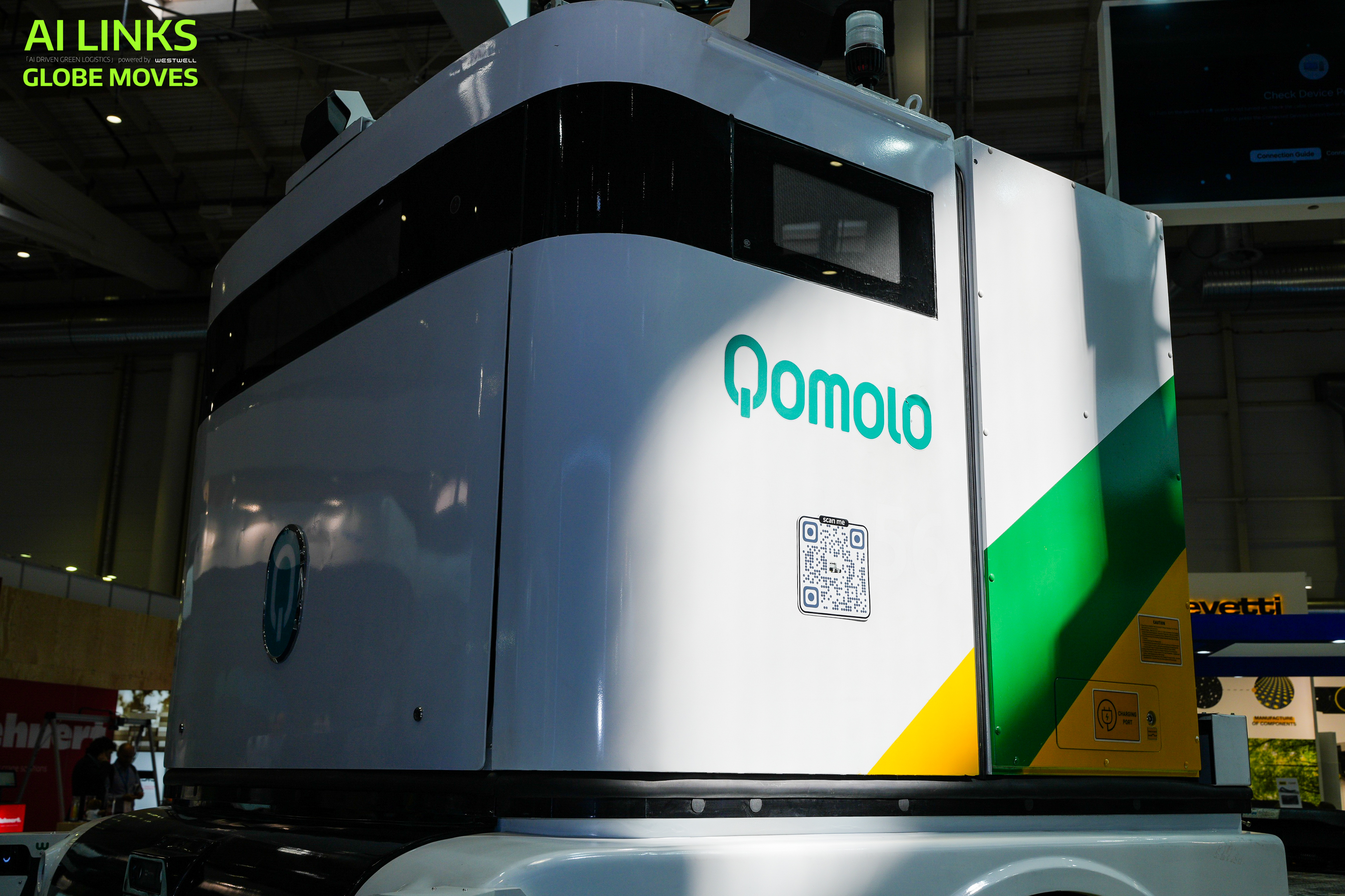
Q-Truck carries up to 75 tonnes, operates on a full-battery range of 150 km, and supports 5-minute battery swapping via the PowerOnair automated swap station. Its autonomous driving system, WellDrive, achieves ±3 cm positioning precision and over 97% first-attempt docking accuracy in road widths under 3 meters — a performance specification that enables it to operate safely in dense quayside corridors.
The global track record reinforces confidence. At CSP Abu Dhabi Terminal, Q-Trucks have maintained 24/7 uninterrupted operation through 50°C heat and sandstorms since 2021. At Port of Felixstowe — the UK's largest container port — Westwell is deploying what is planned to be the largest fleet of electric autonomous commercial vehicles ever built at a port, with 100 battery-powered Q-Trucks contracted.
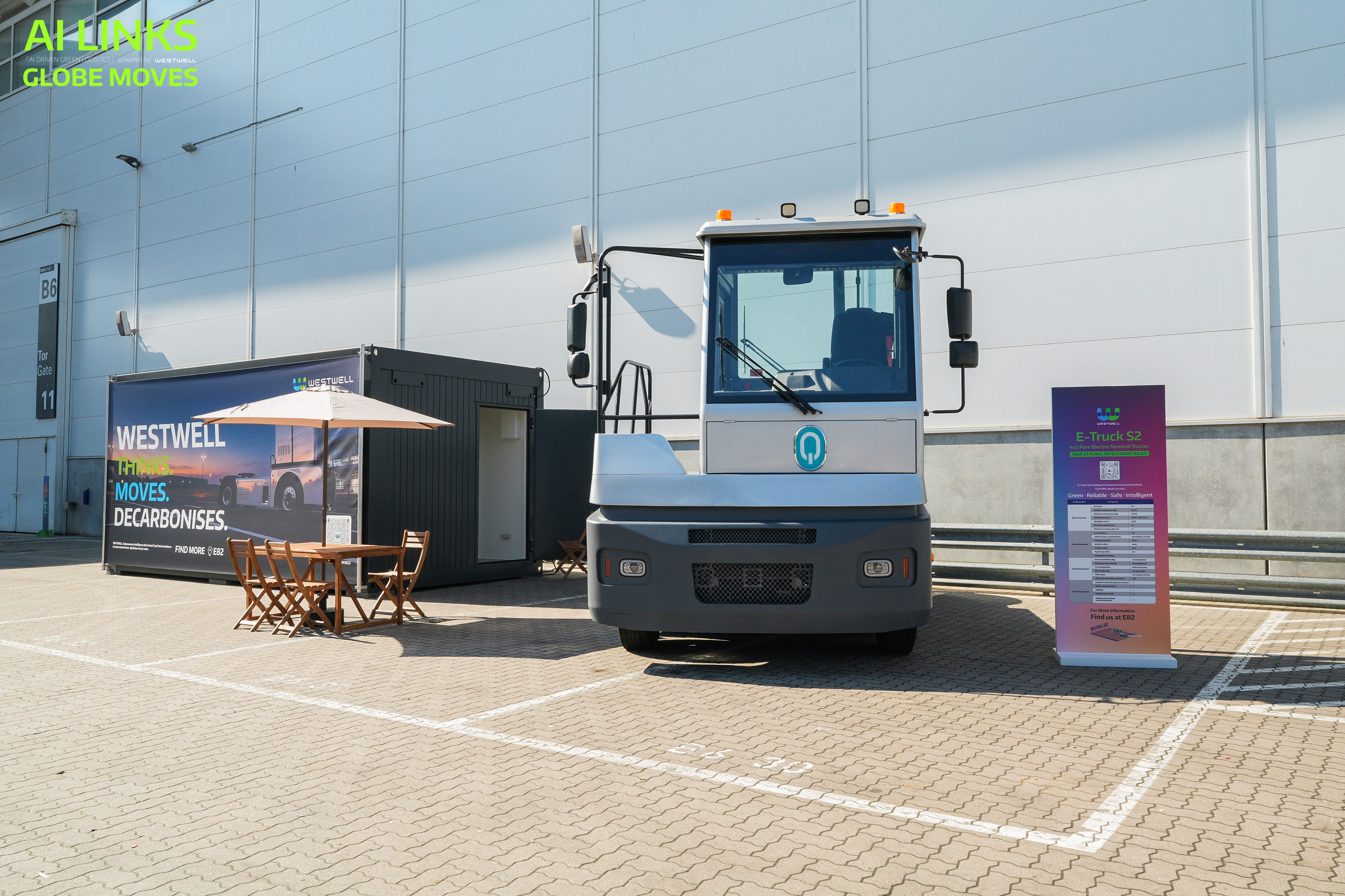
Not every terminal is ready — or able — to move to full autonomy in a single step. The Qomolo E-Truck is specifically designed for this transition reality. It is a new energy heavy-duty truck with an upgradable architecture: human-driven today, capable of upgrading to L4 autonomous driving tomorrow, without replacing the vehicle — while contributing to port decarbonization goals from day one through its pure-electric drivetrain.
E-Truck delivers 75 tonnes maximum traction, energy consumption as low as ≤1.7 kWh/km, and charges from 20% to 80% in 41 minutes — or swaps batteries in 5 minutes. Its scalable electrical/electronic (E/E) architecture includes steer-by-wire, brake-by-wire, and shift-by-wire foundations that make L4 upgrade a hardware-ready pathway rather than a future replacement cost.
At Laem Chabang Port in Thailand, Q-Trucks and E-Trucks currently operate in the same terminal under ReeWell coordination — the world's first commercially validated scalable mixed-operation model. This deployment has processed more than 750,000 TEUs (as of 2025), achieved a 30% operational efficiency uplift, and demonstrates that the transition from manned to autonomous does not require a hard cutover. The two vehicle types coexist, each handling the work they are most suited for, coordinated by ReeWell in real time.
Understanding Westwell's competitive advantage requires seeing how the three systems form an indivisible operational loop — not three separate products running in parallel.
WellOcean establishes a shared perception truth. The moment a vessel berths and quay cranes begin operations, WellOcean captures every container number, lift event, and gate transaction in real time. Every system — from the TOS to the fleet dispatcher — is now working from a single, verified version of terminal reality.
ReeWell converts perception into executable decisions. The Hymala World Model continuously simulates the terminal's state hours ahead — projecting yard density, crane queue depth, and traffic flow across every corridor. The Nexus Agent Decision Engine uses this simulation to compute optimal task sequences and dispatches precise instructions to each vehicle: which crane, which container, which yard slot, in what order.
The Qomolo fleet executes and closes the loop. Q-Trucks and E-Trucks carry out their assigned moves with centimeter-level positioning precision, requiring no human coordination. Every completed task feeds status data back into ReeWell, which recalibrates the next dispatch cycle.
The practical consequence is a terminal that self-corrects in real time. When a crane goes offline, when a vessel arrives early, or when traffic backs up in a corridor, the system detects, recalculates, and reroutes faster than any human dispatcher could respond. Exceptions stop being crises and become variables the system absorbs automatically. According to McKinsey & Company, fully integrated port automation can reduce terminal operating costs by 25–55% and improve asset utilization by 10–35% compared to conventional operations — outcomes that require exactly this kind of unified data and decision layer across perception, scheduling, and execution.
This system integration is not a design concept — it is validated commercial practice across multiple ports and operating conditions.
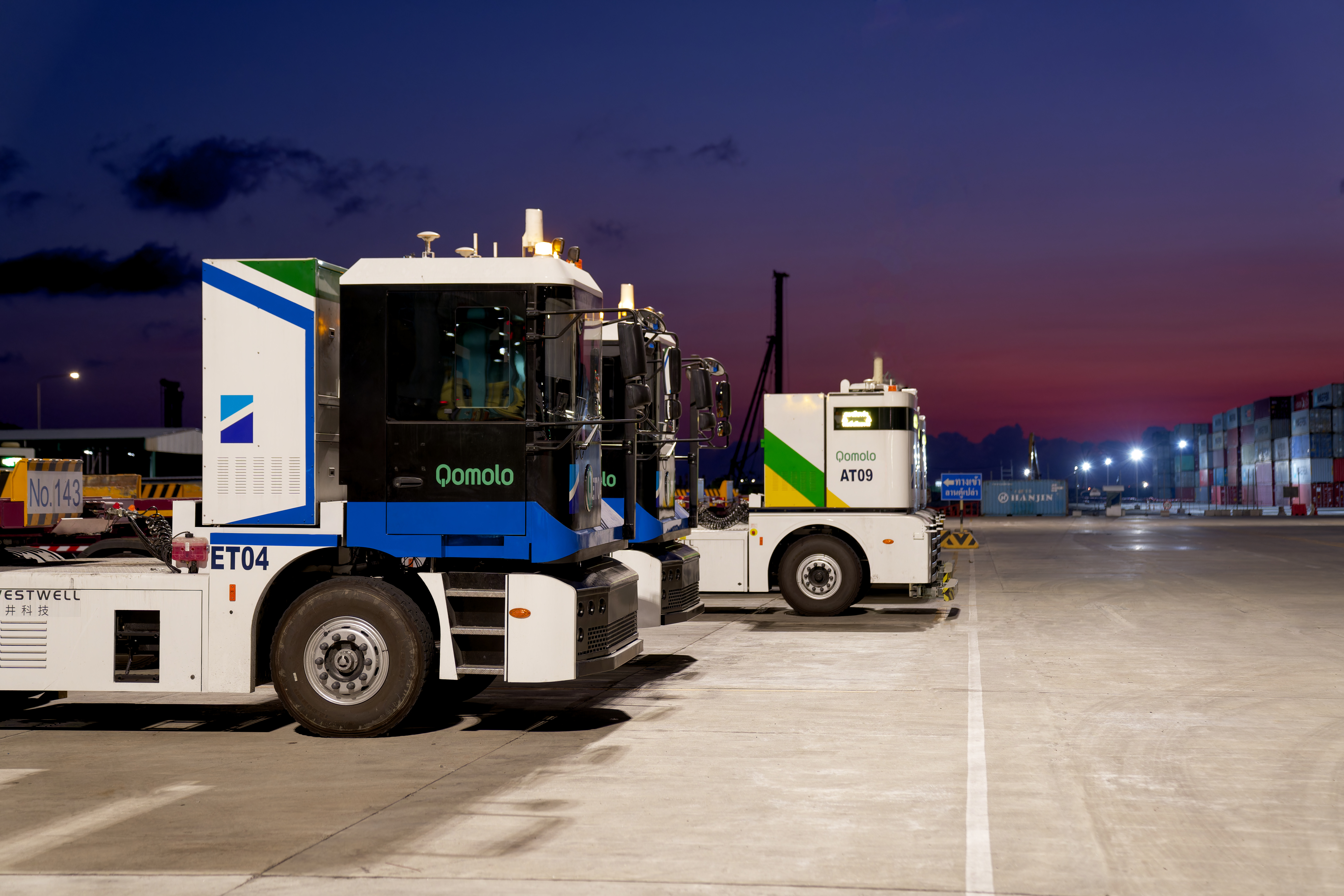
Westwell deployed Q-Trucks, E-Trucks, WellOcean gate systems, ReeWell fleet management, and PowerOnair battery swap infrastructure at Thailand's largest container port. Operating under ReeWell coordination, autonomous and manned trucks work the same terminal without magnetic pins or physical lane separation — a world first at commercial scale. The deployment has processed over 750,000 TEUs as of 2025, delivered a 30% operational efficiency uplift, and each Q-Truck reduces CO₂ emissions by up to 50 tonnes annually under green electricity.
Starting with an AI-powered quay crane OCR system (WellOcean) deployed in 2019 — achieving near-100% container recognition accuracy from day one — Westwell progressively expanded to a full Q-Truck autonomous fleet. CSP ADT has since placed a second repurchase order for 12 additional Q-Trucks and ordered the first IGV deployment in the Middle East, confirming the long-term client trust that incremental, integrated deployment builds.
Mixed-traffic autonomous fleet operation refers to the simultaneous deployment of fully autonomous vehicles (such as the Qomolo Q-Truck) and human-driven or driver-assisted vehicles (such as the Qomolo E-Truck) within the same terminal or logistics site, without physical lane separation. The two fleet types are coordinated by a central AI scheduling platform — in Westwell's case, ReeWell — which assigns tasks, manages routing, and prevents conflicts in real time.
Yes. Westwell's solutions are designed for incremental deployment. WellOcean can be installed on existing cranes and gates as an overlay. ReeWell connects to existing TOS, FMS, and ECS systems via standard APIs. E-Truck can operate under human drivers from day one and upgrade to autonomous driving as the site evolves. This layered approach allows terminals to modernize progressively without halting operations.
ReeWell's Hymala World Model continuously simulates terminal state against forecast inputs including vessel ETAs and weather data. When an anomaly is detected — such as a crane failure or heavy rain event — the Nexus Agent Decision Engine recalculates the unified schedule and issues rerouting instructions to vehicles in milliseconds. The demonstrated case involves a scenario where mid-shift weather data triggered a preemptive reallocation of cold-chain containers before the operational impact materialized.
Each Qomolo Q-Truck or E-Truck reduces CO₂ emissions by up to 50 tonnes per unit per year when operated under green electricity, directly supporting port decarbonization targets. At the Laem Chabang Port deployment, each autonomous Q-Truck achieves this 50-tonne annual CO₂ reduction benchmark.
TOC Europe 2026 is a showcase, but the deployments behind it are live and operating. Westwell's smart port automation portfolio — WellOcean, ReeWell, Q-Truck, E-Truck, and more — has already processed hundreds of thousands of TEUs across multiple continents, in climates ranging from Gulf heat to European winters, at terminals ranging from regional hubs to some of the world's largest ports.
For terminal operators evaluating automation investments, the question is no longer whether to automate — it is how to do so without operational disruption, with a partner who can deliver measurable performance from day one. Westwell's integrated approach answers both.


