


Products
Industries
LinkAige
About


Global logistics is moving faster—and becoming more complex—than ever before. As supply chains stretch across regions and rely on a mix of road, rail, sea, and air, multimodal freight has become the backbone of modern trade, especially in highly connected markets like Europe and fast-growing logistics hubs across the Middle East.
But while freight networks have evolved, the way they are managed often hasn’t.
Traditional freight brokerage was built for linear, single-leg transport. In a multimodal world, that approach quickly breaks down. Disconnected systems, manual coordination between hubs, and limited shipment visibility make it difficult to respond to disruptions, align transport schedules, or keep delivery promises. The result is familiar: delays, rising costs, and a lack of transparency across the freight journey.
This is where digital, platform-based logistics is starting to redefine how multimodal freight works.
Loopo developed by Westwell was built for this exact shift. As an open SaaS platform powered by AI, Loopo connects key transport nodes, synchronizes data across modes, and brings real-time visibility to complex container movements. Instead of reacting to problems after they occur, logistics teams gain the speed and clarity needed to manage multimodal freight proactively—across borders, hubs, and regions.
In an environment where every handoff matters, Loopo turns multimodal complexity into a coordinated, data-driven operation.
At its core, freight management has always been about coordination—matching cargo with capacity and ensuring goods move from origin to destination on time. But the way this coordination happens has changed dramatically as multimodal logistics becomes the norm rather than the exception.
Traditional freight brokerage operates as an intermediary layer, relying heavily on manual communication, fragmented systems, and human experience. While this model can work for single-leg transport, it struggles in today’s multimodal transportation environment.
When shipments move across multiple modes and hubs, brokers often lack:
This leads to common challenges in multimodal freight management: delayed updates, inefficient rerouting, and limited transparency for shippers. In regions like Europe, where cross-border movements are frequent, and the Middle East, where ports, free zones, and inland transport must stay tightly synchronized, these gaps become even more visible.
Modern multimodal logistics replaces manual coordination with a connected logistics platform that unifies data, workflows, and decision-making. Instead of relying on fragmented updates from multiple parties, logistics teams gain a single, real-time view of the entire freight journey.
This is where digital freight solutions deliver clear advantages:
Through logistics automation and real-time data sharing, modern freight management systems make it possible to move faster while maintaining control—even as transport networks grow more complex.
One of the biggest differences between traditional brokerage and modern multimodal logistics is the role of AI. Instead of reacting to issues after they occur, AI-powered platforms analyze transport data continuously to optimize routing, capacity matching, and handover timing.
This is how AI improves freight logistics:
For shippers operating in Europe and the Middle East, this shift from manual coordination to intelligent, automated freight management is no longer optional—it’s essential for staying competitive.
To solve the core challenges of multimodal logistics—limited visibility, inefficient routing, and fragmented coordination—Loopo is built around a set of tightly integrated capabilities that span the entire freight lifecycle. From planning to execution to performance analysis, the platform supports smarter, faster, and more controlled freight management.
One of the biggest inefficiencies in multimodal transportation is the disconnect between cargo demand and available capacity. Loopo addresses this through intelligent cargo and capacity optimization, covering every stage of transport:
This end-to-end optimization allows logistics teams to move beyond reactive scheduling and toward data-driven, proactive freight operations.
In global logistics, shipments often move across multiple modes—ocean, rail, and truck—making coordination a constant challenge. Traditional systems track each leg separately, leaving teams reacting to delays instead of preventing them.
Loopo’s Transportation Management System (TMS) gives logistics teams a real-time view of the entire network. Ports, terminals, warehouses, and inland hubs are displayed clearly, so planners can spot delays, reroute shipments, and prioritize inbound containers before bottlenecks occur.
Whether handling full truckload (FTL) or less-than-containerload (LCL) shipments, the TMS adapts to different sizes and operational needs. By aligning with each client’s processes, it balances flexibility and standardization, helping teams in Europe, the Middle East, and other high-volume regions manage complex multimodal freight efficiently and proactively.
In transoceanic and multimodal freight operations, container damage is often underreported, discovered late, or never traced back to its source. Containers pass through multiple ports, terminals, and inland handovers, and without consistent condition checks, damage can easily go unnoticed until final delivery or empty return.
This creates recurring operational challenges:
Loopo addresses these issues by introducing structured container condition checks into the normal flow of freight operations. At critical touchpoints—such as port gates, terminals, and inland hubs—container exterior condition is captured and recorded as visual, time-stamped data. This makes it possible to identify unreported container damage early and link it to specific transport legs or handling events.
By visualizing container condition within the same platform used for freight tracking and freight management, logistics teams gain a practical way to:
Over time, these records form a container history profile, allowing operators to analyze recurring damage patterns, evaluate handling quality across routes and partners, and take corrective action where it matters most.
Instead of reacting to container damage after delivery, Loopo enables a more proactive approach—helping companies reduce damage rates, improve asset quality, and strengthen operational control across transoceanic multimodal networks.
Multimodal freight operations involve a wide range of stakeholders, each facing different operational risks and visibility gaps across transport modes. When data is fragmented across sea, rail, road, and terminal systems, inefficiencies and accountability issues quickly emerge. A unified multimodal logistics platform helps align these stakeholders around shared execution data and real-time freight visibility.
For cargo owners, fragmented communication and limited shipment visibility remain major pain points in multimodal freight operations. Managing multiple carriers often requires repetitive follow-ups, manual status checks, and delayed updates, making it difficult to anticipate disruptions or control delivery performance.
Through Loopo, shippers gain a single platform to track and manage transportation status across all contracted carriers and transport modes. Key milestones and exception events are automatically synchronized and pushed in real time, allowing shippers to maintain full visibility across the logistics chain. With proactive insights into potential delays, cargo owners can better plan downstream operations, reduce uncertainty, and maintain tighter control over delivery commitments.
For shipping lines, value creation increasingly depends on extending services beyond traditional sailing schedules into inland logistics and container asset management. However, fragmented inland networks and limited visibility into container movements often constrain service reliability and asset efficiency.
Loopo enables shipping lines to integrate inland carriers under unified operational standards while maintaining full visibility of container status across port, rail, and road segments. By digitizing key handover processes and enabling online collaboration, shipping lines can optimize empty container repositioning, reduce detention and demurrage exposure, and improve container utilization. This strengthens end-to-end service reliability and helps shipping lines build a scalable, asset-efficient door-to-door logistics offering.
Carriers face persistent challenges in dispatch efficiency, vehicle utilization, and cost control, especially across multimodal networks. Manual order allocation, mismatched capacity, and idle vehicles directly impact operating margins and service quality.
Loopo provides carriers with an intelligent dispatch and scheduling system that connects orders, vehicles, and routes in real time. From optimized load planning and routing to support for new-energy vehicle paths and digital settlement, the platform supports the full transport execution lifecycle. Tasks are automatically assigned to drivers through connected systems, improving vehicle turnaround rates, reducing empty mileage, and increasing driver engagement. This enables carriers to evolve from execution-focused operators into more integrated participants within a collaborative logistics ecosystem.
Ports, rail terminals, and inland logistics hubs are critical nodes in multimodal freight flows, yet they often operate with limited visibility into upstream and downstream movements. Information silos and reactive planning can lead to congestion, inefficient yard usage, and underutilized resources.
By connecting terminal systems with vessels, trucks, cargo owners, and rail operations, Loopo enables hubs to access accurate arrival and departure schedules for ships, trains, aircraft, containers, and vehicles in advance. Linked operational data supports intelligent appointment scheduling, yard planning, and equipment allocation, allowing terminals to shift from passive execution to proactive coordination. The result is improved throughput, higher resource utilization, and the development of smarter, more resilient multimodal hubs.
Manufacturers and retailers face increasing pressure to manage supply chain disruptions, control logistics costs, and meet sustainability goals, yet logistics data often remains opaque and fragmented. Without material-level visibility, supply chain decisions are reactive rather than strategic.
Loopo enables supply chain teams to move beyond shipment monitoring toward data-driven logistics orchestration. With material-level visibility, companies can align supply and demand more precisely, adjust inventory dynamically, and plan greener transportation routes. Integrated insights help balance cost, lead time, and carbon emissions, transforming logistics from a cost center into a measurable source of competitive advantage across the end-to-end supply chain.
The global multimodal logistics market is growing rapidly, driven by e-commerce expansion, cross-border trade, and increasing demand for digital freight visibility. Each region presents unique challenges and opportunities, and Loopo’s platform is designed to help logistics teams operate efficiently within these diverse conditions.
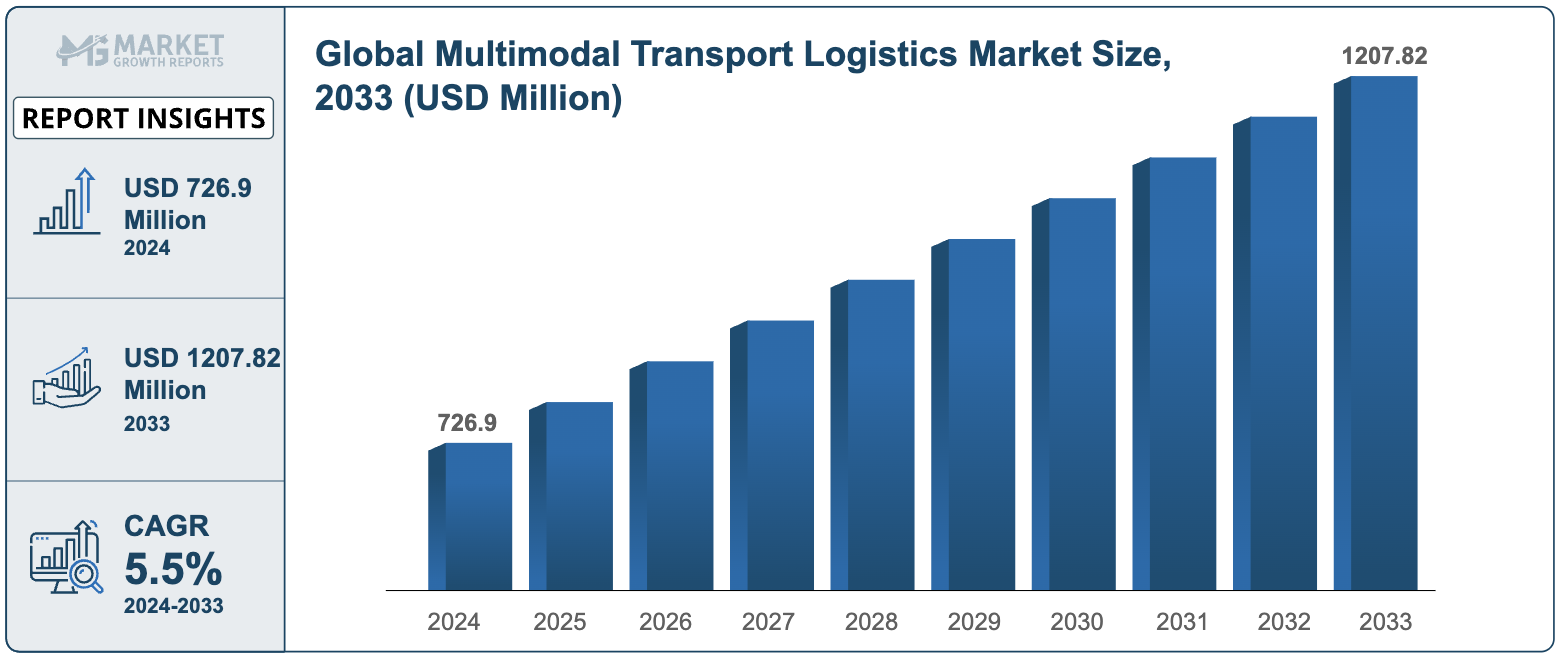
Image Source: Market Growth Report
Europe represents one of the most advanced multimodal markets globally. It accounts for roughly 29% of the global multimodal transport logistics market, with extensive rail, sea, and inland waterway networks moving billions of tonnes of freight annually according to Industry Research (2024).
Key characteristics of the European logistics environment include:
In this mature market, visibility across modes and interoperability between systems are essential. Tools that consolidate multimodal tracking, harmonize documentation, and optimize route planning help cut through regulatory complexity and support sustainability goals — all conditions where a centralized digital platform like Loopo empowers operations by unifying data and decisions in one place.
The Middle East & Africa region is rapidly expanding its role in global logistics, accounting for about 9% of global multimodal activity, with significant investment in ports and inland corridors in countries like the UAE and Saudi Arabia according to Industry Research (2024).
Regional dynamics include:
Development of new dry ports and railway links that improve multimodal connectivity, but uneven digital integration across corridors.
Trade‑driven infrastructure growth under national visions, such as Saudi Vision 2030, aimed at elevating multimodal freight efficiency and capacity.
Increasing adoption of digital transportation platforms, with an estimated 28% of regional logistics providers implementing platform technologies for tracking, customs, and route planning in recent years according to 360 Research Reports.
In a rapidly developing multimodal market, the ability to connect emerging transport nodes digitally, support real‑time load and capacity coordination, and integrate inland and strategic port operations becomes a competitive advantage. Platforms that blend visibility with optimization and data integration—especially where physical infrastructure is developing—help logistics teams reduce fragmentation and friction.
APAC is currently the largest regional multimodal market worldwide based on Market Growth Report (2023), handling more freight tonnage than any other region and projected to remain the fastest‑growing segment of multimodal transport.
Key APAC characteristics include:
Loopo helps logistics teams manage high-volume multimodal shipments with end-to-end visibility, predictive analytics, and automated capacity optimization, improving reliability and reducing operational risk.
Multimodal freight is becoming faster, more complex, and increasingly data-driven. AI and automation are enabling logistics teams to optimize routes, anticipate delays, and coordinate shipments across sea, rail, and road with precision.
At the same time, sustainability is critical. Intelligent capacity planning and optimized routing help reduce empty runs, consolidate shipments, and lower carbon emissions.
With its scalable, flexible, and integrated platform, Loopo empowers companies to manage complex multimodal operations efficiently, maintain visibility across the supply chain, and stay ahead in a rapidly evolving global logistics landscape.