


Products
Industries
LinkAige
About


Container congestion has become a persistent challenge across global seaports, disrupting container handling efficiency and the reliability of container logistics. While yard congestion is often treated as the core problem, the underlying causes of port congestion increasingly originate upstream, at the dock.
In many ports, performance constraints are no longer driven by equipment capacity alone. Operational gaps such as fragmented yard management, ineffective yard planning, and limited coordination within the terminal operating system weaken the connection from berth to yard. As a result, dock operations optimized for quay crane productivity frequently overwhelm yard capacity, extending container dwell time in ports and increasing overall port operations costs.
To address these challenges, smart seaports are shifting focus from isolated automation to container flow optimization, improving dock-to-yard coordination to reduce delays and deliver more predictable port performance.
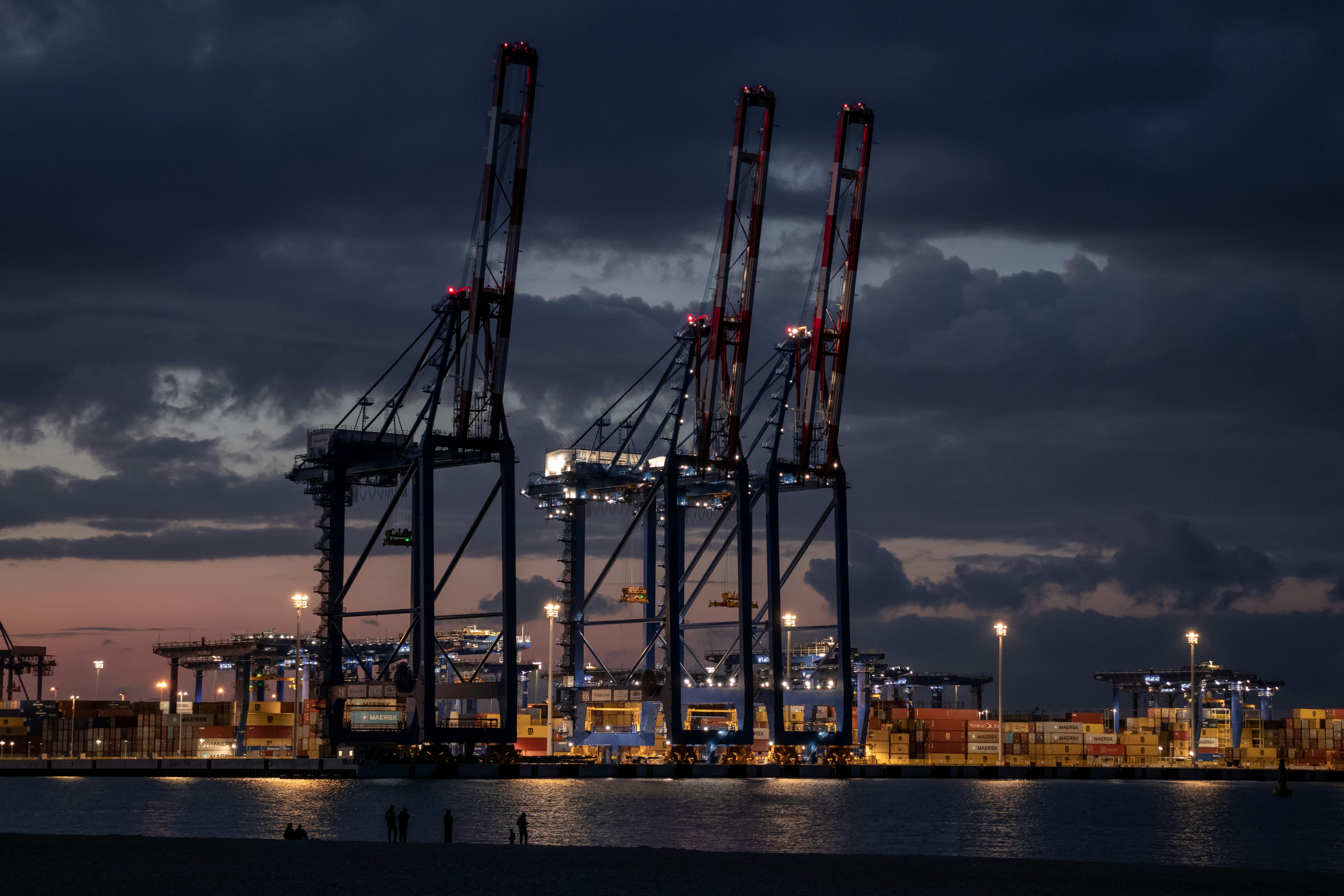
Photo by Valentino Gemelas on Unsplash
While the symptoms of container congestion look similar across ports, the operational constraints behind them differ sharply by region. In both mature and fast-expanding seaports, congestion is rarely caused by a single failure in yard capacity, but by how effectively dock operations, transport links, and yard decisions are coordinated. Examining regional differences helps explain why container congestion often starts at the dock rather than in the yard.
European seaports operate under a unique set of structural constraints that directly affect container handling efficiency and yard management. Logicall (2025) notes that container yards in major European ports, including Rotterdam, Hamburg, and Antwerp, are frequently full, contributing to long berth waits and upstream congestion. Strict environmental regulations further restrict operational flexibility, while legacy yard planning rules were not designed for today’s volatile container logistics environment.
These constraints translate into conservative stacking policies, strict zoning requirements, and limited tolerance for operational deviation. Combined with fluctuating vessel schedules, alliance vessel changes, and occasional industrial actions, container dwell time in ports becomes longer and harder to manage. Yard congestion, therefore, is often a coordination problem rather than purely a capacity issue, triggered by insufficient synchronization from berth to yard within the terminal operating system.
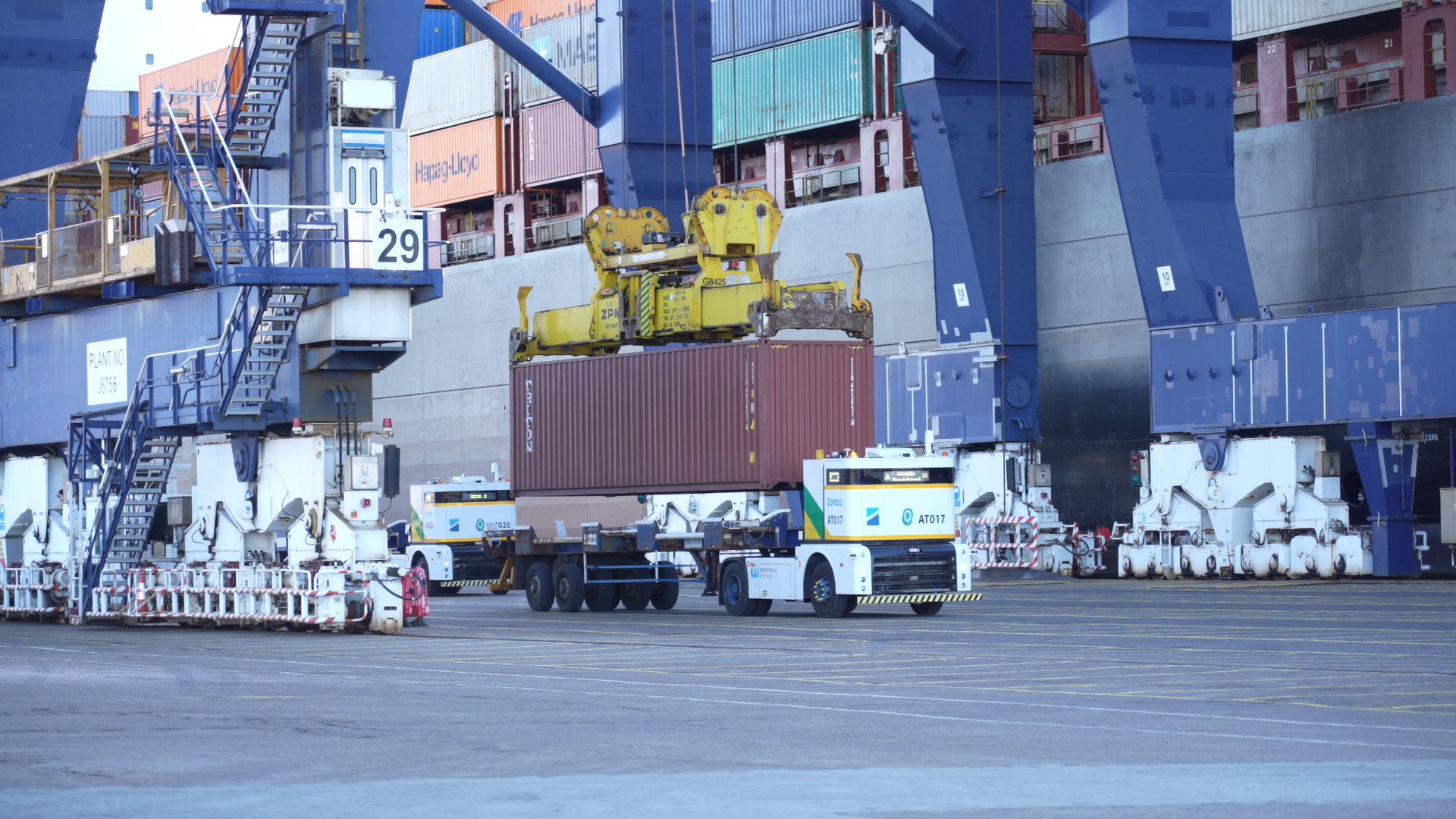
At the Port of Felixstowe, Westwell deployed autonomous electric Q-Trucks integrated into the terminal, enabling seamless coordination between autonomous and manned vehicles. This innovation enhanced real-time synchronization from berth to yard, improving container flow, reducing congestion, and increasing the stability and efficiency of quay crane operations — all without the need for additional yard space.
Middle Eastern seaports handle some of the region’s largest container volumes, with hubs such as Jebel Ali processing over 14 million TEUs in 2023. Beyond scale, ports face operational pressures from vessel schedule changes, transshipment flows, and geopolitical tensions, which increase variability in container arrivals and challenge yard management and port operations.
Even well-ranked terminals must continuously refine yard planning, resource allocation, and real-time decision-making to prevent yard congestion from bottlenecking container handling. Volatility in vessel arrivals and inland pickup demand makes it essential for ports to maintain robust coordination from berth to yard through an effective terminal operating system, ensuring smooth container flow and reduced dwell time.
Leading Middle Eastern terminals are now investing in smart operational systems and container flow optimization, aligning berth discharge with yard capacity and inland transport to sustain high throughput while maintaining operational resilience.
The pursuit of maximum quay crane speed is no longer sufficient to optimize terminal throughput. Increasing vessel sizes, unpredictable schedules, and volatile inland transport flows have made traditional metrics of speed less effective, as upstream or downstream delays can quickly create yard congestion and disrupt container flow.
Modern smart ports prioritize containers based on real-time logistics demand, dynamically deciding which containers move first from berth to yard and which can wait. This strategic sequencing integrates berth operations, autonomous transport, and yard management, creating a coordinated chain rather than isolated speed improvements.
By focusing on timing and coordination rather than raw throughput, terminals reduce container dwell time in ports, prevent bottlenecks in yard areas, and ensure that port operations remain stable even under fluctuating demand. The result is higher overall efficiency without the need for expanding physical yard capacity, making container handling both faster and more predictable.
Efficient dock-to-yard operations require not just speed, but complete visibility and coordination across all assets. Westwell’s Reewell port scheduling platform optimizes routing for autonomous truck fleets, ensuring containers are moved efficiently from berth to yard while minimizing idle time and avoiding congestion.
Complementing this, the AdaOps digital operations platform ensures that all equipment is fully monitored and operationally healthy, a prerequisite for any intelligent scheduling solution. As a collaborative layer to the terminal operating system (TOS), AdaOps leverages asset digitization and full-domain data integration to provide essential operational support, enabling ports to maintain continuous, reliable container handling even under fluctuating demand. By combining intelligent scheduling with real-time equipment insights, terminals can achieve smoother container flow, reduced container dwell time in ports, and optimized yard management without expanding physical space.
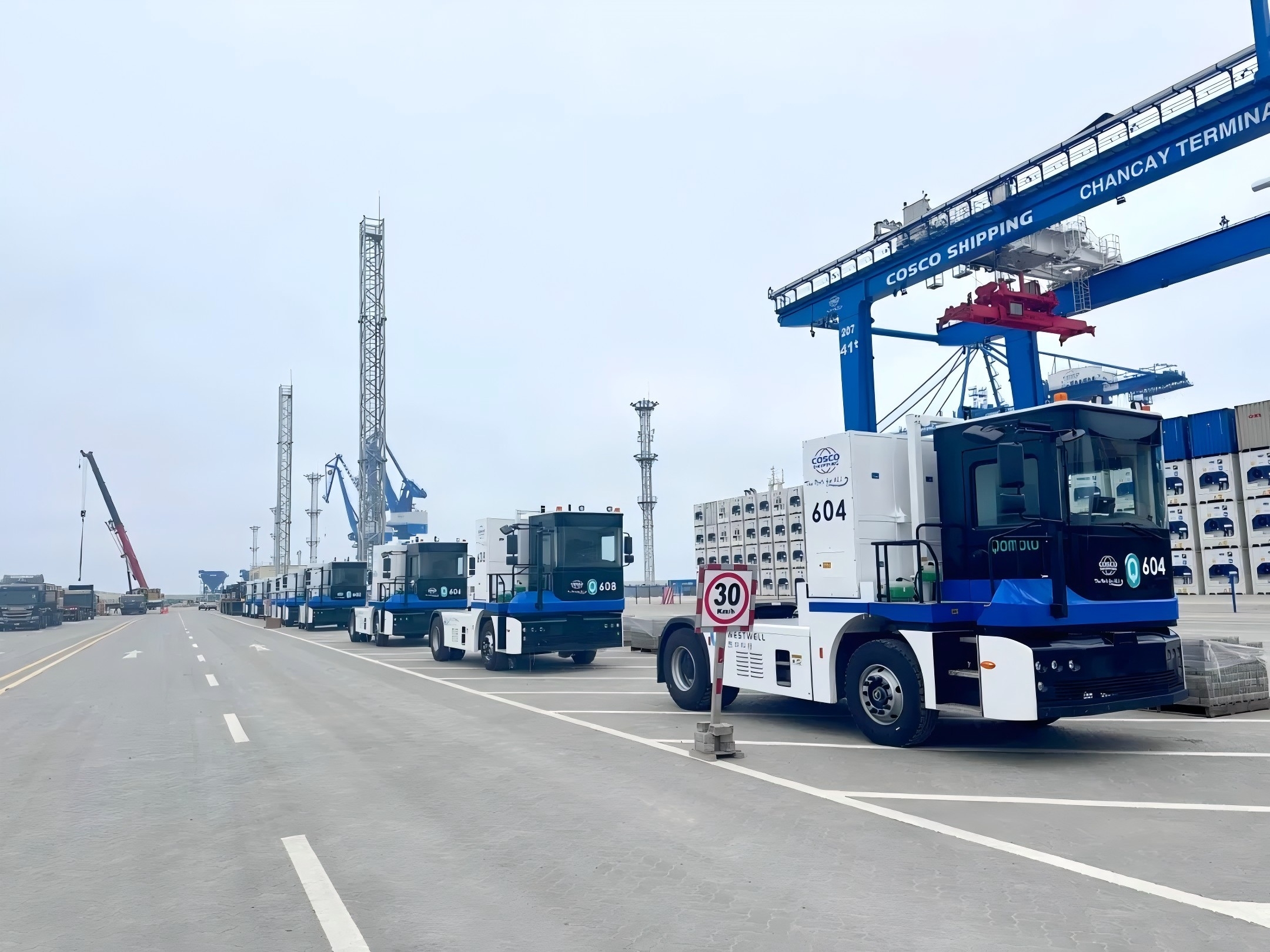
At the Port of Chancay, Westwell’s AdaOps platform works in tandem with the Q-Box terminal to monitor vehicle status, battery consumption, work instructions, and container positions in real time. This integration enables intelligent scheduling and provides end-to-end visibility, enhancing decision-making efficiency and operational transparency. By connecting with the TOS system, AdaOps ensures that all electric manned assets are fully coordinated, supporting smooth dock-to-yard operations, optimizing container flow, and reducing yard congestion.
Optimized dock-to-yard operations go beyond faster crane speeds—they fundamentally transform how shipping lines, cargo owners, and terminal operators manage container logistics. By aligning berth operations, yard management, and transport flows, ports can deliver predictable, efficient, and coordinated container handling, benefiting every stakeholder in the supply chain.
For shipping lines, smoother container flows enable more reliable vessel scheduling and stowage planning. When berth-to-yard coordination is optimized, carriers can allocate cargo space more efficiently, reduce waiting times at congested ports, and improve vessel turnaround predictability. This operational certainty helps shipping lines lower scheduling risks and increase overall fleet efficiency without needing additional port capacity.
Cargo owners gain increased visibility and control over their shipments. With accurate real-time information on container location, yard status, and pick-up timing, they can plan inland transport more effectively, avoid idle storage, and minimize disruptions to downstream logistics. Even during peak periods or fluctuating vessel arrivals, optimized sequencing ensures containers move efficiently, helping cargo owners maintain reliable delivery schedules and reduce supply chain costs.
Terminal operators benefit indirectly from improved coordination across the port. By reducing container rehandling, maximizing yard space utilization, and synchronizing equipment and transport operations, terminals can increase overall throughput without expanding physical infrastructure. This not only supports smoother operations for shipping lines and cargo owners but also elevates the port’s role from a simple handling facility to a dependable logistics hub capable of supporting complex global supply chains.
Modern seaports demonstrate that operational efficiency is driven less by equipment or yard size and more by how container flow is managed. Through smart sequencing and integrated platforms like Reewell and AdaOps, terminals can coordinate berth-to-yard operations, reduce yard congestion, and ensure smoother, predictable container handling.
This focus on flow enables shipping lines to plan vessel operations more reliably, allows cargo owners to schedule inland transport with confidence, and helps terminal operators maximize efficiency without physical expansion. Across regions, ports that prioritize coordinated flow over raw assets set the benchmark for efficiency, reliability, and competitiveness in global logistics.