


Products
Industries
LinkAige
About


While automation in manufacturing has revolutionized the shop floor, factory automation often hits a wall at the loading dock. Despite accelerating industrial automation trends and the rise of robotics in manufacturing, many logistics parks still rely on manual handoffs once a product leaves the line.
This is the "Automation Paradox": you have a high-tech interior, but a manual "Gate Gap." These logistics bottlenecks in factories and hubs throttle manufacturing efficiency Improvements and leave ROI on the table. To bridge this, the industry is shifting toward human machine collaboration—integrating warehouse automation and automated palletizing systems into a single, seamless ecosystem that doesn't stop at the perimeter.
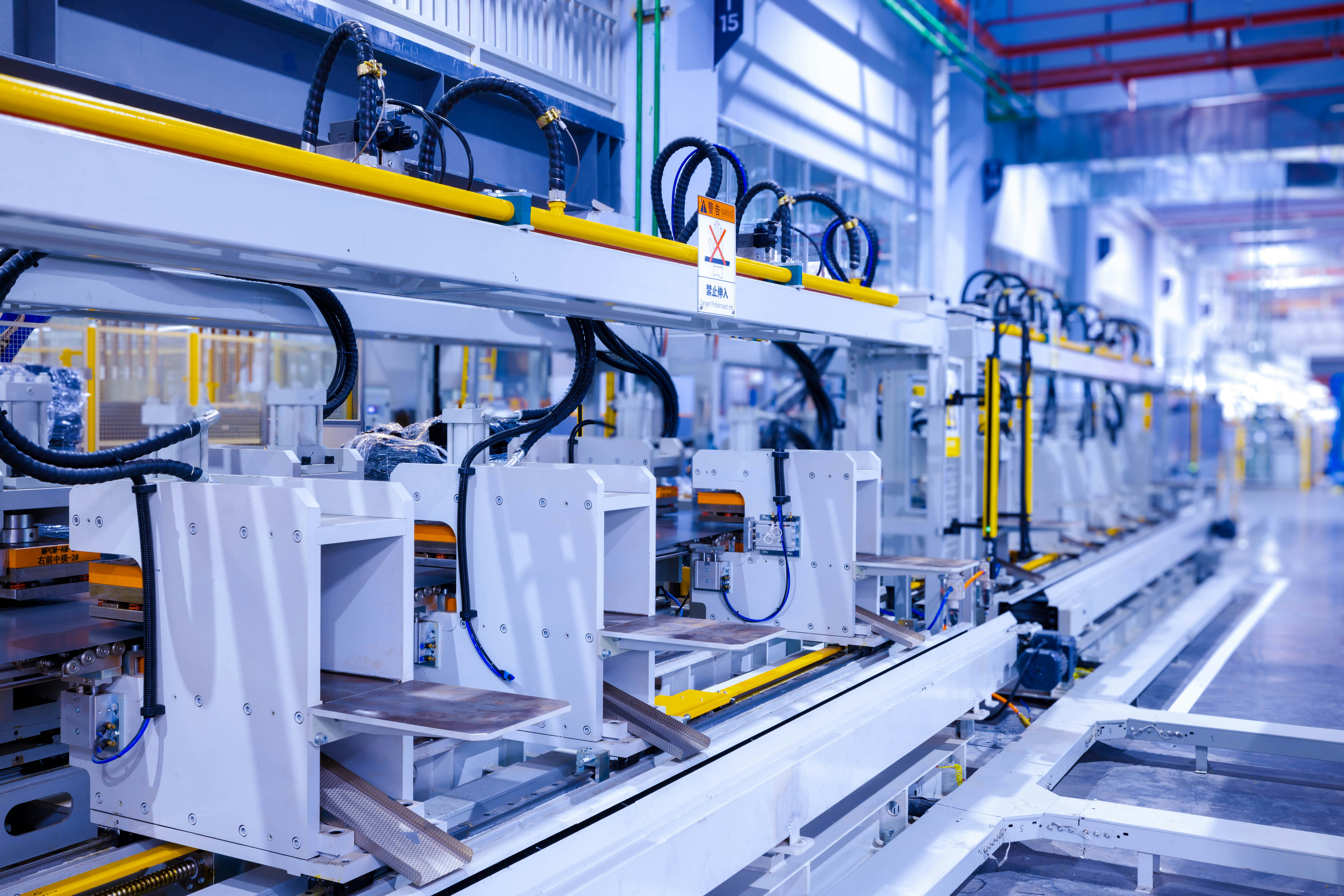
Photo by Homa Appliances on Unsplash
In 2026, the global smart manufacturing market has crossed a $446 billion valuation, signaling a shift where automation is no longer an "innovation project" but an operational baseline. While the International Federation of Robotics (IFR) reports a record 2 million industrial robots now active in factories worldwide, a significant "automation paradox" remains. Production lines and warehouses have achieved high levels of maturity — with global warehouse robot installations exceeding 4.7 million units—yet the "connective tissue" between these zones, specifically the logistics gate, often still operates as a manual stronghold, creating a persistent bottleneck in otherwise high-tech facilities.
China continues to anchor this global expansion, with its domestic factory automation market projected to hit a massive $182 billion this year. Driven by strategic mandates and a relentless push for supply chain self-reliance, Chinese enterprises are rapidly integrating AI and IIoT to bridge productivity gaps. However, even in this hyper-automated environment, a sharp disparity exists: while sectors like automotive and electronics boast high internal automation rates, the physical transition at the logistics gate—including material handling and automated palletizing—remains the final frontier for achieving true manufacturing efficiency improvements.
Despite the surge in industrial automation trends, many facilities suffer from a "production-logistics mismatch." You likely have a million-dollar robotic line that feeds into a manual clipboard-and-pallet-jack system.
How to bridge automation gaps starts by acknowledging these three friction points:
A gap at the gate isn't just a minor delay; it’s an overall drag on your ROI. The impact is felt across four critical dimensions:
To solve this, we move toward human machine collaboration. This isn't just about "buying a robot"—it's about creating a collaborative ecosystem.
In this model, automated palletizing systems and AI-driven security cells handle repetitive, high-volume tasks. Meanwhile, human operators act as "System Orchestrators," using real-time anomaly detection in manufacturing to manage exceptions and optimize the flow. This partnership is what finally achieves the manufacturing efficiency improvements that pure automation alone cannot deliver.
To see human-machine collaboration in action, look at the Hong Kong eHub Smart Air Cargo Center. As a critical node in the Cainiao global network, this facility recently faced a major challenge: handling high-volume parcel surges that traditional manual methods couldn't sustain. By deploying Westwell’s fully automated “Security Screening → Palletizing” workflow, the hub bridged the gap between arrival and dispatch, setting a new benchmark for scaling factory automation systems.
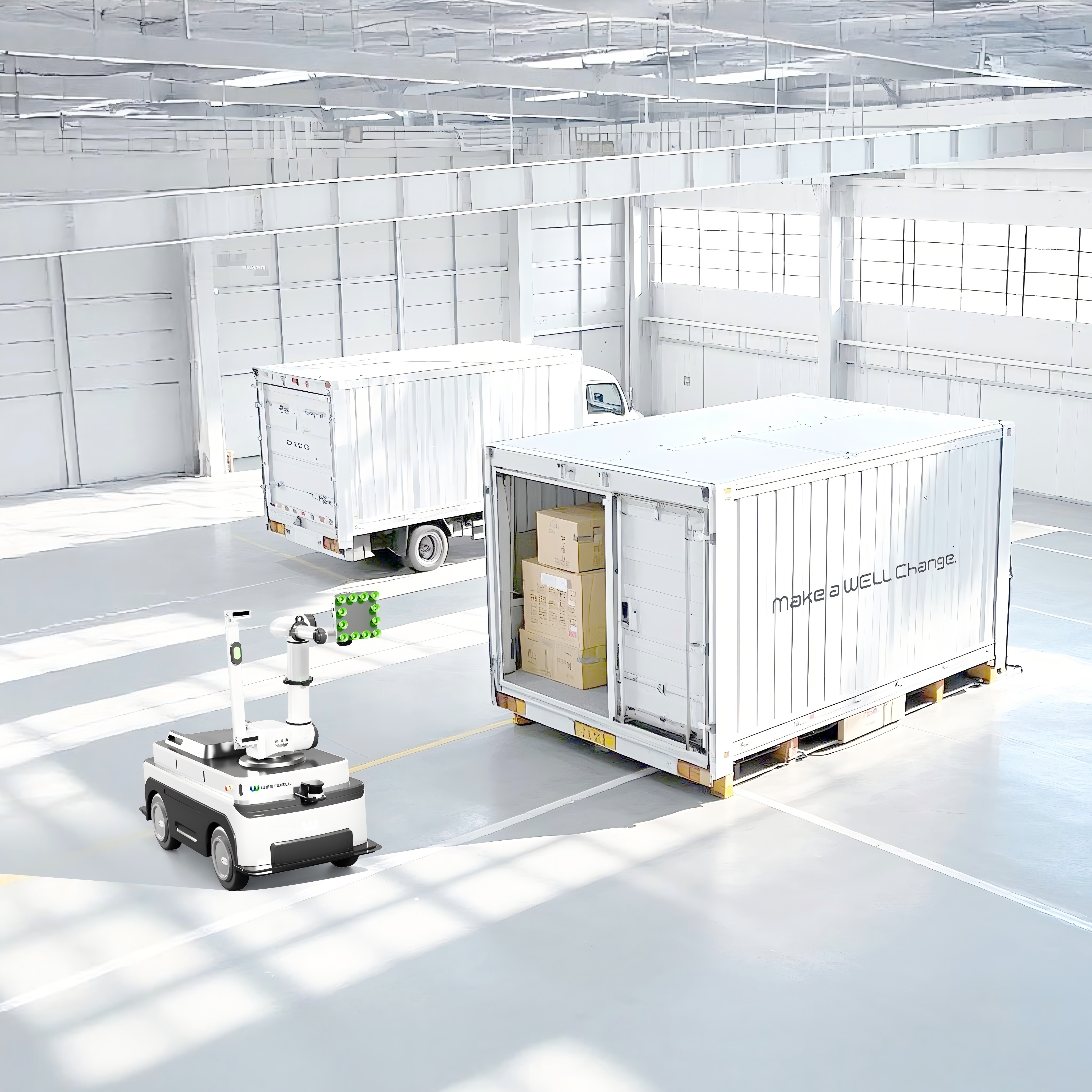
The technical core of this shift is the Westwell Well-Bot, an AI-driven robotic system that replaces manual guesswork with millisecond-level precision. Unlike standard automated palletizing systems that struggle with the variability of e-commerce packaging, the Well-Bot utilizes AI vision and ±0.05 mm repeatability to handle irregular and "bulging" parcels. By using flexible grippers and AI-optimized stacking algorithms, the system ensures that even complex, mixed-load pallets remain stable during transport—eliminating the safety risks and delays associated with manual stacking.
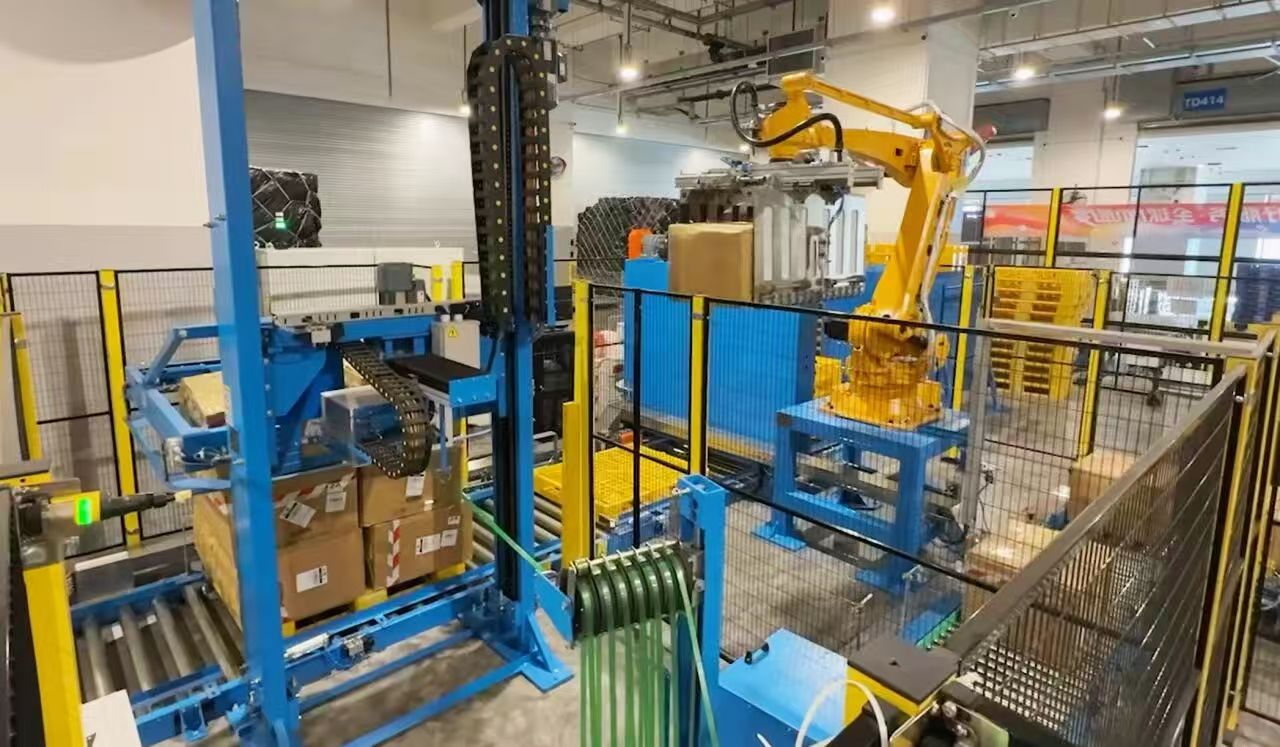
The results from pilot operations, including a full-load mission for a Mexico charter flight, prove the power of manufacturing efficiency improvements. The system processed nearly 100 tons of cargo—hundreds of thousands of parcels—in just 7 hours, boosting overall efficiency by 20%. By integrating real-time anomaly detection, the system identifies and flags mismatched cargo instantly, ensuring "parcel-to-bill" consistency while remaining fully unmanned. This shift to an autonomous ecosystem ensures that the "Gate Gap" is closed, turning a former bottleneck into a high-speed, transparent gateway.
The "Logistics Gap" at the factory gate is the final hurdle in the race for total automation in manufacturing. As we have seen, even the most advanced production lines lose their competitive edge if they are throttled by manual handoffs and fragmented data at the loading dock. Industrial automation trends are no longer just about what happens on the assembly line; they are about how seamlessly a product moves from the line to the global market.
By embracing human-machine collaboration, enterprises can finally move beyond isolated "islands of automation." Systems like the one deployed at the Cainiao eHub prove that integrating automated palletizing systems with AI-driven vision and real-time anomaly detection in manufacturing isn't just a technical upgrade—it’s a strategic necessity. This approach allows for scaling factory automation systems in a way that is flexible, safe, and significantly more productive.
The future of factory automation belongs to those who view the loading dock not as a perimeter, but as a bridge. By closing the logistics gap, companies can achieve the manufacturing efficiency improvements required to lead in an increasingly autonomous world. The technology to bridge this gap exists today; the only question is how quickly your organization will move to close it.

