


From June 14 to June 16, 2022, TOC Europe was held in Rotterdam, the Netherlands. As a leading solution supplier in the field of smart ports, Westwell is glad in the exhibition to introduce its application cases of smart ports for experts and exhibitors from all over the world in the industry, including the achievements of self-developed Q-Truck to build the business operation of autonomous driving vehicles.
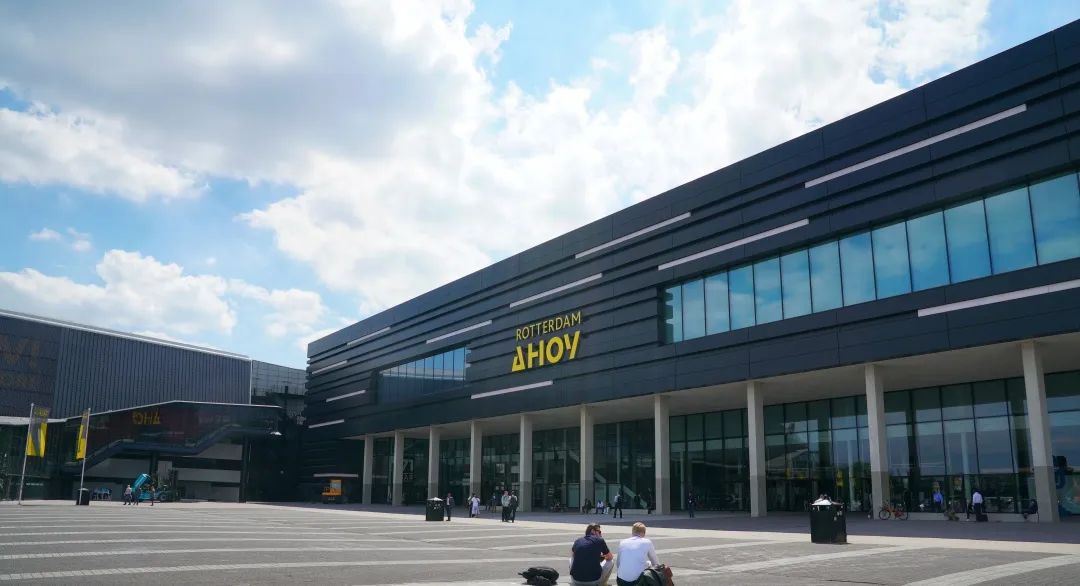
(Photo) TOC Europe held in Ahoy Centre, Rotterdam
TOC Europe serves as an annual gathering for container supply chain enterprises. Since 1976, every mid-June, global industry professionals converge to learn and discuss. TOC has evolved into the premier platform for technical exchanges among port operators and their suppliers. Over the last two years of TOC Europe's hiatus, global port operations have struggled with port congestion, lagging transport capacity, excessive burden on manual truck drivers, and insufficient transportation capabilities.
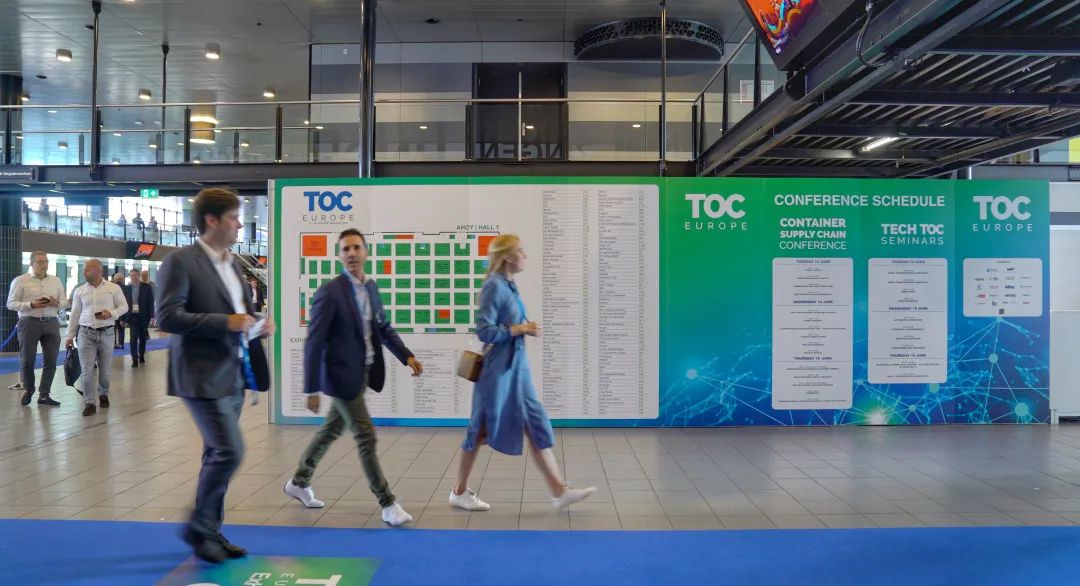
(Photo) TOC Europe returns to offline after two years
The COVID-19 pandemic has significantly restrained and impacted the global economy and trade. Nevertheless, various innovative changes within the container supply chain are highlighting the efficiency boost brought by new technology as a crucial production element. In recent years, global announcements on achieving net-zero emissions have raised higher requirements for green and low-carbon development in global port enterprises.
Industry experts are looking forward to leveraging new technologies like 5G, Internet of Things, AI, and more in port scenarios to reduce labor consumption, increase operational efficiency, lower operating costs, and achieve lean management goals for ports. At the TOC exhibition, professionals from global ports, terminals, shipping, third-party logistics, and related equipment suppliers gathered to explore ideas, services, and technologies aimed at enhancing operational efficiency in maritime business.
During this TOC exhibition, we showcased multiple cases of autonomous driving commercial deployments, including our flagship product, the Q-Truck, a fully autonomous driving commercial vehicle. Our booth attracted detailed inquiries from industry clients globally, including those from Sweden, Germany, the Netherlands, Malaysia, and clients involved in the China-Europe rail network.
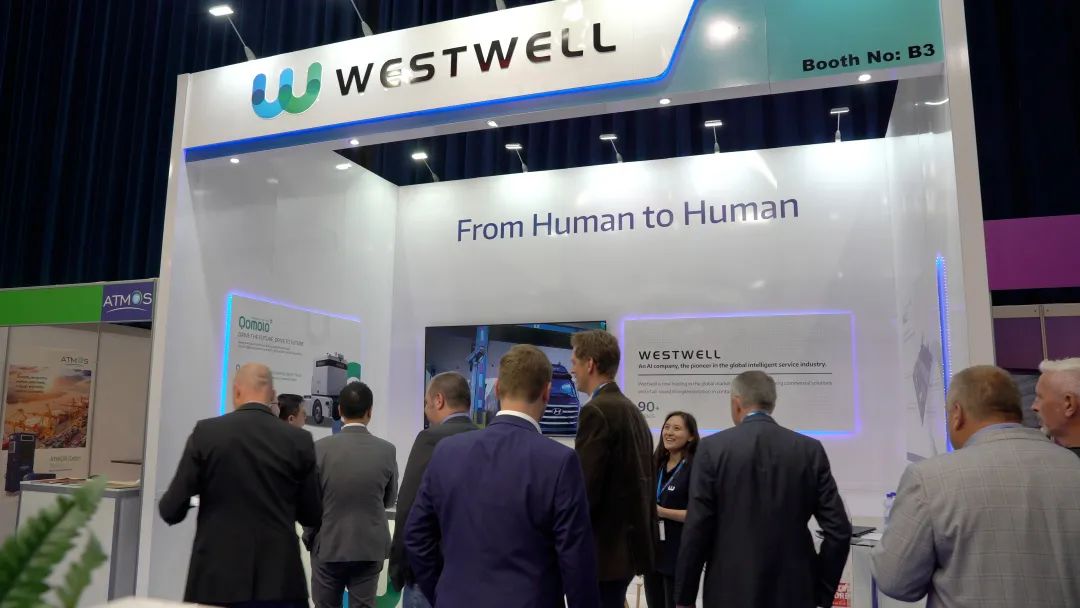
(Photo) Visitors flocking to Westwell's booth
Numerous industry users were keenly interested upon learning about the Q-Truck as the world's first mass-produced autonomous driving commercial project. Since 2020, it has been deployed at ports such as Laem Chabang Port in Thailand and Phase II Terminal at COSCO Shipping Ports in Abu Dhabi Khalifa Port. This solution, which does not require delineated restricted areas, physical barriers, or segmentation based on vessel types, received widespread approval from attendees. They believe it's particularly suitable for rapidly upgrading traditional container terminals globally, enhancing overall operational efficiency while simultaneously reducing energy consumption across the entire scenario.
The new Terminal D of Laem Chabang Port is one of the intelligent upgrading projects of “Thailand 4.0” national strategy. Hutchison Port and Westwell make joint efforts to develop AI cooperation in global ports. Westwell has taken full responsibility of the automation construction project of Terminal D autonomous driving. Since April 2020, Q-Truck autonomous driving fleet has been operating in Thailand terminals for 21 months in total with 120,000 TEU of ship operation containers. For the first time in the world, the autonomous driving fleet has been completely delivered to users for their own operation now. In intelligent projects of autonomous driving vehicles, drivers can be liberated from the heavy task of three shifts in 24 hours, and a new labor post--intelligent operator of the autonomous driving vehicle--is created to show the scientific care.
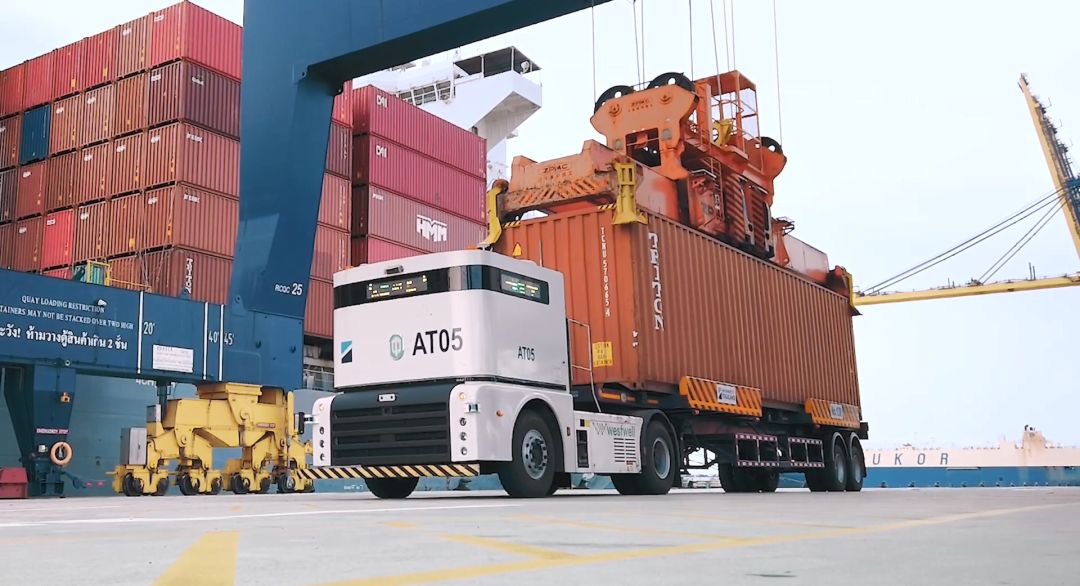
(Photo) Q-Truck autonomous driving fleet operating at a port in Thailand
In addition, in the second half of 2020, Westwell officially starting a new mode of “agent operation” for commercial autonomous vehicles after concluding a contract with Q-Truck fleet of COSCO Shipping Abu Dhabi (CSP Abu Dhabi). From March 2021 to the present, Q-Truck fleet continues to operate at Phase II terminal of Khalifa Port in Abu Dhabi Ports.
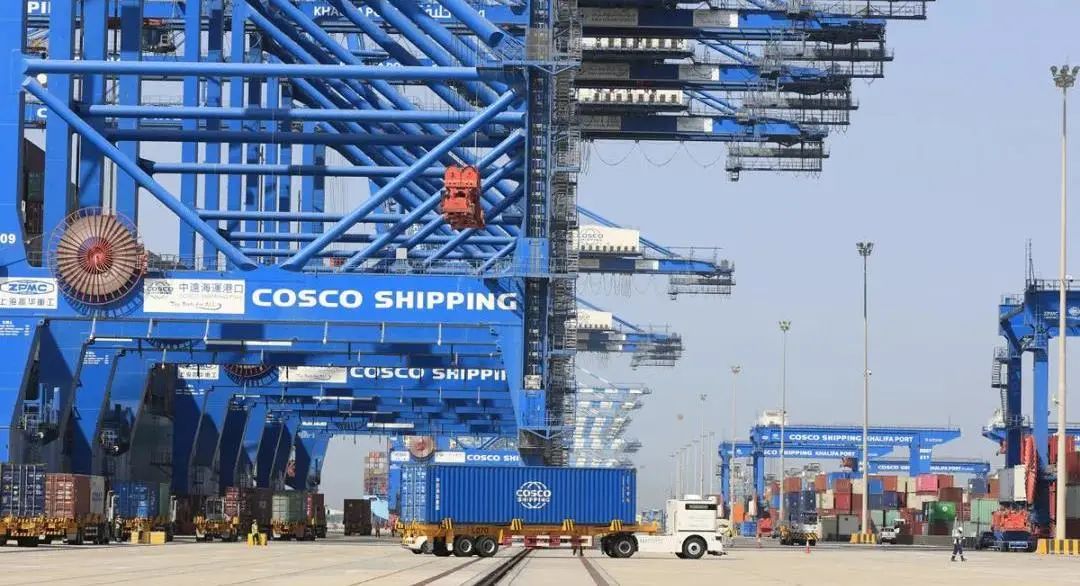
(Photo) Q-Truck operating at Phase II Terminal at Khalifa Port in Abu Dhabi
Meanwhile, Westwell also places special emphasis on using technology to empower green and sustainable development at ports. The Q-Truck adopts new energy sources capable of reducing individual vehicle carbon emissions by 66%. Currently, a single Q-Truck consumes 2.6 kWh/km, reducing approximately 8 tons of CO2 emissions annually per vehicle, equivalent to planting over 900 trees each year.
Addressing the pain points of large battery capacity and slow charging in electric commercial vehicles, Westwell introduced the intelligent swappable Q-Truck heavy truck this year. Operating fully automatically, it only takes 6 minutes to autonomously replace the battery, reducing the charging time from 2 hours to just 6 minutes.
Westwell achieves precise and efficient transportation through this "green+ intelligent" approach, reshaping the entire process from closed-loop autonomous driving scenarios. This continuous innovation in creating commercial value through autonomous driving has earned global recognition. Presently, Westwell's operations span across more than 90 international ports and large logistics parks.
Kenny, Founder and CEO of Westwell, commented, “From redefining the Q-Truck as a fully autonomous driving commercial vehicle to pioneering the ‘agent operation of autonomous driving commercial vehicle' model, Westwell has always centered around ‘people'. We continuously expand, optimize, and seek the best solutions for the relationship between 'people' and 'intelligence'. In the future, Westwell will continue to leverage technology to empower the circulation and operations of production and life elements, assisting port enterprises in achieving cost reduction, increased efficiency, and safe operations. We aim to lead the world's port intelligence upgrade and low-carbon development in an entirely new mode.”


