

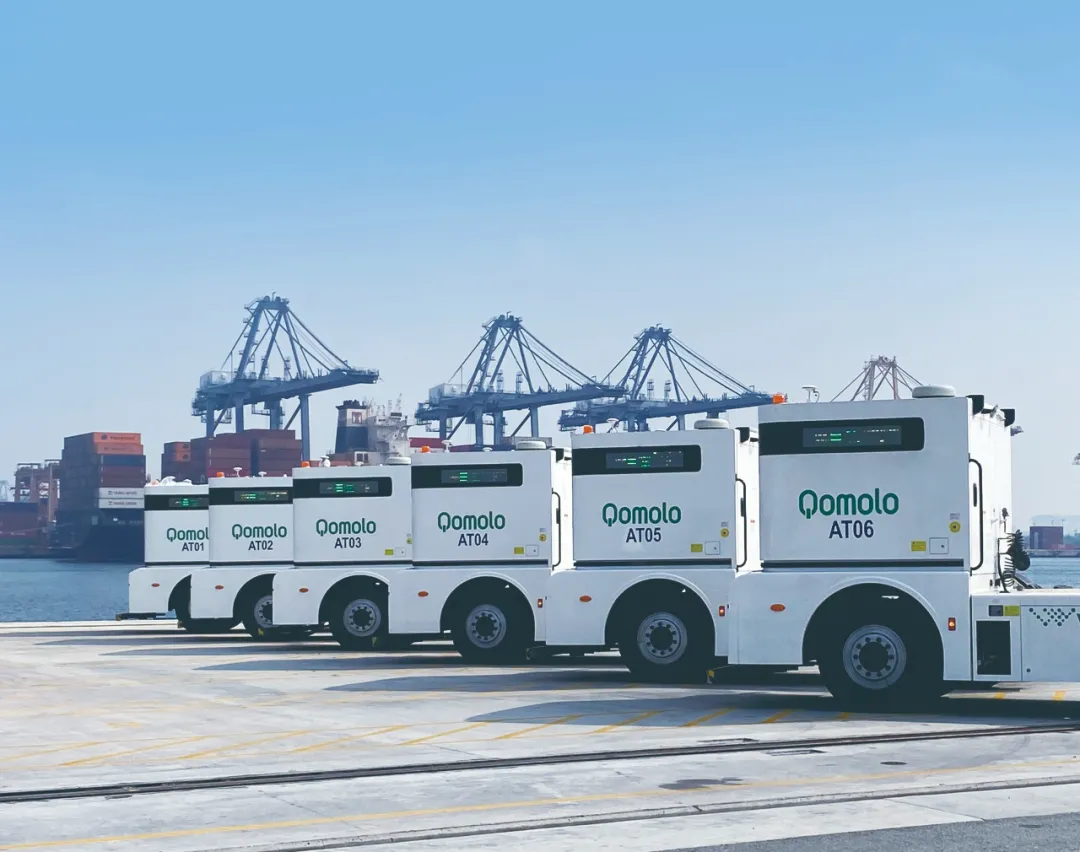
What constitutes a true port autonomous driving truck? As autonomous vehicles enter various scenarios and discussions surrounding the gradual removal of safety personnel emerge, Westwell had a daring idea as early as 2017—fully eliminate the Q-Truck cab. This bold move allows us to see the real production value that autonomous driving brings to the industry.
In recent years, the enthusiasm for autonomous driving within both the technology industry and capital market has centered around three key topics: Robotaxi, autonomous driving trucks on main logistics routes, and autonomous driving in specific scenarios. While the excitement persists, the focus has shifted from the initial popularity of Robotaxi to the pursuit of autonomous driving trucks on main logistics routes, and finally to the gradual adoption of autonomous driving in specific scenarios that offer faster implementation and quicker business returns.
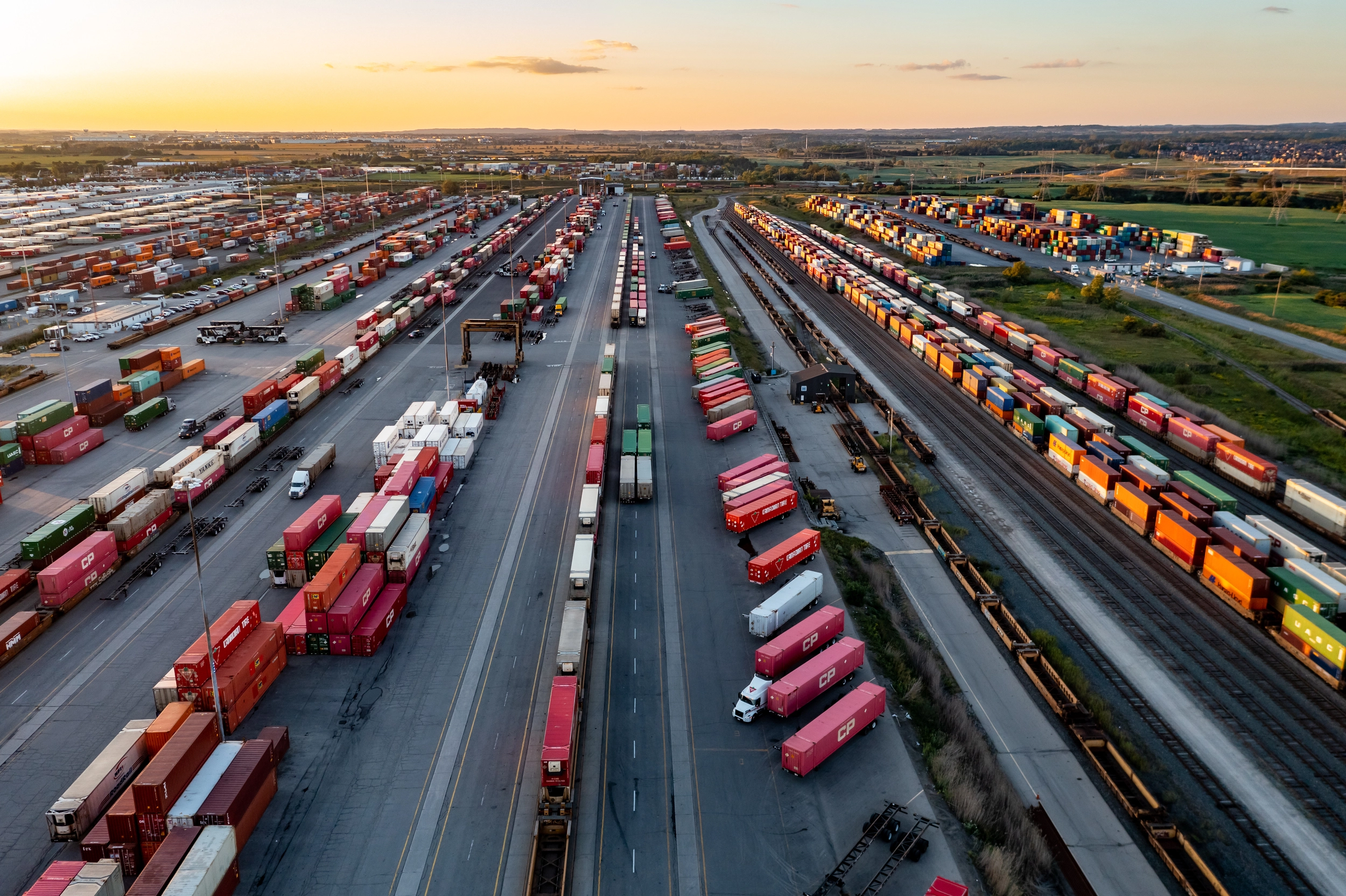
Ports, with their semi-closed and highly standardized environments, are considered one of the best scenarios for rapidly realizing digital transformation. A variety of factors converge to drive this process both within and beyond the ports industry.
For ports, does the entrance of new players representing the most cutting-edge technologies truly usher in an era of drastic change within the industry? In particular, how will the increasingly popular autonomous driving technology accelerate the port automation process?
Recently, Westwell took the lead in helping Thai customers of Hutchison Ports achieve the world's first AI mixed-traffic truck terminal operation, matching the efficiency of human drivers. This case study provides valuable insights into the integration of autonomous driving capabilities across the whole port production chain.
A New Breed of Cab-less Autonomous Driving
"For Westwell, the initial reason for choosing autonomous driving vehicles was to address the challenge of horizontal container transportation in ports, not merely for the purpose of pursuing autonomous vehicles. That's because the market always drives the direction of technology," explains a representative. Ports essentially depend on human effort; existing human-operated practices present safety risks and costs that continue to rise.
In 2016, Westwell's first product was an AI system aimed at facilitating intelligent cargo-handling at ports. However, constant communication and practice with customers revealed an increasing need for autonomous driving. High-throughput ports that typically require 24-hour operations necessitate a large number of experienced drivers; as a result, labor costs at many ports account for 70% of total costs. Moreover, due to high-altitude operations and fatigue-related risks, conventional ports have a high rate of safety incidents. Truck drivers face substantial physical and mental strain due to high-intensity work conditions, which directly impact both the efficiency and safety of port transportation.
Recruiting truck drivers for ports has become increasingly challenging in recent years, particularly in the wake of the pandemic. Key figures from logistics firms at various ports have stated that the number of truck drivers hasn't yet recovered to pre-pandemic levels, severely impacting port logistics operations.
Westwell established an autonomous driving team towards the end of 2016. In January 2018, it completed the first autonomous driving truck operation at Zhuhai Port, with an actual delivery container. Despite retaining the cab, it was vacant during actual operation. The vehicle independently completed the entire process, from the yard to the container terminal, following the established procedure.
During frontline terminal tests, the team gained a comprehensive understanding of the port production process and appreciated the hard work of frontline drivers. In industries engaged in autonomous driving research, vehicles still requiring debugging personnel or safety personnel cannot truly liberate frontline workers from their strenuous duties, nor reduce the vehicles' operating costs. Furthermore, how can the safety of these additional personnel be assured? Such contemplation sparked the "no driver seat" objective, leading the team to repeatedly scrutinize and refine the underlying logic and technical details of product design.
In September 2018, Westwell officially launched Qomolo, its brand of autonomous vehicles. The debut of Q-Truck, a “cabless and pure electric” concept for a full-time, autonomous, new energy heavy truck, introduced the industry to a new product definition. By 2019, Q-Truck reached engineering mass production, integrating Westwell's fourth-generation self-developed vehicle-level steer-by-wire product, compliant with the Automotive Electronics Council (AEC) standards. By 2020, Q-Truck mass production vehicles reached international markets.
The World's First Mixed Traffic Terminal with Artificial Intelligence Trucks
Currently, Westwell's Q-Truck lineup is operational at the Laem Chabang Port in Thailand and the Phase II Terminal of Khalifa Port in Abu Dhabi, UAE.
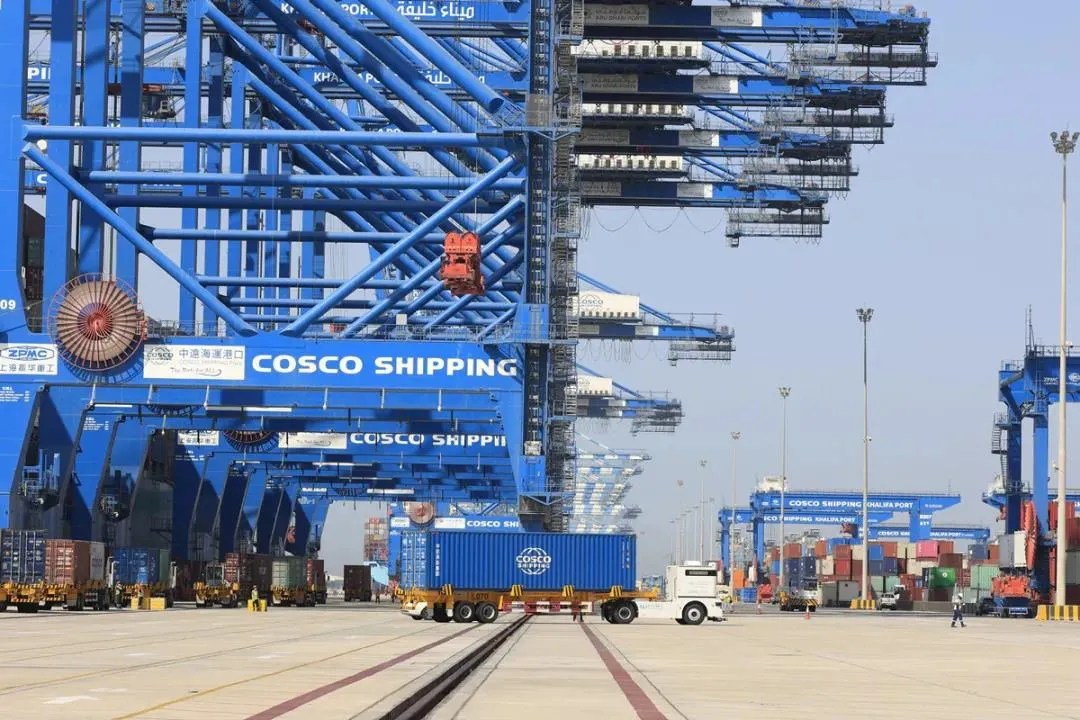
(Photo) Q-Truck at CSP Abu Dhabi Terminal
The Q-Truck fleet in Thailand's Laem Chabang port is the world's first to implement a combination of human-operated and autonomous driving in daily operations. From October 2020 to May of this year, Westwell's autonomous driving Q-Truck fleet has safely transported more than 23,243 TEU containers in Thailand's Laem Chabang.
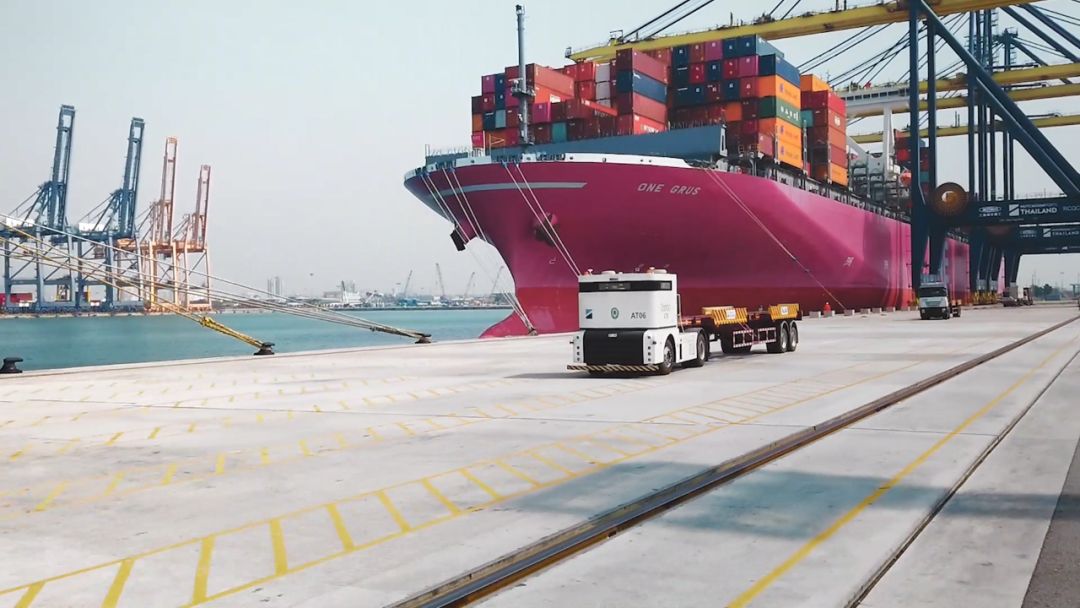
The fleet has aided Hutchison Port Thailand in realizing the world's first mixed traffic fleet operation management without isolation, embracing all types of ships, including Mother Vessels. The ultralong battery life enables the fleet to take part in the assembly tasks for about 4,000 containers of the largest ship's cargo without interruption. The operational efficiency matches the average labour efficiency of 26 moves/hour and is continually rising.
Apart from seaports, Q-Truck is also expanding into other logistics scenarios such as land ports. This year, the lineup has achieved commercial operation at Xinjiang International Land Port.
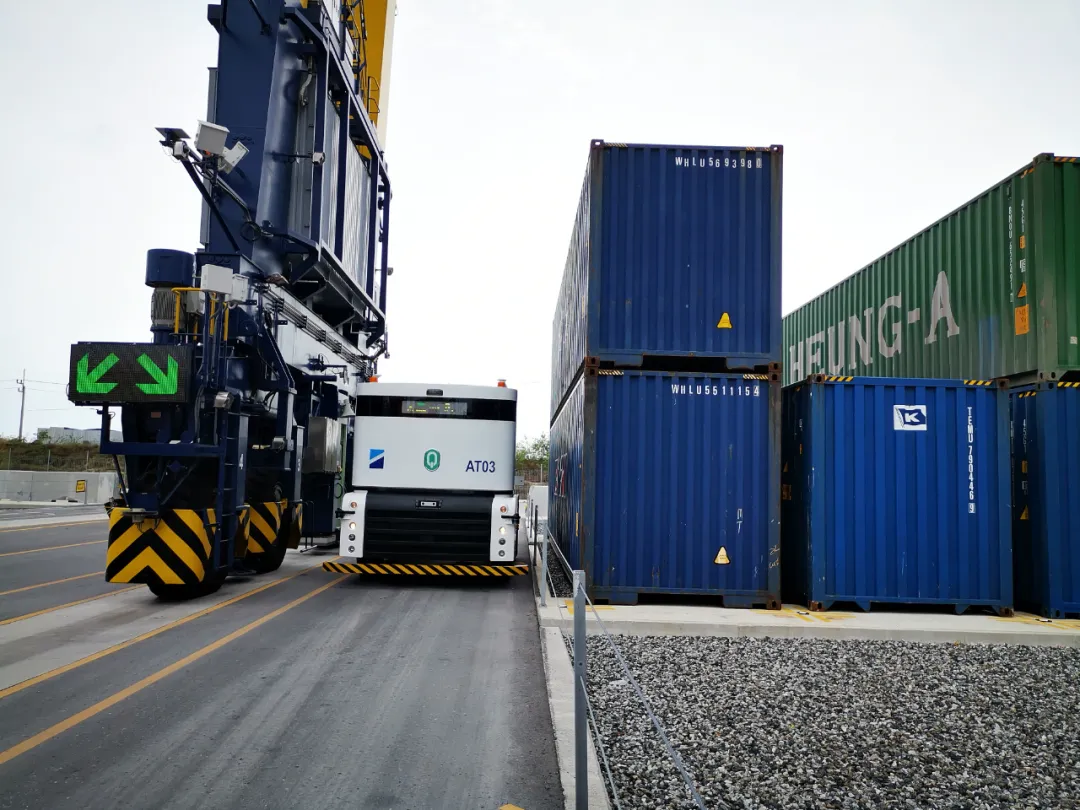
True Emancipation of "Humans" Leading to Fully Automated Operations
On the journey towards port automation and autonomous driving, Westwell's R&D direction has been clear from the outset. The product design focuses on automation as the ultimate objective, firmly establishing a cab-free blueprint. It anticipates the Q-Truck to define the real autonomous operations truck for ports, thereby providing a comprehensive solution to productivity issues resulting from labor shortages in ports and similar environments.
This design approach also serves to reduce the construction cost of vehicles. Compared to other automated trucks, Q-Truck can accommodate more batteries, computing units, and other hardware. It also allows for personalized intelligent settings tailored to specific scenarios. It's reported that Westwell may consider eliminating the sensor warehouse and tractor in the future.
The emphasis on "automation" as the starting point necessitates exceptional levels of safety and operational smoothness from the Westwell Q-Truck. This not only demonstrates Westwell team's strong technical confidence and systematic approach but also reflects the complete trust and confidence of Westwell customers in the Q-Truck. To achieve this goal, the Q-Truck's product design takes into account the logic underpinning each system module's architecture and the system's stability and reliability when multiple modules are linked.
Their deep understanding and study of port scenarios have enabled the Westwell team to glean numerous operational nuances in port transportation, integrating them into the product design. "We have conducted a lot of simulations, contemplating various unexpected issues that could occur in the port scenario."
Currently, Westwell's Q-Truck trucks have achieved deep coupling with port scenarios. For instance, under the quay crane and gantry bridge, the alignment error between the spreader head lock and container hole lock does not exceed 3cm, and the accuracy rate is nearly 100%. The wireless sensor can provide 360-degree truck trailer coverage without any blind spots.
Westwell's independently developed Fleet Management System (FMS) can offer effective information management for fleets operating within ports and perform one-to-one task matching to reduce the rate of unladen vehicle travel and provide real-time positioning and monitoring to stay informed about vehicle and cargo conditions. The fleet system can manage multiple autonomous driving trucks simultaneously, and even realize mixed-traffic operations combining autonomous and human-operated vehicles, a feature not offered by standard single-vehicle autonomous driving companies.