


Products
Industries
LinkAige
About


As global trade accelerates, port logistics, factory operations, and large-scale supply chains are becoming more complex and interconnected. Traditional fleet operations often struggle with delays, inefficiencies, and safety risks caused by limited visibility, manual coordination, and data silos. Idle equipment, communication breakdowns, and human error further slow down operations and raise costs.
To overcome these challenges, the logistics industry is embracing smart logistics solutions powered by AI, IoT, and automation. Within this transformation, a Fleet Management System (FMS) plays a crucial role — enabling real-time visibility, intelligent dispatching, and data-driven decision-making. When integrated into a broader smart logistics ecosystem, FMS technology helps ports, warehouses, and logistics parks enhance efficiency, reduce emissions, and move toward a safer, more intelligent, and sustainable operational model.

(Image: Haris Illahi on Unsplash)

(Image: Haris Illahi on Unsplash)
A fleet management system (FMS) is an integrated digital platform that monitors, schedules, and optimizes the use of vehicles and equipment across modern logistics environments such as ports, airports, warehouses, and logistics parks. In a modern port, an FMS can track container trucks, cranes, and yard vehicles in real time, ensuring smooth cargo movement and reducing congestion. At airports, it coordinates ground service vehicles, baggage trucks, and fueling units to enhance safety and punctuality. Within warehouses and logistics parks, the system optimizes internal transport, manages heavy equipment fleets, and ensures efficient material flow.
Modern FMS solutions often include cloud-based fleet management, fleet tracking, and logistics automation, providing operators with real-time visibility, predictive maintenance, and improved supply chain visibility solutions. By combining operational control with data-driven insights, an FMS serves as the central hub for smart logistics solutions, enabling safer, faster, and more efficient fleet operations across complex environments.
Modern fleet management systems (FMS) are transforming operations across various closed logistics environments, including ports, factories and warehouses, and logistics parks. Each environment presents unique challenges, and FMS solutions are designed to address them while improving efficiency, safety, and overall fleet performance.
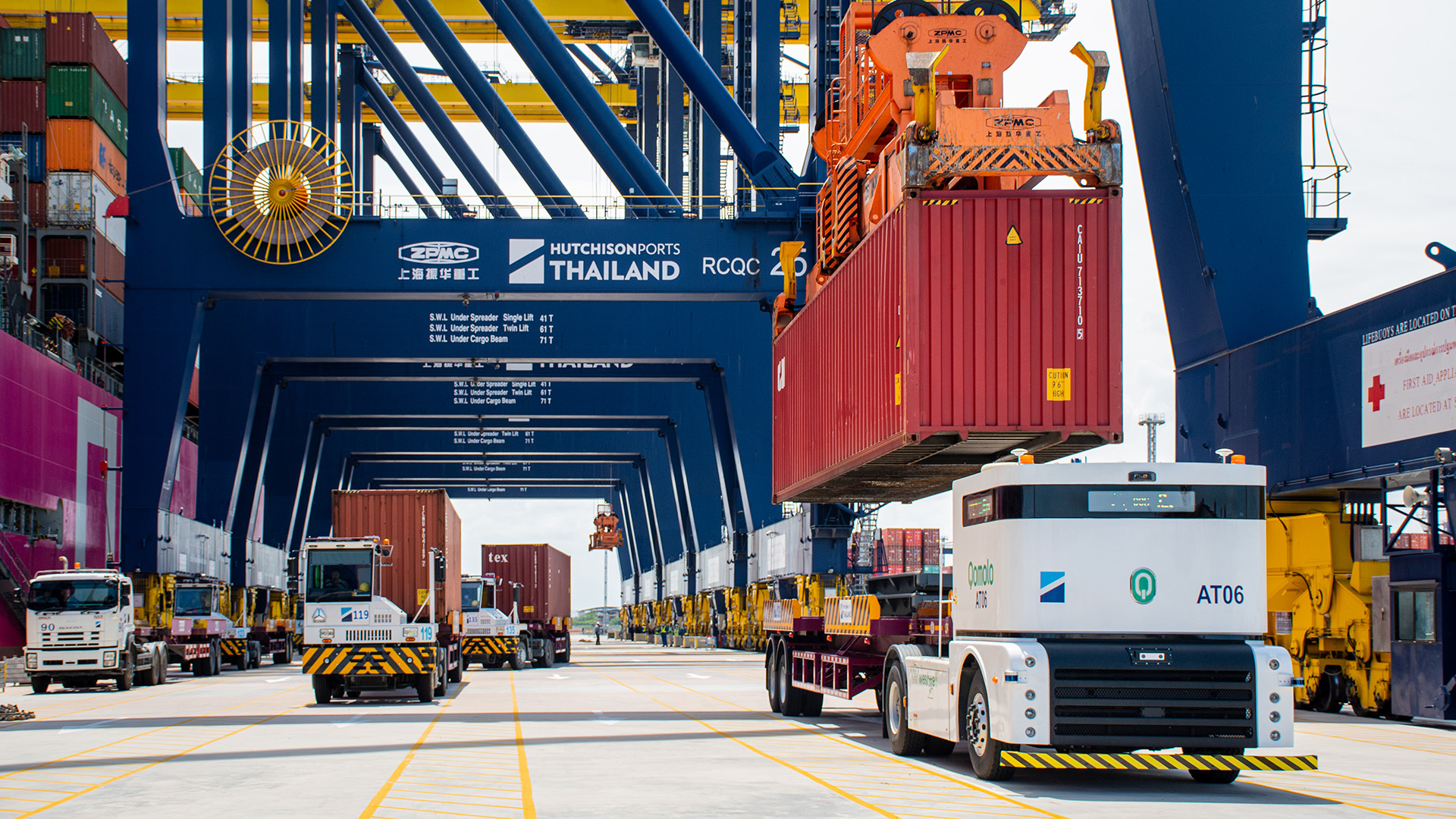
Ports face constant congestion, inefficient truck scheduling, and complex yard traffic. A smart FMS provides real-time vehicle tracking and route optimization, enabling operators to manage container trucks and yard cranes more efficiently. With AI-powered dispatching and seamless integration with Terminal Operating Systems (TOS) and gate systems, cargo moves smoothly through the terminal. Digital twin visualizations offer predictive insights into yard operations, helping ports reduce turnaround times, enhance safety, and optimize overall yard flow.
Internal logistics in factories and warehouses often face inefficiencies due to manual scheduling and lack of visibility. An FMS enables automated scheduling for AGVs and forklifts, monitors real-time fleet performance and energy usage, and integrates seamlessly with Warehouse Management Systems (WMS) and Manufacturing Execution Systems (MES). These capabilities boost throughput, reduce downtime, and ensure smooth coordination between teams, creating more efficient warehouse and factory operations.
Multi-tenant coordination and visibility gaps are common in logistics parks. FMS solutions provide multi-zone fleet visibility and a centralized dashboard, giving operators a comprehensive view of fleet movements across the park. This leads to improved transparency, enhanced operational efficiency, and scalable operations, supporting growth as traffic and tenant numbers increase.
Across all these environments, smart logistics solutions powered by fleet management software drive a digital transformation in logistics, helping operators optimize fleets, improve safety, and make data-driven decisions. From ports to airports and warehouses to logistics parks, FMS has become the backbone of modern, efficient logistics operations.
In today’s fast-moving logistics world, the ability to coordinate and control complex fleet operations is no longer just a competitive advantage — it’s a necessity. A powerful fleet management system (FMS) like Westwell’s ReeWell Logistics Scheduling Platform empowers ports, airports, and logistics operators to transform traditional, manual operations into connected, data-driven ecosystems.
Every operation is different — from a single-airport ground vehicle fleet to a multi-terminal port or sprawling logistics park. Westwell’s Fleet Management System is built on a scalable, modular architecture, meaning it can adapt to fleets of any size and complexity. Operators can deploy only the modules they need — such as vehicle tracking, route planning, or yard management — and expand effortlessly as their operations grow. This flexibility ensures long-term ROI and easy integration into existing logistics systems.
With deep integration of IoT technologies, Westwell FMS connects directly to vehicles, sensors, and equipment, transforming on-site assets into real-time data sources. This connectivity provides operators with a complete operational picture — from vehicle locations and energy consumption to task progress and safety alerts. All data is collected, analyzed, and visualized in an intuitive dashboard, enabling proactive decision-making and transparent collaboration across the site.
Efficient vehicle movement is the backbone of modern logistics. Westwell’s intelligent routing and traffic management system uses AI algorithms to dynamically plan routes, assign jobs, and prevent congestion. In ports and logistics parks, this helps coordinate container trucks and yard vehicles with precision; in factories, it ensures AGVs and forklifts move efficiently between production lines and warehouses. The result is smoother traffic flow, reduced idle time, and safer site operations.
Sustainability is becoming a key driver of modern logistics operations. Westwell’s WellEMS Energy Management System works in tandem with the Fleet Management Software to optimize energy usage and carbon emissions across ports and logistics sites. By connecting to on-site equipment and vehicle systems, WellEMS provides real-time energy monitoring and intelligent analytics to identify inefficiencies and uncover energy-saving opportunities.
Beyond day-to-day control, Westwell’s FMS acts as a data intelligence engine. By collecting and analyzing performance metrics over time, it identifies bottlenecks, predicts maintenance needs, and uncovers new optimization opportunities. Through visual analytics and AI insights, decision-makers gain a holistic understanding of fleet performance and can continuously refine strategies to achieve safer, greener, and more efficient operations.
As global logistics operations continue to expand in scale and complexity, traditional management models can no longer meet the demands of real-time coordination, sustainability, and efficiency. The future of logistics lies in connected, intelligent ecosystems—where data, automation, and AI work together to drive seamless collaboration between people, vehicles, and infrastructure.
From ports and factories to logistics parks, Westwell empowers operators to achieve full operational visibility, optimize resource utilization, and make proactive, data-driven decisions. By uniting every element of the logistics chain under one intelligent platform, Westwell is helping build a future where global logistics is not only faster and smarter, but also safer, greener, and more sustainable.