


In an era defined by supply chain volatility and the imperative for decarbonization, global ports are under great pressure. The core operational challenge is unequivocal: how to guarantee safe, efficient, and truly continuous 24/7 container handling in an environment of inherent complexity and unpredictability.
In 2023, we launched a major collaboration at the Port of Felixstowe in the UK——deploying a large-scale fleet of 100 new energy intelligent autonomous Q-Trucks, with the initial vehicles now exceeding 660 days of routine operation. This fleet moves beyond traditional port operations’ reliance on manual labor. It showcases a replicable, scalable integrated solution, powered by Westwell's innovations in stereo vision perception, 3D occupancy sensing, and smart energy management systems. This article examines the core technological foundations powering this upgrade and their critical implications for the global logistics industry.
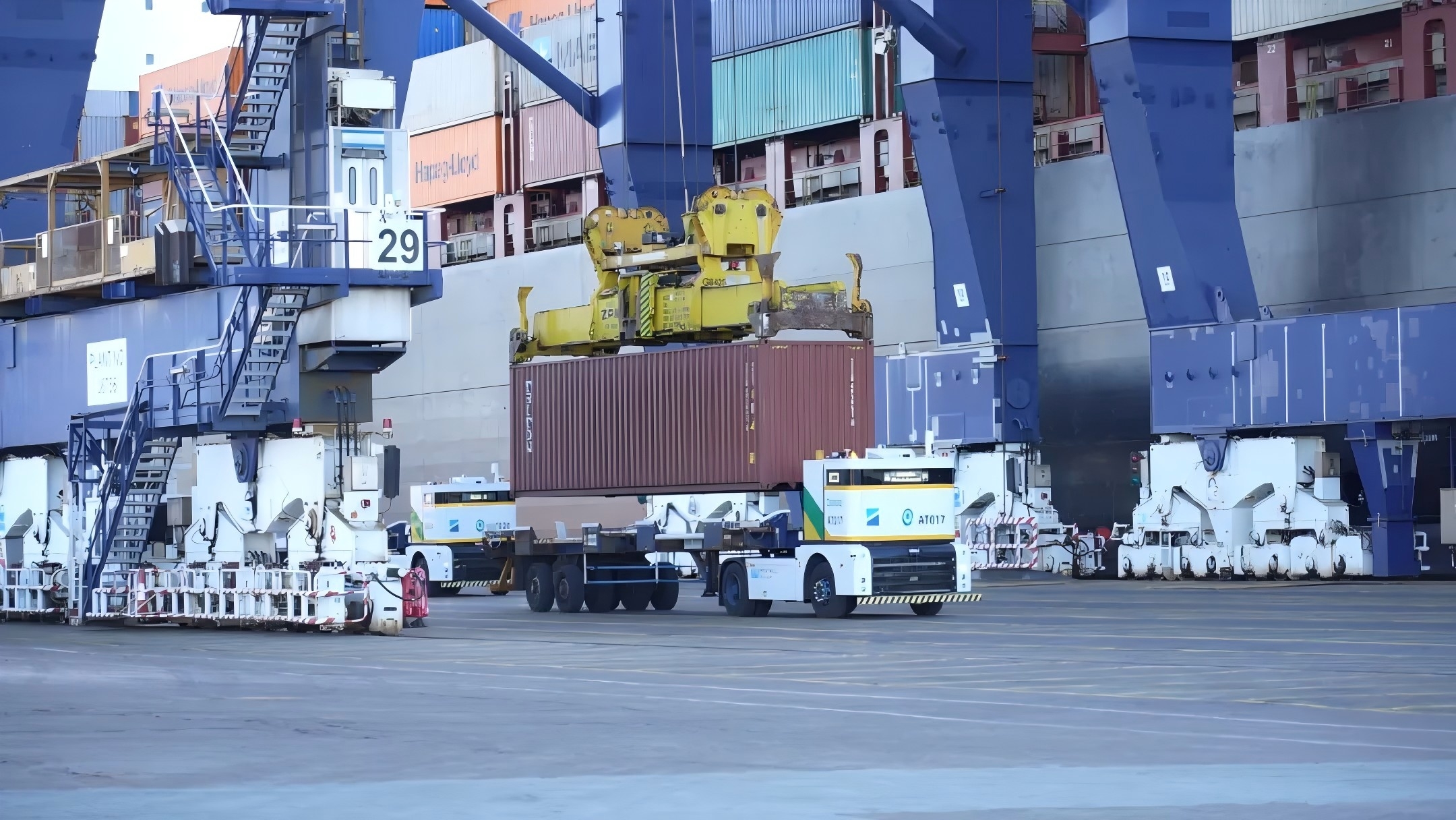
Ports are critical nodes in global trade, yet traditional, human-reliant operations are reaching their limits. The need for round-the-clock operations introduces risks: night shifts, adverse weather, and visual blind spots in stacked container rows can compromise both safety and productivity.
In the meantime, port operators face the dual mandate of reducing carbon emissions while controlling operational expenditures, which requires them to balance the urgent drive toward decarbonization with the practical demands of controlling costs and ensuring uninterrupted service.
It is within this context that Westwell collaborated with the Port of Felixstowe, establishing Europe's first ever successful use of autonomous trucks in mixed traffic mode operation, marks a paradigm shift towards an integrated operational model built on intelligent perception, energy management, and global dispatch.
At the Port of Felixstowe, autonomous operations face highly dynamic and demanding conditions: low-light night shifts, sudden downpours, and stacks of containers creating blind spots... These impose near-stringent demands on the "eyes" of autonomous heavy-duty trucks. Traditional monocular vision solutions struggle with precise depth estimation, while conventional stereo vision falls short in glare, fog, or detecting distant small objects. This common industry challenge directly constrains the safety and uptime of port autonomous operation.
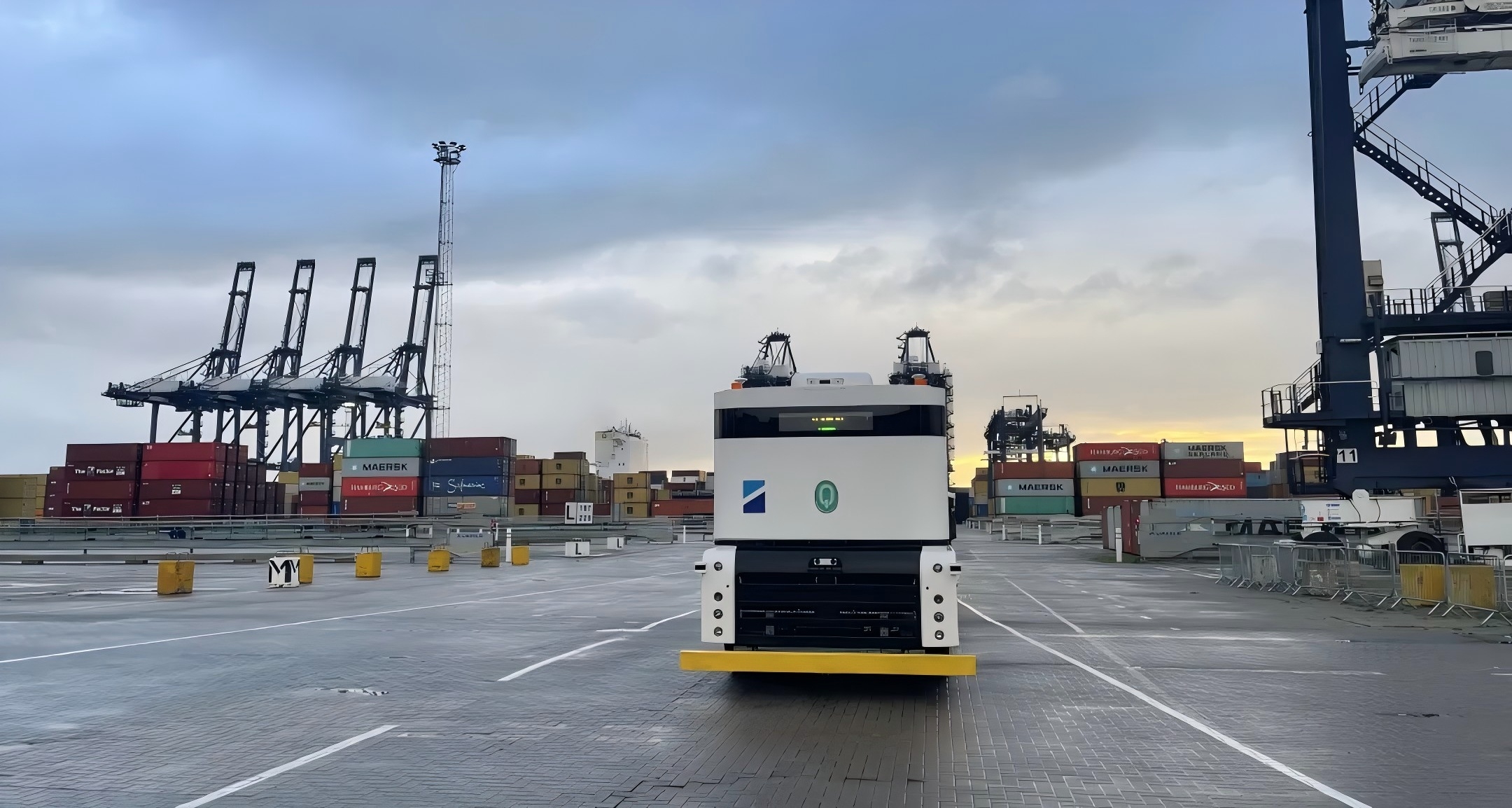
Westwell’s SPT (Stereo Pyramid Transformer) technology, developed in collaboration with Tongji University, has been published and included in IROS 2024, and innovates the perception paradigm at the algorithmic level, endowing the vehicle's "intelligent eyes" with four core capabilities:
In a port filled with containers, an inconspicuous obstacle or ground shadow can pose a risk. A core innovation of SPT technology lies in its multi-layer "pyramid" structure. Based on this, Westwell's perception system mimics the hierarchical processing mechanism of the human eye, parsing visual information layer by layer, from fuzzy outlines to sharp edges. Regardless it's a tool hidden in shadow or a distant, low curb, the system achieves sub-meter level accurate distance measurement. This fundamentally avoids collisions or sudden stops caused by misjudgment, providing a solid foundation for precise navigation in complex environments.
Moving beyond basic object identification, true intelligent perception mechanism interprets the spatial relationship of objects. The semantic attention mechanism introduced by SPT enables the system to deconstruct the semantic associations between different elements in a scene and probabilistically predict their potential movement trajectories. When a Q-Truck simultaneously perceives a moving terminal truck ahead and a pedestrian crossing laterally, it can understand their respective intentions, like an experienced driver, making smooth, human-like decisions such as gentle deceleration or slight avoidance in advance, thereby achieving safe and efficient mixed human-vehicle traffic.
Ports never stop for bad weather. SPT innovatively fuses the advantages of binocular stereo vision and monocular depth prediction, creating perception redundancy for the vehicle: if one camera is temporarily blinded by strong light or water mist, the system can immediately invoke another set of "visual logic" for supplemental judgment.
In authoritative international benchmarks like KITTI, our depth perception error is controlled within 0.16 meters. This error margin, smaller than a suitcase, is the core technical guarantee enabling Q-Trucks to achieve 7x24 continuous safe operation in complex port.
Traditional perception systems rely on identifying a finite set of known object categories. But ports are full of unknowns: partially obscured equipment, non-standard loads, and complex dynamic interactions. Westwell's implementation of 3D Occupancy (OCC) perception addresses this fundamental limitation. Instead of asking "what is that object?", it answers the essential question: "is that space occupied?"
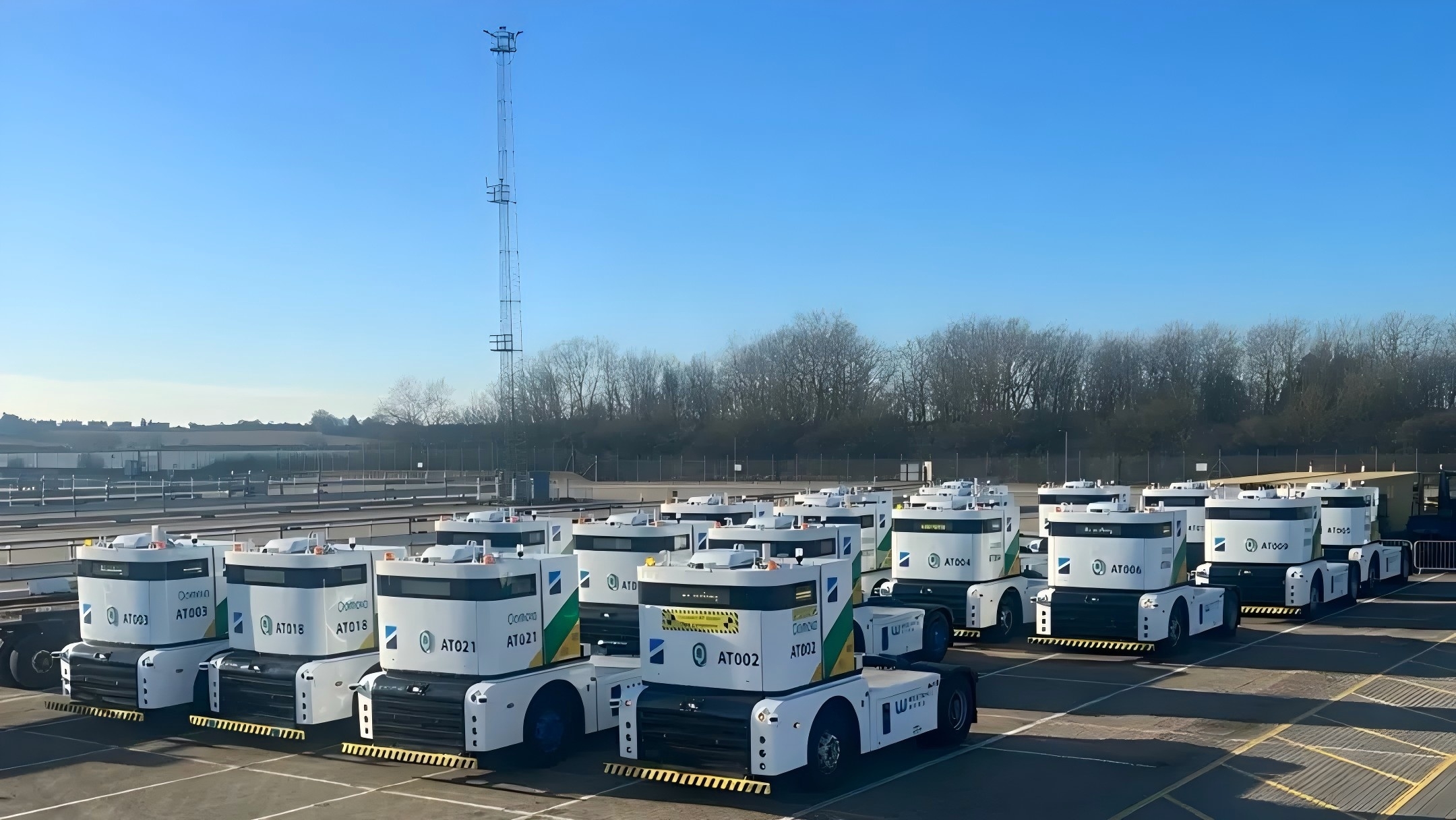
OCC technology represents a fundamental shift in perception philosophy. Instead of relying on pre‑classified objects, the system detects any physical volume—whether labeled, unlabeled, or entirely unknown — and treats it as an obstacle. This geometry-first approach provides a critical layer of safety redundancy against unknown or unexpected hazards. By constructing a detailed volumetric understanding of the environment, the system can more reliably infer the trajectory of partially obscured pedestrians or vehicles. This leads to smoother, more anticipatory decision-making, markedly reducing harsh braking and erratic lane changes.
The precise object contours modeling also grants vehicles superior maneuverability in confined areas. They can accurately assess clearances from surrounding obstacles, enabling safe and smooth close-proximity navigation that mirrors human spatial awareness. More importantly, OCC eliminates the need for exhaustive 3D labeling, resulting in stronger generalization capabilities and higher data efficiency. This allows for rapid adaptation across diverse geographic and infrastructural conditions, and thus establishing a scalable foundation for end-to-end autonomous driving systems.
Reliable 24/7 autonomous operation in a busy port requires more than a single sensing modality. To this end, we equipped our Q-Truck with a multi-source sensor redundancy system built on 360° blind-spot-free coverage. Through the topological arrangement of multiple roof-mounted cameras and ultra-wide-angle LiDAR units, a 360° panoramic perception field is established. This enables comprehensive, gap-free monitoring of the vehicle’s surroundings, laying the spatial safety foundation necessary for high-level autonomous operations.
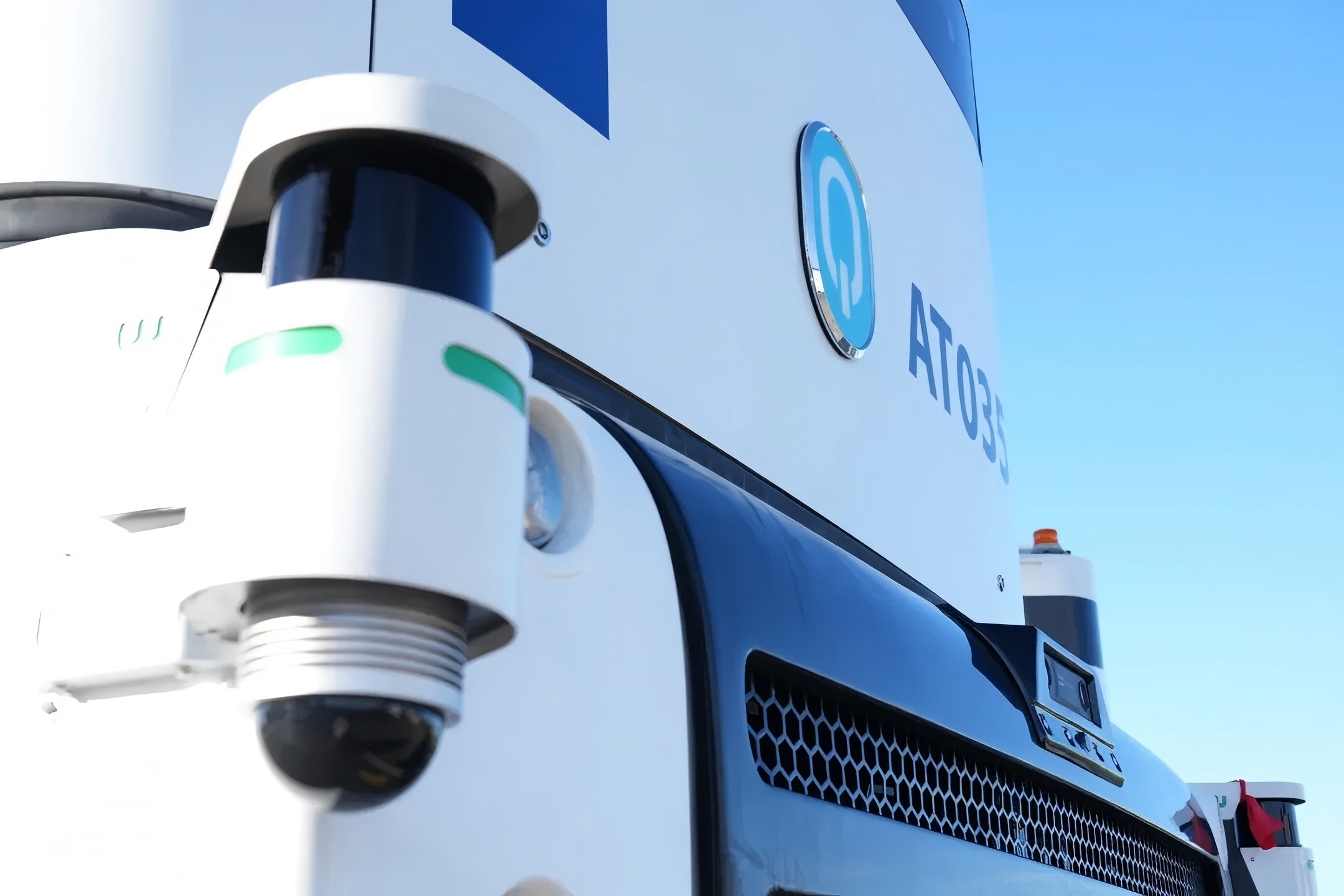
To address sensor challenges in ports, from signal fade in dense metallic environments to interference under harsh weather, Westwell's self-developed OCC perception framework has innovatively achieved feature-level deep fusion of vision and LiDAR data. Within this architectural framework, cameras accurately identify object attributes, providing rich texture and semantic information through the visual modality; while LiDAR delivers millimeter-level spatial data in real-time, unaffected by changes in lighting conditions. Rather than merely complementing each other, these two sensing modalities undergo feature-level fusion within a unified geometric space, generating a dense and precise 3D occupancy grid.
This architecture ensures resilience. If one sensor modality is compromised — whether by glare, rain, fog, or electromagnetic interference — the other provides immediate, seamless failover with continuous cross-validation. This ensures a stable, uninterrupted stream of environmental awareness, enabling true 24/7 all-weather perception in the complex and high-velocity setting of the Port of Felixstowe.
Building on this robust perception foundation, the OCC system, integrated with behavioral prediction modules, forms the decision-making core of the Q-Truck within the port's horizontal transport "dynamic flow." When operating alongside manually driven terminal trucks, mobile equipment, personnel, and other autonomous vehicles, the system enables the Q-Truck to:
This means the Q-Truck not only perceives clearly but also understands contextually, maintaining smooth and composed navigation through the port’s densely structured and ever-changing road network. Together, these capabilities deliver another critical layer of technical assurance for sustained, zero-incident autonomous operation.
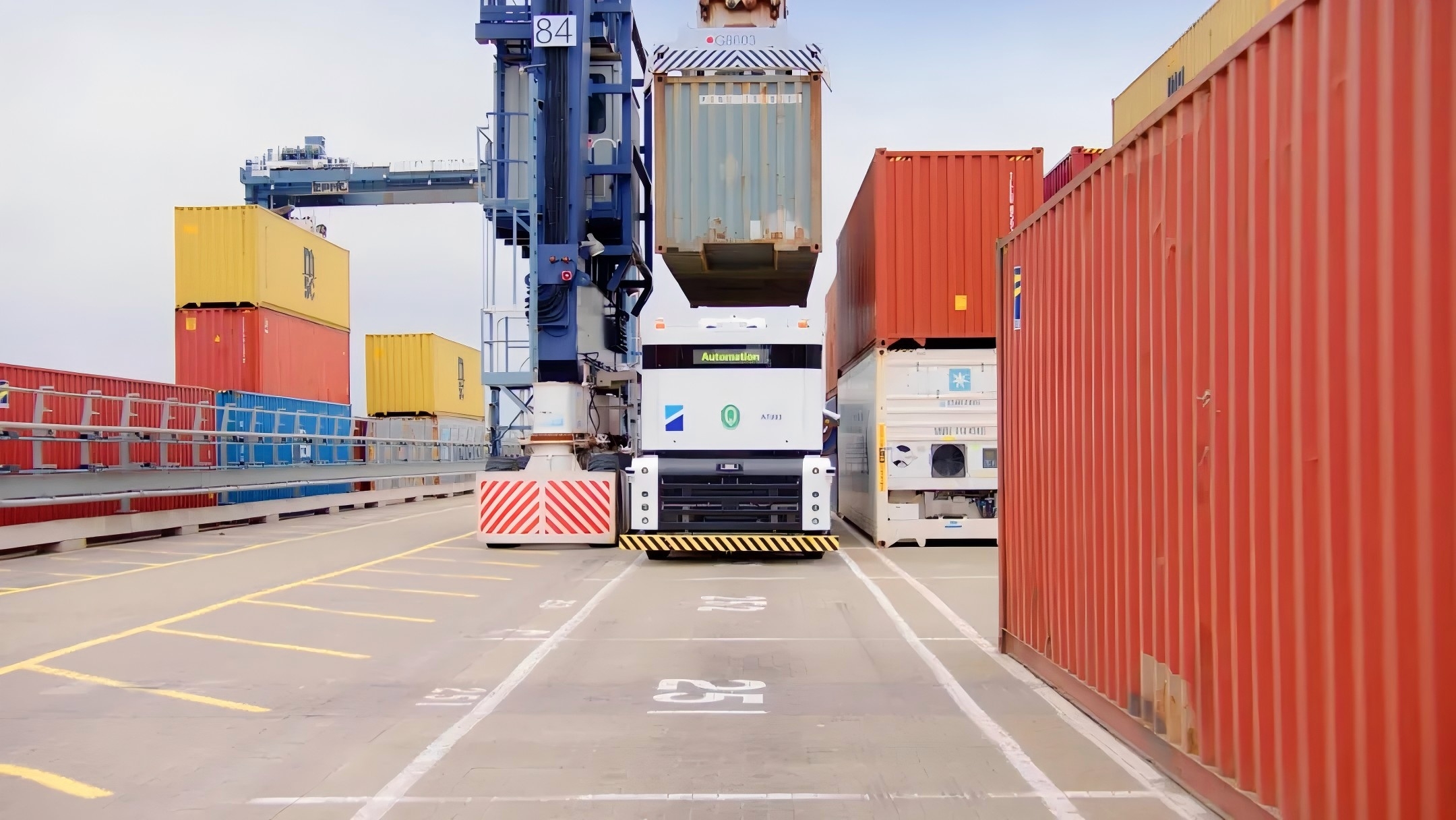
The efficient operation of new-energy heavy-duty trucks hinges on precise and intelligent energy management. For port operators, the primary concerns regarding fleet electrification are often not the technology itself, but the associated operational risks and cost uncertainties:
At the Port of Felixstowe, Westwell's solution tackles these concerns head‑on, leveraging a battery‑swapping ecosystem combined with smart scheduling to redefine the efficiency and economics of energy management for ports.
In the time-sensitive environment of port logistics, the WellFMS system manages all equipment in real time, enabling precise vehicle dispatching and route optimization. When a Q-Truck’s battery runs low, instead of joining a lengthy charging queue, it receives a system directive to proceed orderly to a PowerOnair swap station—where a full battery exchange is completed in under five minutes. This matches the refueling time of a conventional diesel truck and means new‑energy fleets can sustain the same 24/7 high‑intensity operation, fundamentally securing the critical operational metric of vehicle uptime.
Westwell’s modular battery‑swap system introduces an innovative “vehicle‑battery separation” approach. PowerOnair specializes in the fine‑grained control of the swap‑station network, executing energy‑dispatch strategies from AdaOps while managing the entire process of battery charging, storage, allocation, and replacement in real time. Ports avoid the high upfront cost of dedicating a fixed battery to every vehicle; instead, smart scheduling within the swap network enables multiple vehicles to share a pooled battery resource. This not only significantly lowers the initial investment threshold but also transforms energy management into a flexible, on‑demand service—making the green transition more agile and economically viable.
Acting as the “digital brain,” AdaOps brings foresight and coordination to operations. By predicting peak and off‑peak workload periods, it schedules concentrated battery charging during low‑demand windows and ensures swap‑station efficiency during high‑activity phases. This pre‑emptive coordination between swap stations and fleet dispatch synchronizes energy replenishment with production tasks at a system‑wide level.
Such intelligent “peak‑shaving and valley‑filling” scheduling prevents grid stress, maximizes the use of renewable energy, and eliminates workflow interruptions caused by poor planning in traditional models. In this way, energy supply itself becomes a key lever for optimizing overall port operational efficiency.
Westwell's journey from the "world's first AI-powered mixed-traffic terminal" at Laem Chabang Port in Thailand to the "European benchmark for green and smart ports" at the port of Felixstowe in the UK represents more than geographical expansion. It marks a path of continuous technological evolution, rigorously tested and refined in real-world operations. Every successful deployment validates the reliability, replicability, and scalability of Westwell's solutions, offering global ports a clear and actionable template for intelligent transformation.
What we deliver is more than a single product, but an evolving technology ecosystem and architectural philosophy, co-developed through global projects. This model of "global validation, continuous evolution" enables us to provide tailored, integrated solutions that meet the specific needs of ports in different regions.
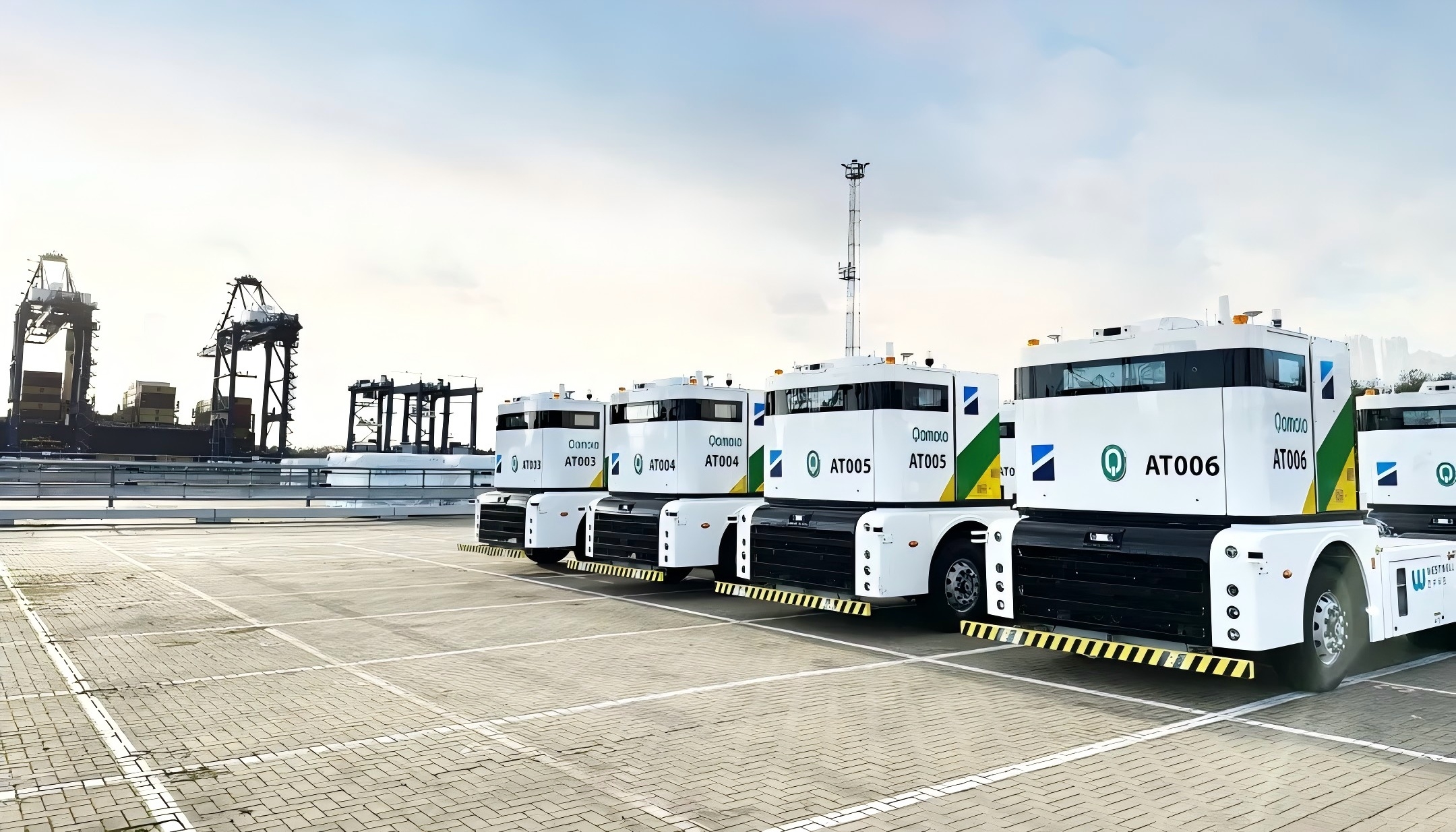
Today, ports worldwide face multifaceted challenges: enhancing efficiency, ensuring safety, optimizing costs, and achieving green transition. Westwell is committed to sharing the technological insights and operational expertise gained from our global projects with partners across the industry. Together, we can advance the future of global logistics toward greater efficiency, safety, and sustainability.


