


Products
Industries
LinkAige
About


In the landscape of modern industrial logistics, the difference between factory automation and autonomy has become the defining line between operational stagnation and scalable growth. While traditional factory automation once relied on fixed-path AGVs and rigid robotruck routes to handle repetitive tasks, these "passive" systems have become stumbling blocks in today's dynamic environments. They lack the situational awareness to adapt to sudden obstacles or shifting production priorities, often requiring manual resets that drain efficiency.
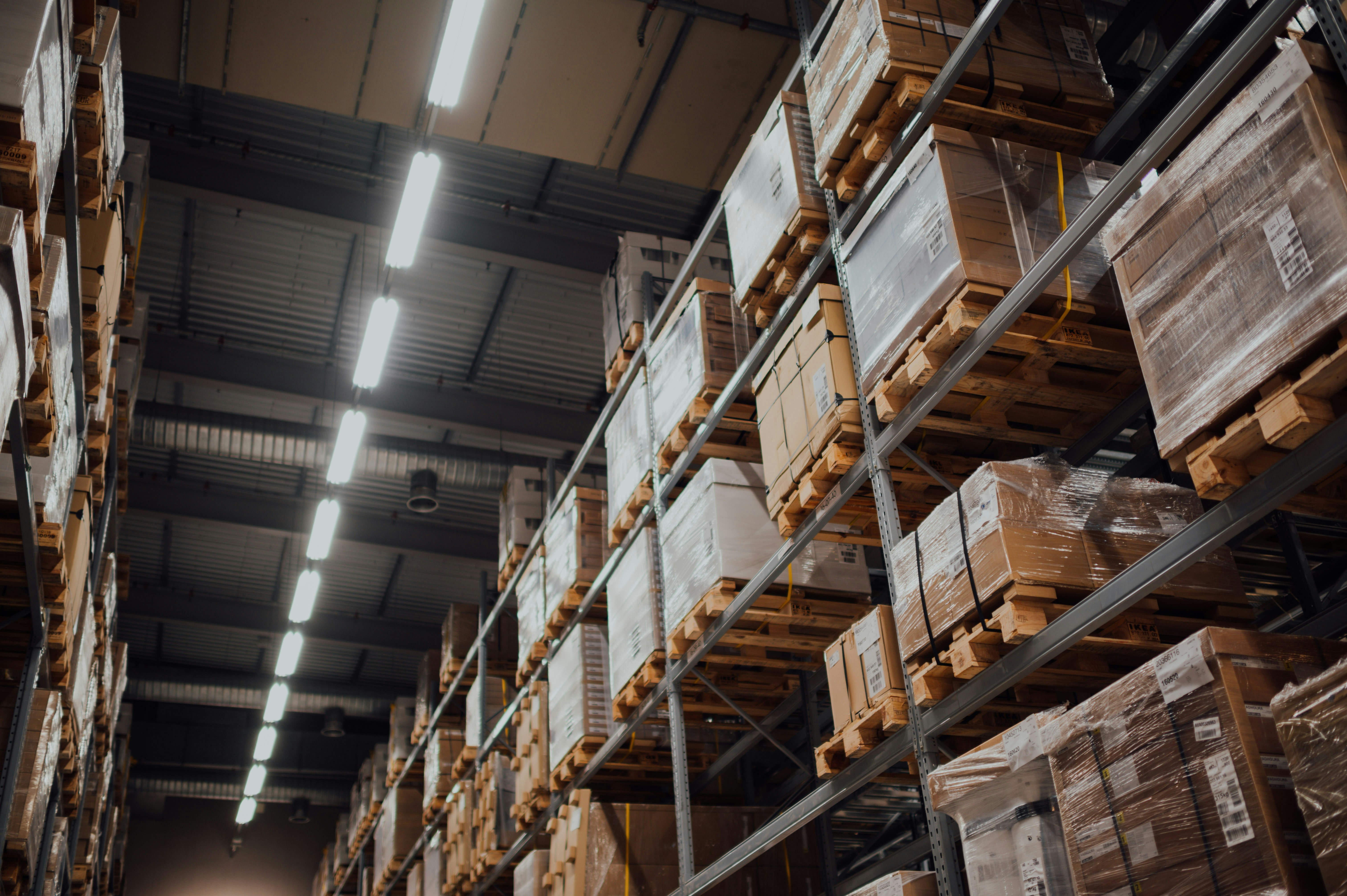
Photo by CHUTTERSNAP on Unsplash
The rise of AI transforms the AMR (Autonomous Mobile Robot) from a simple mover into a core collaborative partner capable of "deep thinking." By integrating the Well-Bot AMR seamlessly with a facility's WMS (Warehouse Management System), factory management moves beyond pre-set scripts to achieve real-time adaptation. Whether it involves optimizing Robotic Palletizing sequences or synchronizing the Westwell Ainergy Strategy to balance performance with an Industrial Energy Management System, this shift ensures that every asset—from the warehouse floor to the loading dock—operates as a cohesive, self-evolving ecosystem.
While factory automation has successfully standardized basic workflows and reduced labor reliance over the last few decades, it has reached a critical "efficiency ceiling." In the high-stakes world of modern industrial logistics, legacy systems are increasingly exposed as too rigid to adapt, too fragmented to collaborate, and too "energy-blind" to meet ESG mandates. To move forward, the industry must look beyond simple task execution toward an autonomous transformation.
The core bottleneck in traditional factory automation is its absolute reliance on fixed "if-then" logic. In a standard industrial logistics setup, legacy AGVs and robotrucks are effectively blind; they cannot deviate from a preset program. This rigidity becomes a liability during Robotic Palletizing when a slight shift in material dimensions or a 5mm placement error occurs. Because these systems lack the "situational reasoning" to adjust, a minor deviation doesn't just slow things down—it paralyzes the entire line. This creates a hidden labor cost in factory management, as human operators must constantly "rescue" machines from simple environmental changes that an autonomous system would navigate instantly.
Efficient factory management is currently throttled by "information islands." In most facilities, the WMS (Warehouse Management System), ERP, and yard management operate in isolation. This fragmentation means that while the WMS might show inventory is ready, the Robotic Palletizing units and AMR (Autonomous Mobile Robot) fleets are unaware of real-time production shifts.
This lack of synergy is the primary reason why many managers ask, "How can we integrate AMRs with WMS seamlessly?" Without a unified "logistics brain," data cannot be synchronized. The result is a disconnected chain where Well-Bot AMRs may be idle while loading docks are congested, or finished goods stack up because the palletizing robots aren't synced with outbound schedules. Breaking these silos is essential for achieving the "full-link" coordination required for how AI improves multimodal transport hubs.
In the era of "dual carbon" goals and strict ESG mandates, being automated is no longer enough—you must be "energy-intelligent." Traditional systems are fundamentally energy-blind; they consume power at a flat rate regardless of the actual industrial logistics workload. Whether it’s a high-consumption robotruck or a fixed-path AGV, legacy hardware lacks the integration with an Industrial Energy Management System to optimize duty cycles.
This is where the Benefits of AI + New Energy in logistics become a competitive necessity. The Westwell Ainergy Strategy addresses this gap by moving away from "dumb" electricity usage toward a model where energy consumption is dynamically regulated based on production rhythm. Without this intelligent orchestration, factories face soaring operational costs and fail to meet the sustainability standards that modern global partners now demand.
Transitioning from traditional factory automation to true autonomy requires a system capable of independent perception, reasoning, and action. Westwell leads this shift not merely as a hardware provider, but as the architect of the Westwell Ainergy Strategy. By merging AI with New Energy, this digital-intelligent approach creates a "Thinking Factory" where every asset—from robotrucks to Well-Bot AMRs—operates within a cohesive, self-optimizing ecosystem.
Westwell’s Hymala is a next-generation “world model” that bridges digital systems with the physical factory. By integrating camera feeds, LiDAR, sensors, fleet data, and operation logs, it creates a unified view of people, vehicles, materials, equipment, and pathways. Hymala transforms this information into dynamic, computable scenes, allowing factories to track who or what interacted, where, and when, while detecting bottlenecks, conflicts, supply gaps, and equipment wear.
Beyond observation, Hymala leverages causal graphs to explain why changes occur, highlight actionable levers, and suggest the safest interventions. Operating atop MES, WMS, and FMS systems, Hymala provides a global intelligence layer that turns complex operational data into clear insights, enabling smarter decisions, dynamic scheduling, and continuous optimization.
While Hymala provides the "brain," Westwell’s specialized hardware provides the "muscle" required to execute the autonomous vision.
The Q-Truck is a cabless, self-evolving new energy unmanned robotruck purpose-built for the horizontal transport of heavy assets. Designed specifically for closed environments—such as industrial parks, logistics yards, and ports—it operates without the complexities of public roads to ensure maximum 24/7 reliability. As a core carrier for the Westwell Ainergy Strategy, the Q-Truck identifies road conditions and optimizes horizontal routes between workshops or from the production line to the yard, ensuring the flow of heavy materials remains fluid and synchronized with internal operations.
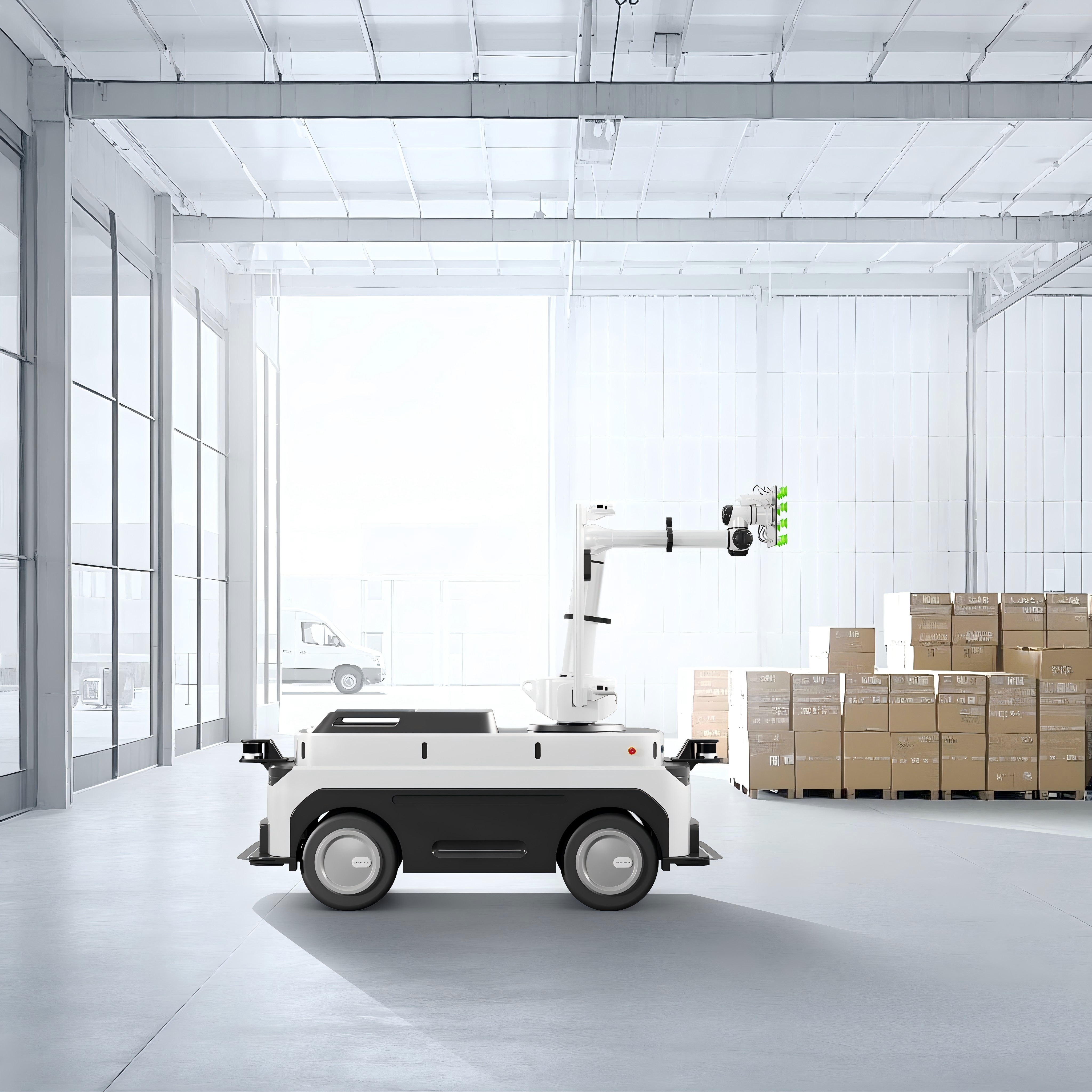
The Well-Bot AMR is a specialized connector designed to bridge the "last-ten-metre" gap between heavy logistics operations and internal warehouse workflows. Unlike traditional AGVs, this AMR handles complex tasks such as conveyor line docking, container loading/unloading, and navigating covered bridges.
Integrating AI vision, the Well-Bot identifies varying carton dimensions in real-time to facilitate intelligent mixed-palletizing. This ensures optimal, high-density stacking for diverse parcel specifications. By perfecting the handshake between intake and storage, the Well-Bot provides the high-precision horizontal transport essential for lean factory management and the Westwell Ainergy Strategy.
The practical power of the Westwell Ainergy Strategy is best demonstrated at the Cainiao Hong Kong eHub——the Smart Air Cargo Center, which features the region's first fully automated “Security Screening -> Palletizing” workflow. By utilizing Well-Bot AMR units to handle the "last-ten-metre" handshake, the facility has successfully scaled from modular operations to a full-hub autonomous ecosystem. During pilot runs, the integrated system processed nearly 100 tons of parcels in just 7 hours while remaining entirely unmanned. This coordination between the intelligent "brain" of the system and the physical "muscle" of the fleet resulted in a 20% boost in operational efficiency. This success serves as a definitive answer to how AI improves multimodal transport hubs, proving that the synergy of AI vision and autonomous hardware is the new standard for global industrial logistics.
The advancement of Industry 4.0 has moved industrial logistics beyond the reach of traditional, rigid systems. As factories demand higher efficiency and refined factory management, the "Ainergy" (AI + New Energy) approach has become the essential standard for global leaders. By moving away from fragmented data silos and deterministic programming, the Westwell Ainergy Strategy creates an ecosystem where factory automation is no longer just about moving goods, but about intelligent orchestration.
Photo by Zac Wolff on Unsplash
Through the integration of the Hymala large model, the Well-Bot AMR, and high-precision Robotic Palletizing, Westwell has bridged the gap between raw performance and environmental responsibility. This autonomous evolution doesn't just solve today's operational bottlenecks; it provides a scalable, zero-carbon framework that aligns with the high-quality development goals of the modern manufacturing era. With Westwell, the path to a smarter, greener, and more resilient future in industrial logistics is no longer a vision—it is a reality in motion.