


Products
Industries
LinkAige
About


Ports are the backbone of global trade, handling over 80% of the world’s seaborne cargo, according to the United Nations Conference on Trade and Development (UNCTAD). As global container volumes continue to rise, traditional port logistics operations are under mounting pressure. Delays in container handling, safety risks for operators, inefficient coordination between quay cranes, terminal tractors, and yard trucks, as well as disruptions caused by extreme weather or mixed-traffic conditions, all limit overall efficiency.
To overcome these challenges, ports are increasingly turning to autonomous trucks and intelligent scheduling systems — technologies that move the industry beyond basic automation toward a new era of smart, connected, and sustainable container transport.
A standard container transport workflow in port logistics begins with vessel unloading, where massive quay cranes lift containers from ships onto terminal tractors or chassis for inland transfer. These vehicles then move containers to yard storage areas, where they are stacked, organized, and prepared for further distribution by road, rail, or feeder vessels.
At each stage, timing and coordination are critical. Delays can occur when trucks wait for crane availability, when yard space becomes congested, or when fleet scheduling lacks real-time visibility. Even minor inefficiencies ripple through the system, reducing throughput and increasing operational costs.
That’s why many terminals are now focusing on fleet optimization and intelligent container transport coordination, aiming to create a seamless flow between quay, yard, and gate operations.
Modern port logistics are evolving rapidly, and smart trucks are at the forefront of this transformation. By linking quay cranes, terminal tractors, and yard operations, these self-driving trucks streamline the movement of containers, reduce operational bottlenecks, and enhance overall efficiency.
In port container logistics, intelligent trucks act as the crucial link between the quay crane and yard storage areas. Equipped with advanced sensors and navigation systems, these electric trucks and self-driving transport move containers quickly and precisely along pre-planned routes. By minimizing idle time and avoiding congestion, they help terminals achieve faster container turnaround and greater fleet optimization across every transport cycle.
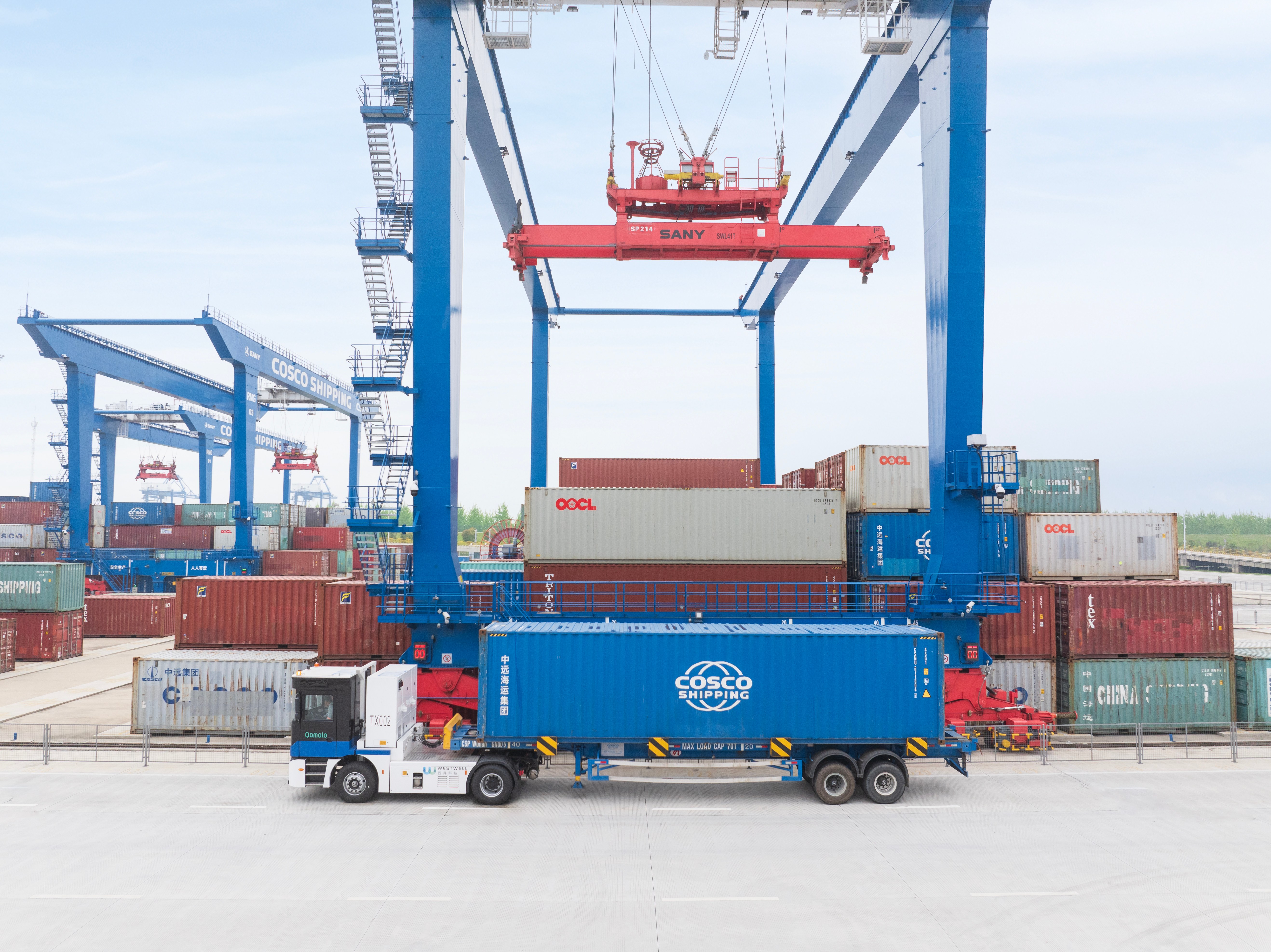
Modern terminals still rely on a combination of manned and unmanned vehicles. Autonomous freight trucks are designed to operate safely in these mixed-traffic scenarios, communicating with cargo handlers, terminal tractors, and other logistics equipment through connected systems. This real-time coordination reduces waiting times, improves workflow stability, and keeps port logistics operations running efficiently without disrupting existing processes.
Ports operate around the clock, often facing extreme weather such as heavy rain, fog, or heat. Built with redundant perception and control systems, autonomous trucks maintain stability and precision even in low-visibility or challenging surface conditions. Their continuous reliability ensures consistent container transport, protecting port efficiency regardless of environmental challenges.
Autonomous trucks leverage a range of advanced technologies to optimize container transport in ports, enhancing efficiency while maintaining high safety standards. These systems allow vehicles to operate reliably alongside humans, cranes, and other machinery in complex terminal environments.
Modern autonomous trucks and terminal tractors use LiDAR, radar, cameras, and onboard sensors to continuously monitor their surroundings. This ensures accurate detection of obstacles, pedestrians, and other vehicles, reducing the risk of accidents and improving overall port safety.
High-definition maps, GPS, and V2X communication enable precise route planning from quay cranes to yard storage, while allowing self-driving trucks to coordinate seamlessly with manned vehicles. This minimizes congestion, prevents collisions, and ensures smooth container flow.
Electric autonomous terminal tractors like Westwell Q-Trucks use intelligent battery management and energy-efficient powertrains. Rapid battery swap systems, such as PowerOnair, help maintain continuous operation, reducing delays while ensuring safe handling of high-power electric systems.
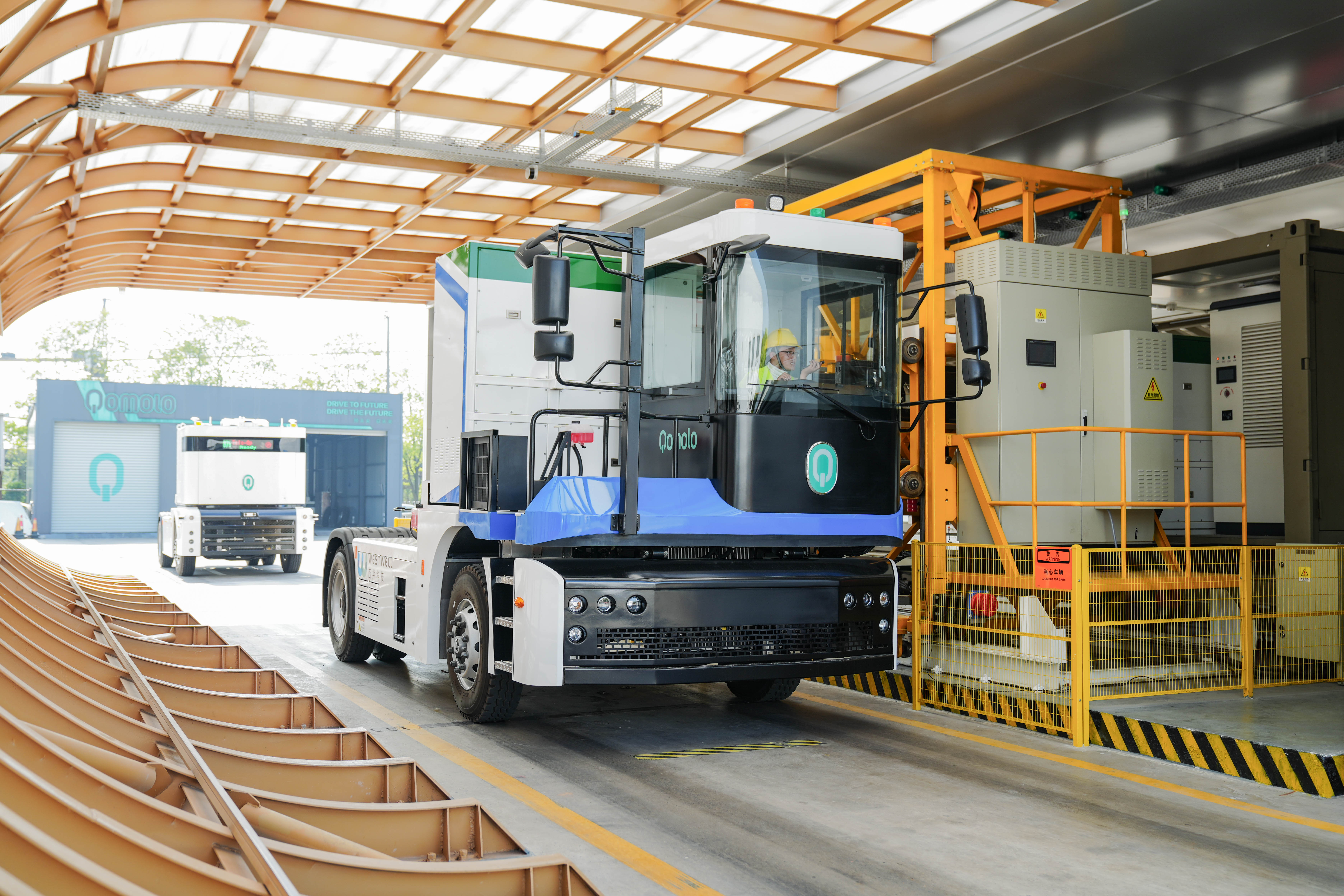
Fleet management systems optimize vehicle assignments, routes, and timing across both autonomous and manned trucks. By reducing idle time and coordinating container movement efficiently, these systems enhance operational throughput while maintaining safe workflows throughout the terminal.
Autonomous trucks are transforming port logistics by improving safety, efficiency, and sustainability. Equipped with advanced sensors, LiDAR, and cameras, they reduce risks in busy terminals and mixed-traffic scenarios, protecting both personnel and cargo. By optimizing movement between quay cranes and yard storage, these vehicles minimize idle time, speed up container turnaround, and enhance fleet utilization. Electric autonomous trucks, like the Westwell Q-Truck, further cut emissions and lower operational costs, helping ports operate smarter, greener, and more efficiently.
Beyond safety and efficiency, autonomous trucks support sustainable port operations. Their zero-emission electric powertrains reduce the carbon footprint of container transport while lowering fuel and maintenance costs. By combining environmental benefits with operational and economic gains, autonomous trucks are helping ports achieve smarter, greener, and more resilient logistics systems.
Autonomous trucks are reshaping port logistics, enabling safer, more reliable, and highly efficient container transport. By combining advanced technologies with electric powertrains, ports can move toward smarter, more sustainable operations. Looking forward, the continued adoption of autonomous systems promises fully connected terminals, seamless coordination across fleets, and a new era of global container logistics that is faster, greener, and more resilient.
1. Shipping Data: UNCTAD releases new seaborne trade statistics