Where additional assets stop helping
Imagine a delayed inbound shipment that leaves little time to move priority cargo through a terminal. The site may have spare vehicles, unused storage and nominal handling capacity. Yet those resources may not fit the task: vehicles may be in another zone, storage may not accept cargo, and suitable equipment may be tied to lower-priority work.
The problem is a mismatch between the revised plan and the resources that remain usable. Priority cargo waits, teams make manual calls to change assignments, and the delay can affect an outbound commitment.
The same pattern appears in other operating environments:
-
A warehouse may add storage while receiving appointments, handling capacity or outbound cut-off times still constrain flow.
-
A factory may increase line-side stock while material delivery remains out of step with changing production requirements.
-
A fleet may grow while service performance remains weak because vehicles are not positioned around the actual bottleneck.
That is why logistics capacity planning and warehouse capacity management should test more than asset totals. They should test the fit between each critical task and the resource expected to perform it: compatibility, location, time window, route, handover conditions, safety requirements and the effect on dependent work.
Fleet management is a resource-allocation discipline
A fleet management system (FMS) is often associated with location tracking and utilisation reporting. Both are useful. They do not, on their own, establish whether a reassignment will protect the service commitment that is now at risk.
The decision depends on the task's time window, vehicle and equipment status, load compatibility, operator availability, route and handover conditions, maintenance requirements and energy state. It also depends on the work the reassigned resource will leave behind.
This is a more useful way to assess fleet utilization. Keeping every vehicle busy can make a fleet appear efficient while reducing the room available to protect a critical window. An idle vehicle may be too far away or unsuitable for the next task. Another vehicle may need to remain available because it is the only resource that can meet a time-sensitive requirement.
Productive utilization therefore requires judgement about commitments, not simply higher asset activity.
Recovery is the operating test of supply chain resilience
Disruption does not always call for more capacity. It first calls for a clear view of what has changed and which commitments are exposed.
The next decisions are practical: whether a task can still proceed, which available resource is suitable, what work needs to move as a result, and when a supervisor or an alternative process should take over. Recovery is complete only when the revised work can be carried out without quietly moving the problem to the next loading point, shift or departure window.
The constraints differ by site. Ports coordinate vessel schedules, yard movements, gates and road access. Air cargo operations work around flight and transfer windows. Warehouses balance receiving, storage allocation, picking and loading. Factories align material delivery with production changes. In each case, resilience is not measured only by the quality of a resource decision. It is measured by the operational result after conditions change: how quickly the site returns to its target service level, whether critical tasks still finish within their agreed windows, and how many loading, transfer or production-supply commitments are missed during recovery. The relevant thresholds should be defined by each site’s operating model and service commitments.
From resource status to a recoverable operating commitment
In a complex site, each team can take an action that makes sense within its own queue. A warehouse may hold cargo for a receiving constraint. Dispatch may reassign a vehicle to relieve a local backlog. A charging plan may reserve an asset needed later in the shift. Without a way to assess the consequences across the active work, these decisions can leave the original commitment less achievable.
Westwell approaches this as an operational-coordination question. The point is to keep the relationship visible between a logistics task, the resource assigned to it and the site condition required for completion. When a condition changes, the operation can assess whether the assignment remains workable before the missed commitment appears downstream.
ReeWell supports this coordination at the logistics-operation level by bringing relevant task, equipment and site information into a shared operating context. Within that context, WellScheduler supports the orchestration and dynamic adjustment of multiple resource types. WellFMS supports the management and scheduling of horizontal transport equipment after logistics tasks are issued for execution.
This does not replace a terminal operating system, warehouse management system or the people responsible for site decisions. It gives those operating decisions a clearer connection to the resources that will execute them and to the status returned from the field.
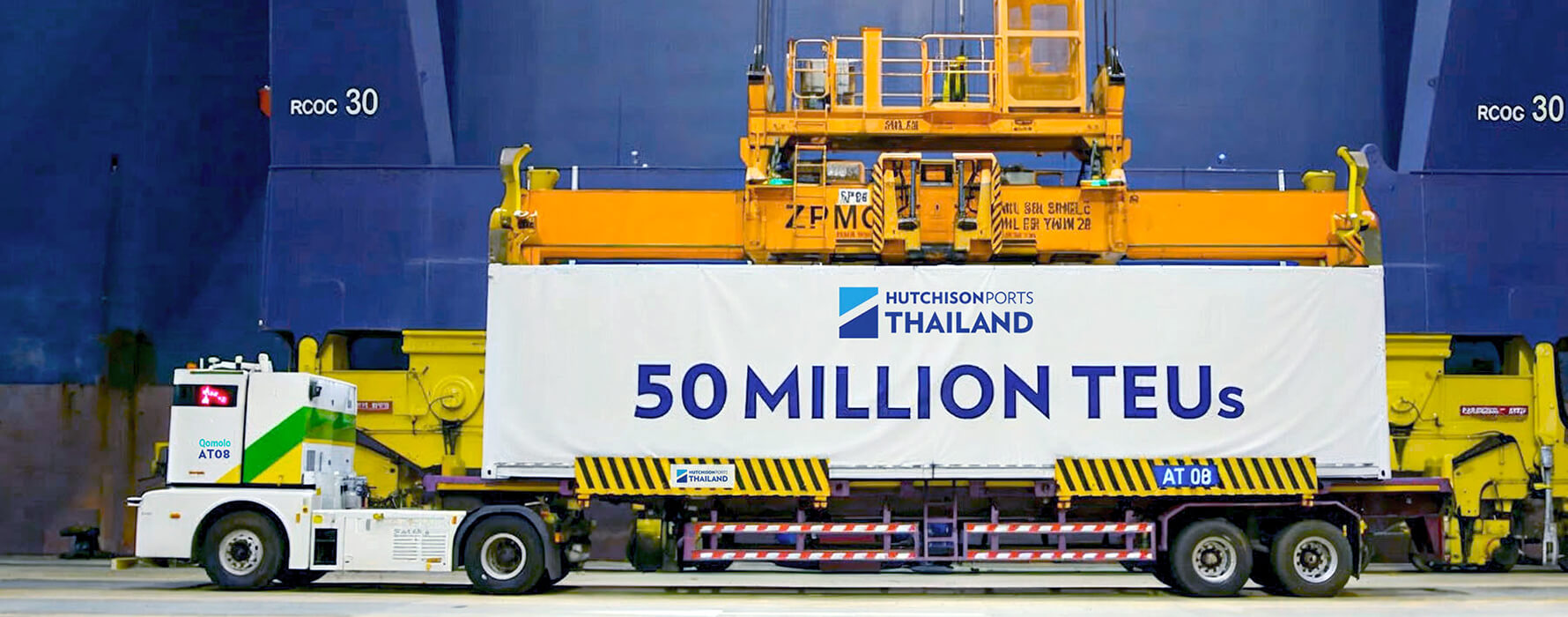
At
Laem Chabang Port, Westwell has published a mixed-fleet operating context in which autonomous Q-Trucks and human-driven E-Trucks run in the same terminal with WellFMS support. The example does not establish a general supply-chain outcome. It shows why an operation with different vehicle types needs a reliable way to relate task priority, vehicle availability, energy state and route conditions as the shift changes.
The investment question is where capacity will protect a commitment
More trucks, storage and equipment may be the right investment when they address a demonstrated bottleneck, provide necessary redundancy or resolve a defined failure mode. Asset count alone does not establish fulfilment reliability.
Before adding capacity, operations leaders can ask:
-
Which commitments are most costly to miss?
-
Which resource, handover or operating condition usually prevents those commitments from being completed?
-
When that constraint changes, can the site identify the affected work and make an accountable reassignment in time?
The answers show whether the immediate problem is a shortage of assets, a shortage of usable capacity, or a gap in how the operation manages change. That distinction makes capital decisions more precise and helps capacity support the commitments it was acquired to protect.
FAQ
1. What is the difference between supply-chain capacity and capability?
Capacity is the total amount of work a network could handle. Capability is whether its resources can perform a specific task under the relevant operating conditions. Availability asks whether that capable resource can be used at the required location and time.
2. Why can more trucks fail to improve supply-chain reliability?
Additional trucks may be in the wrong location, assigned to other work, incompatible with the load or unavailable because of charging, maintenance or shift constraints. Without effective fleet management and resource allocation, nominal capacity may not improve service reliability.
3. How can fleet management improve resource allocation?
Fleet management connects task priorities with vehicle status, location, route, compatibility, maintenance, energy and other operating constraints. This supports assignment decisions based on the commitment at risk rather than simple proximity or availability.
4. How do you improve fleet utilization without creating new delivery risk?
Improving fleet utilization does not necessarily mean keeping every vehicle busy all the time. A better approach is to increase productive use while preserving enough flexibility around critical bottlenecks and time-sensitive commitments. Reassignment decisions should consider the effect on the entire task queue.
5. What should leaders measure when assessing supply chain reliability?
The right measures depend on the site and its service commitments. In addition to asset utilisation and total capacity, leaders should track:
-
On-time completion rate for critical tasks: the share of priority movements completed within their agreed operating window.
-
Time to recover after a disruption: the time required to restore the target service level after a delay, equipment issue or change in priority.
-
Missed operating windows caused by disruption: the number of missed cut-off, loading, unloading or production-supply windows linked to a resource or coordination issue.
These measures help distinguish a genuine capacity shortfall from a problem in resource allocation, task sequencing or recovery.